
Fiber Laser Marking System
LF100 Fiber Laser Marking Machine
The LF100 Fiber Laser is designed for permanent industrial marking on metals, hard plastics and traceability-sensitive components. It is a practical choice for serial numbers, batch codes, Data Matrix codes, logos and durable product identification where ink-free marking and low consumable use matter.
Request the LF100 PDF
Please leave your contact details before downloading the LF100 product file.
Where It Fits
Permanent fiber laser marking for industrial production lines
LF100 is positioned for manufacturers that need clear, durable and machine-readable marks without labels or ink consumables. It can support both stationary marking and flying marking on suitable production lines.
Permanent identification
Suitable for serial numbers, batch numbers, production dates, logos, 1D barcodes, QR codes and Data Matrix codes on compatible substrates.
Metal and plastic marking
Common use cases include aluminum, steel packaging materials, other metal parts and selected hard plastics such as HDPE, PP, PVC and PS.
Traceability workflows
Supports coding needs for components, packaging, electronics, automotive parts and regulated manufacturing lines where readability and repeatability are important.
Machine Photo Gallery
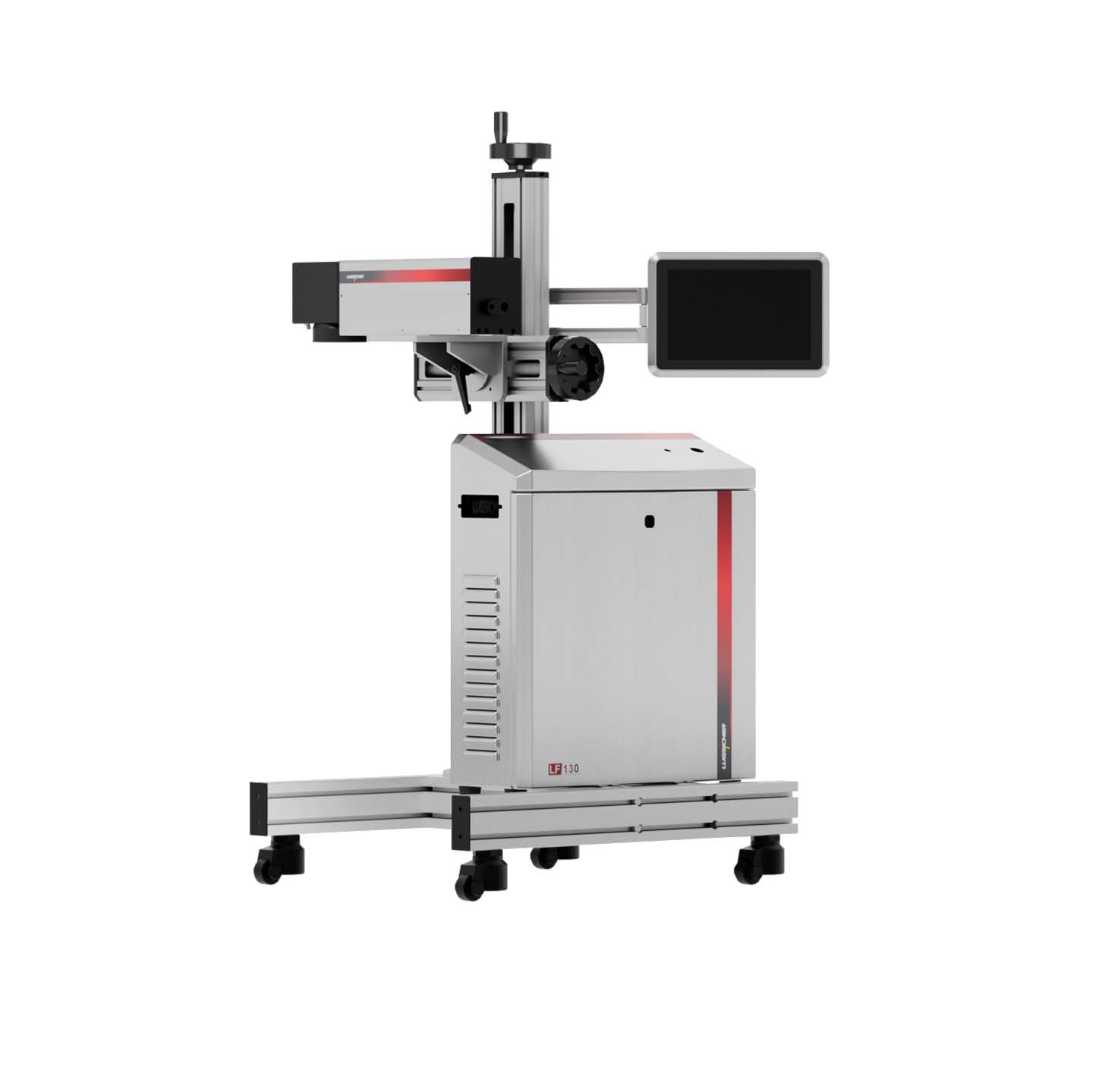
LF100 Fiber Laser machine photos
These photos show the LF100 hardware and related machine configurations for quick visual reference before reviewing technical details.


Application Samples
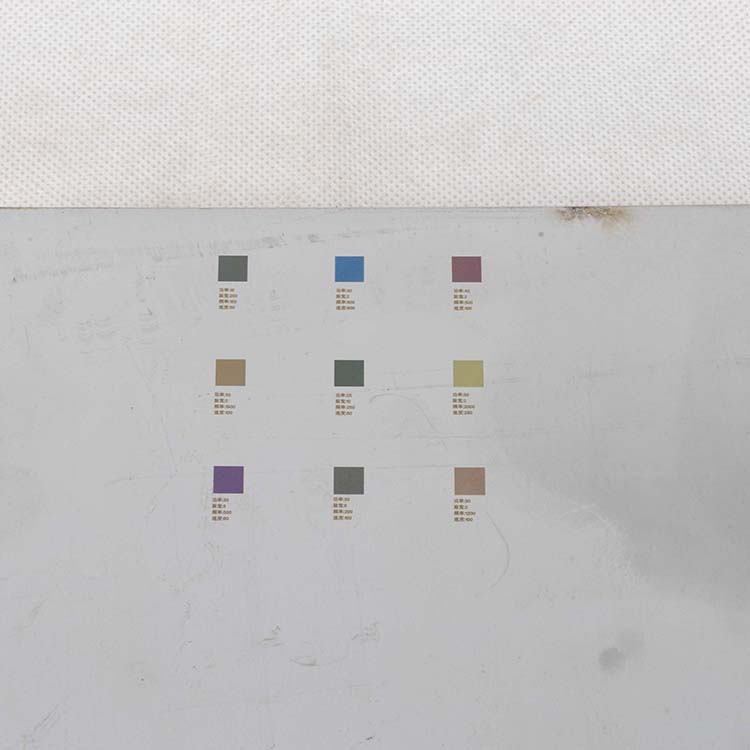
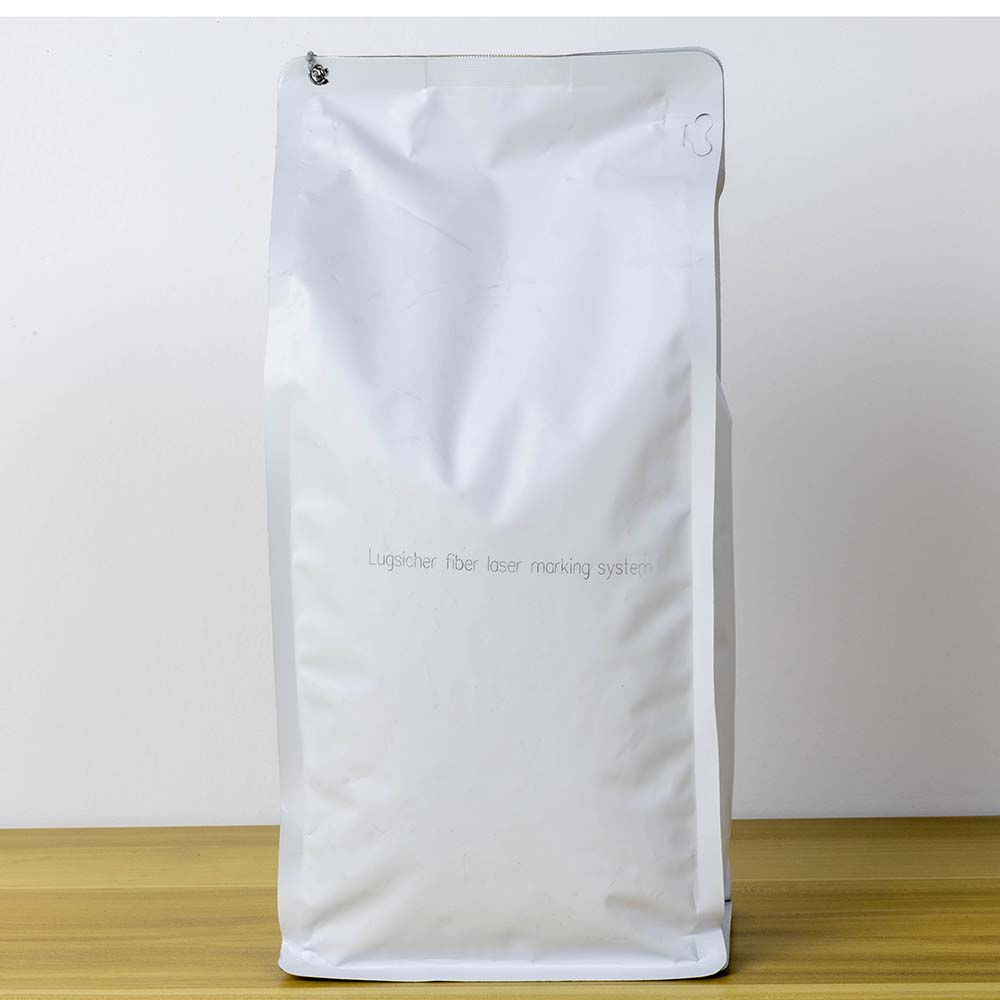
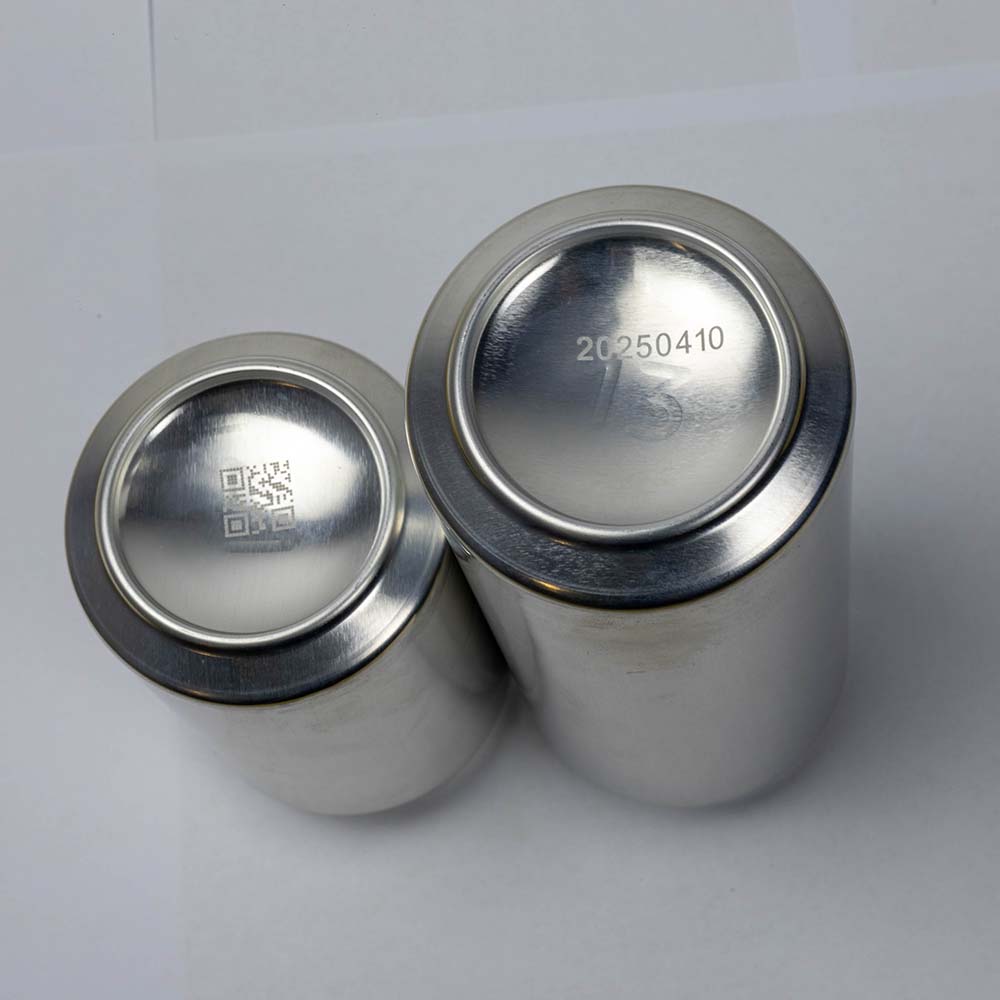
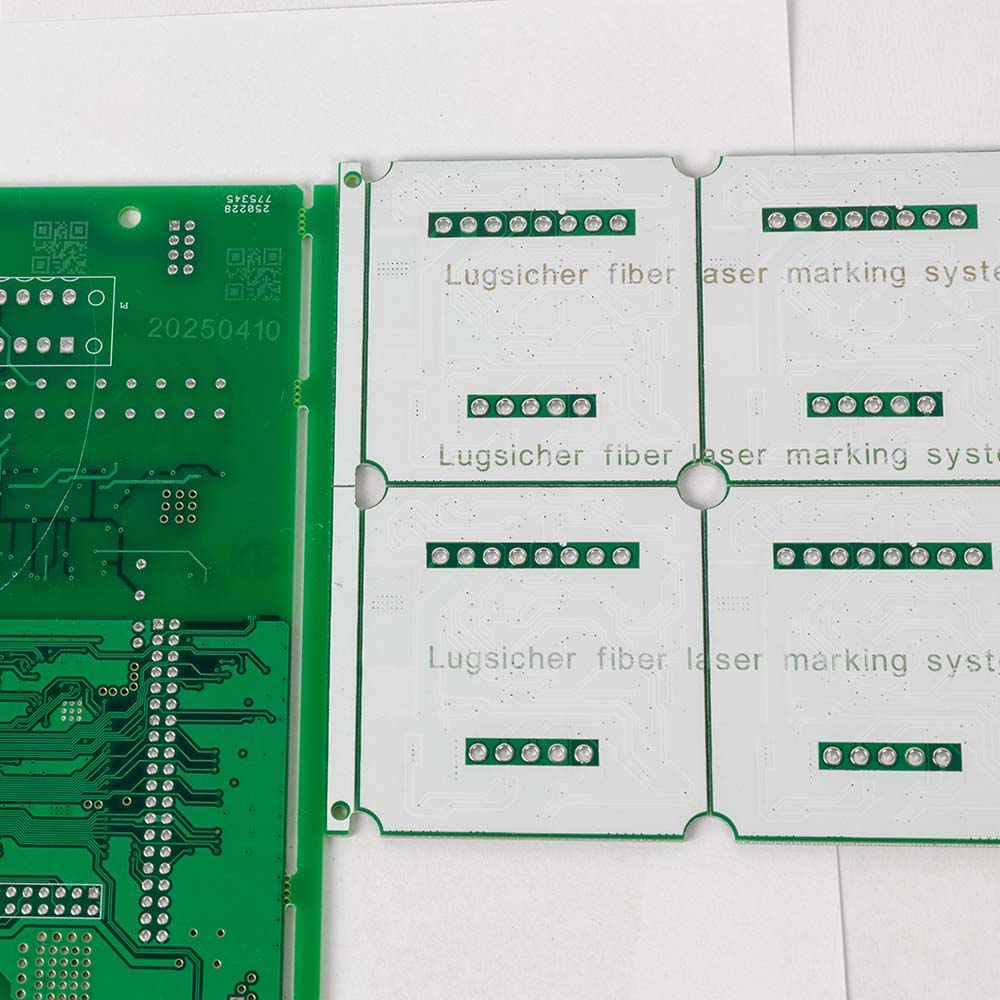
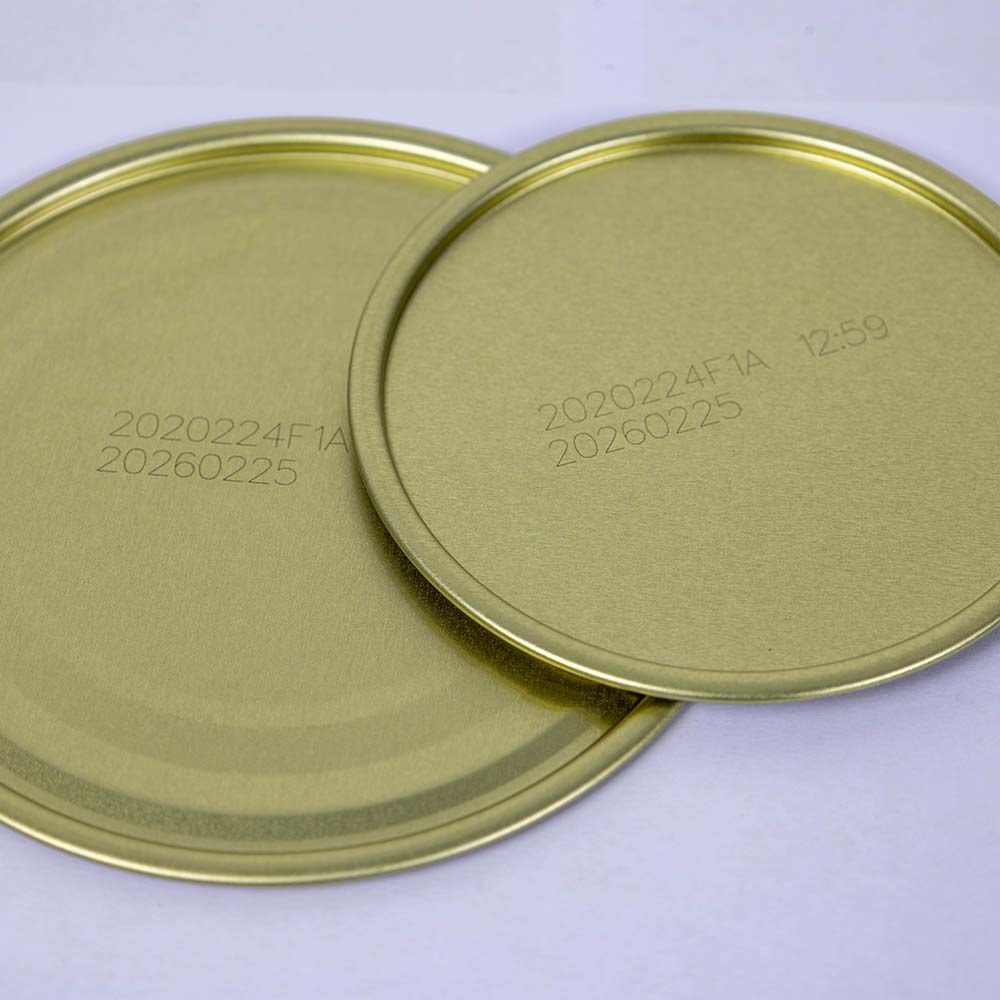
Representative samples for fiber laser marking projects
Sample photos help evaluate whether the LF100 direction is suitable for the substrate, contrast requirement, code size and production scenario.
Technical Parameters
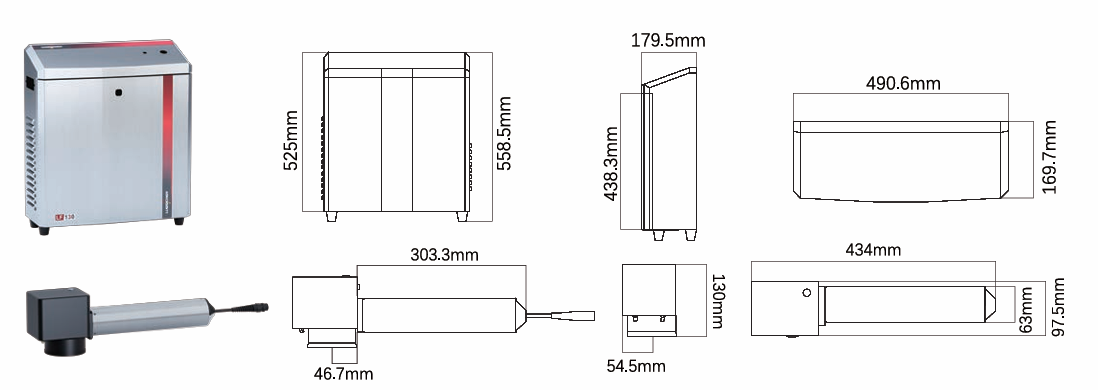
LF100 Fiber Laser dimensions and key specifications
Use these parameters as a first-stage reference. Final selection should consider material, code size, marking contrast, field lens, line speed, installation space and integration requirements.
| Control interface | LugTec operating system with 10.1 inch external touch screen for production setup and operation. |
|---|---|
| Model options | LF130 30W and LF150 50W fiber laser configurations, selected according to material, contrast and cycle-time requirements. |
| Laser type | Direct electrically modulated semiconductor laser, 1055-1070 nm wavelength, air-cooled structure. |
| Supported substrates | Aluminum, steel packaging materials, other metals, selected flexible packaging and hard plastics including HDPE, PP, PVC and PS where testing confirms suitability. |
| Marking field options | Field lens options from smaller precision fields through larger marking areas, including common F163 110 x 110 mm configuration. |
| Marking content | Text, batch numbers, serial numbers, dates, logos, graphics, Code128, Code39, Code93, QR Code, Data Matrix, Aztec Code and other machine-readable codes. |
| Speed reference | Mirror marking speed up to 13,500 mm/s and production line speed up to 6,900 mm/s, depending on code content, material and configuration. |
| Electrical and environment | 240 VAC, 50/60 Hz, 1 phase, 0.80 kW; operating temperature 5-40 C; humidity 10%-90%, non-condensing. |
| Integration interface | UDP, TCP/IP and RS232 communication, encoder and product-detection trigger inputs, plus I/O for start/stop, interlock and alarm signals. |
| Standard configuration | Main unit, 2D aluminum alloy adjustment bracket, 10.1 inch touch screen, fiber optic electric eye and universal adjustment electric eye. |
Parameter values are first-stage references. For production projects, sample testing is recommended before confirming model, lens, marking speed and installation layout.
Applications
Typical LF100 Fiber Laser application scenarios
LF100 is usually considered when the mark must remain readable through handling, storage, logistics or downstream inspection.
Electronics and components
Permanent part numbers, serial codes and Data Matrix marks on metal housings, connectors, plates and precision components.
Automotive parts
Durable identification for metal and plastic parts where traceability, batch control and supplier quality records are required.
Packaging and closures
Batch codes, date codes and machine-readable marks on compatible metal packaging materials, caps or rigid packaging surfaces.
Industrial manufacturing
Logo marking, production codes, inspection-related identifiers and anti-mix-up marks for general manufacturing workflows.
FAQ
LF100 Fiber Laser selection questions
These questions help narrow whether LF100 is the right direction before a detailed quotation or sample test.
Is LF100 suitable for every plastic?
No. Fiber laser results depend on plastic type, additives, surface color and required contrast. HDPE, PP, PVC and PS can be considered, but sample testing is recommended.
Can it mark moving products?
Yes, flying marking can be considered when the production line speed, trigger position, encoder setup and code size are matched to the system configuration.
What information is needed for quotation?
Material, product photo, code content, marking area, target speed, available installation space and sample requirements help us select the model and lens.
When should I choose CO2 or UV instead?
CO2 or UV may be more suitable for some films, glass, paper, cartons or high-precision plastic marking. The right route depends on substrate and mark quality target.
Need to confirm whether LF100 fits your material?
Send the substrate, code content, line speed and marking area. Lugsicher can help compare LF100 with CO2, UV or other product directions before you request final configuration details.