
Laser marking quotations: compare the scope of supply
Laser marking quotations: compare the scope of supply
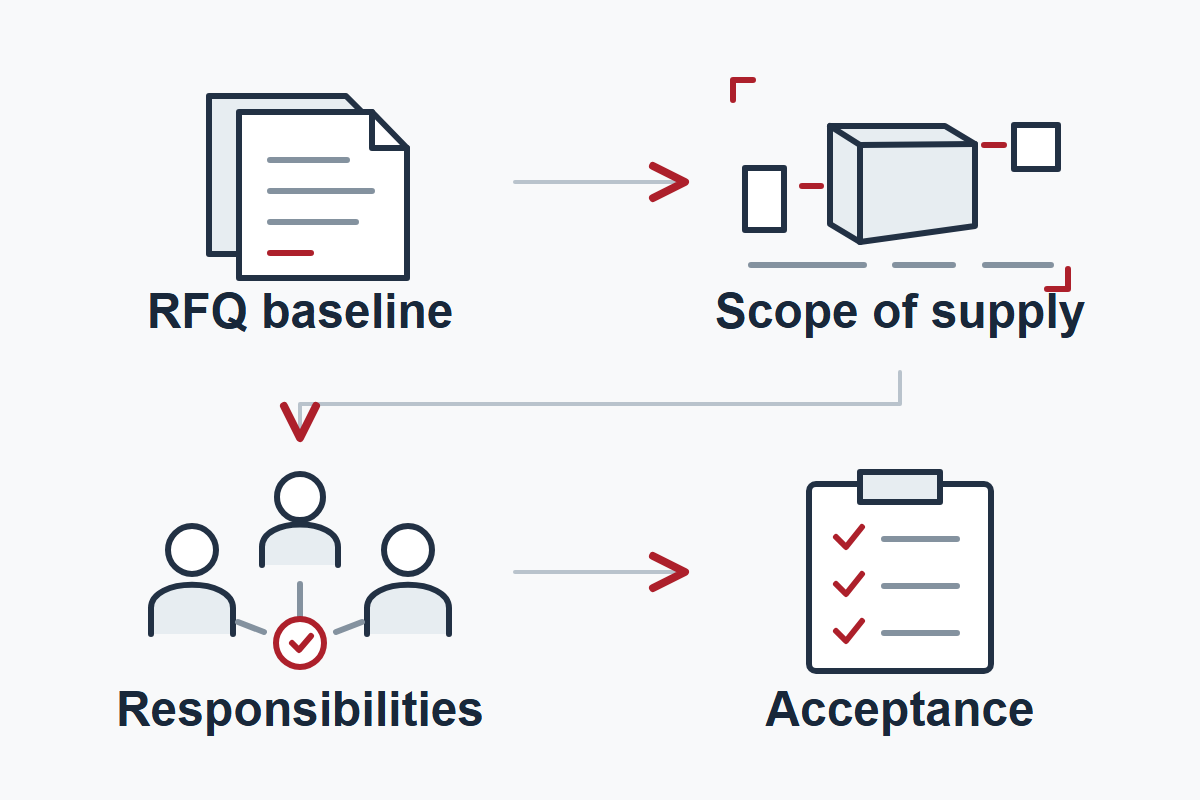
Two quotations for a laser marking system may specify the same power and a similar marking field while covering different tasks. A reliable comparison requires the same material, marking content, line conditions and acceptance requirements. A shared scope-of-supply matrix then shows what is included, what else is needed and who is responsible for each task.
Establish a shared basis for the enquiry
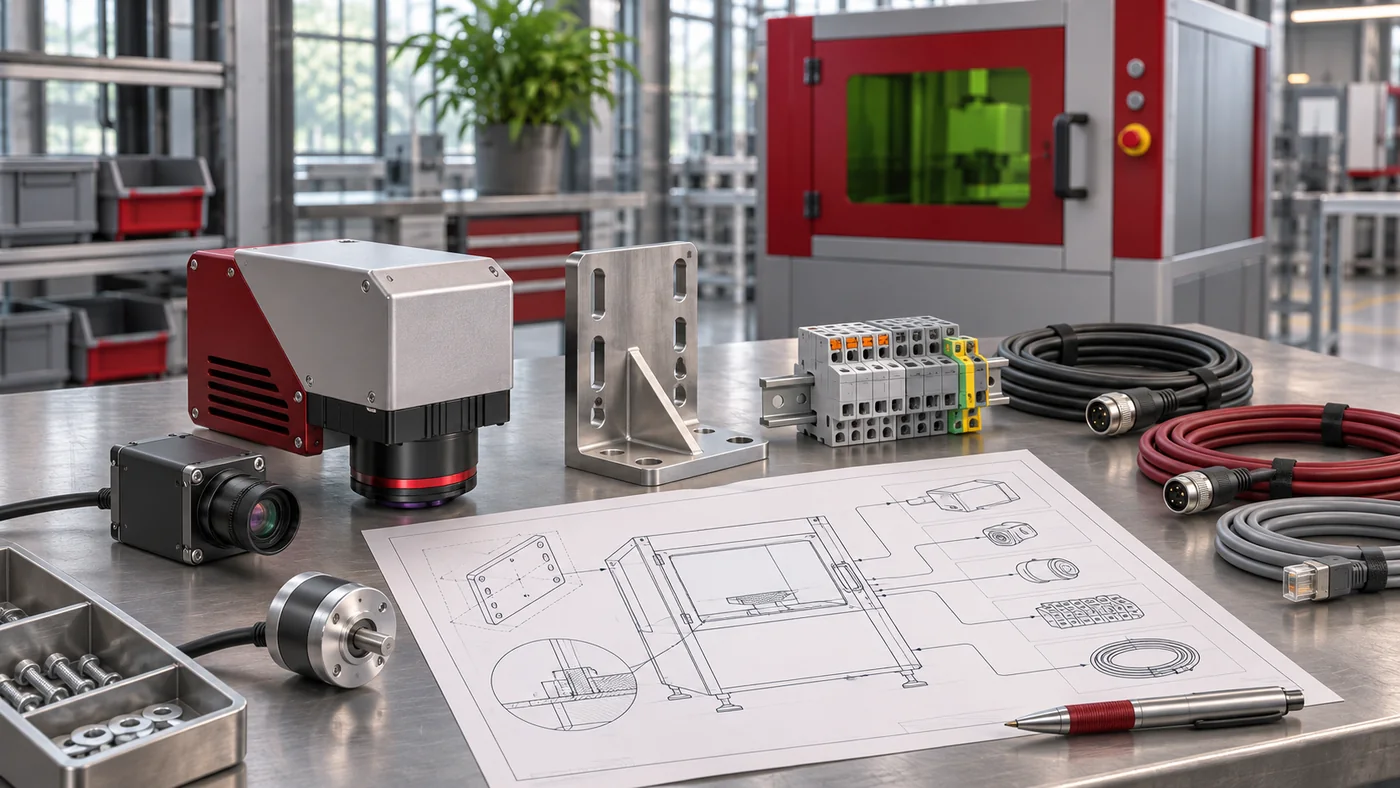
Give both suppliers the same approved enquiry package: original material and surface condition, part dimensions, complete code content, marking size, product spacing and speed range. Include downstream stresses such as cleaning or abrasion, together with existing interfaces and the available installation space.
Keep unresolved points explicitly open in the comparison. A quotation backed by a confirmed material trial cannot be compared directly with one whose process design still relies on assumptions. Changes to the enquiry baseline should be traceable for everyone involved.
Compare the scope of supply line by line
Use the following matrix as a starting point. For each row, also record whether the item is included, optional, customer-supplied or still open, who is responsible and what evidence will be provided.
| Item | Clarify in the quotation |
|---|---|
| Laser and controller | Exact components, software scope, cooling and required accessories |
| Optics and setup | Marking field, working distance, focus adjustment and protective components |
| Mechanical and electrical work | Mounting, workholding, sensors, encoder, control cabinet and wiring |
| Line integration | PLC signals, workpiece tracking, interlocks and fault responses |
| Data integration | Protocol, field mapping, job changes, logging and retry logic |
| Inspection | Content comparison, readability, code quality assessment where required and confirmed rejection |
| Protection and extraction | Coordinated protective measures, source capture, filters and maintenance access |
| Commissioning and support | Acceptance, training, documentation, spare parts and agreed support |
This list does not replace engineering design. It makes missing tasks and possible overlaps in the quoted scope visible.
Describe interfaces through their operating states
The statement “MES integration included” is too vague without further detail. Clarify which data the system receives, when it acknowledges a job and which event produces the result. Job received, marking completed, inspection passed and result stored are different states.
Also agree the behaviour when data is missing, the connection fails, messages are retransmitted or rejection remains unconfirmed. Assign each function to the equipment supplier, line integrator or operator. Required changes on the customer’s side also belong in the comparison.
Define acceptance evidence before placing the order
- Material and marking: Record the intended batches, surfaces, content and dimensions.
- Operating range: Check speed, product spacing, changeover conditions and the agreed running conditions.
- Inspection method: Assess content accuracy, readability and any required code quality separately. Successful decoding alone is not complete evidence of quality.
- Fault cases: Test missing jobs, incorrect codes, read failures, rejection and restart in a traceable way.
- Documentation: Record results, deviations, responsibilities and the rules for retesting or corrective work.
Factory acceptance and acceptance at the installation site may cover different conditions. The technical scope should state which tests will take place at each location.
Separate operating costs from unresolved assumptions
List capital expenditure, integration, training, filter media, optical cleaning, spare parts and software maintenance as separate items. Travel expenses and work on existing equipment should be identifiable as either included services or open items. Lower ink or ribbon consumption does not mean that a laser system operates without maintenance.
Downtime-cost and payback calculations require documented assumptions from your own operation. Where those inputs are unknown, an explicit open assumption is more useful than a seemingly precise payback date. A traceable quotation comparison therefore shows both the price and the technical and operational conditions that still need to be resolved.
Review your application with Lugsicher
Describe the material, code content, line cycle and the issue you have observed. This helps define the next checks for your application.
Discuss your project