
Why an Industrial Identification System Cannot Be Evaluated by One Laser Marker Alone
Technical Articles
Why an Industrial Identification System Cannot Be Evaluated by One Laser Marker Alone
Modern industrial identification requires data delivery, marking execution, online inspection, abnormal handling and traceability feedback as one system.
In many projects, the marking requirement appears simple at first. Products need date codes, batch numbers or QR codes, so a laser marker is selected. Packaging needs labels, so a labeling machine is selected. In mass production, however, the question is no longer whether a single device can perform one action.
Single machines perform actions; systems control flow
A laser marker can mark. A labeler can apply labels. A vision camera can inspect. But in a production line, these actions must be connected through data, trigger timing, verification, exception handling and feedback.
Without system logic, each machine may work alone while the overall process remains unstable.
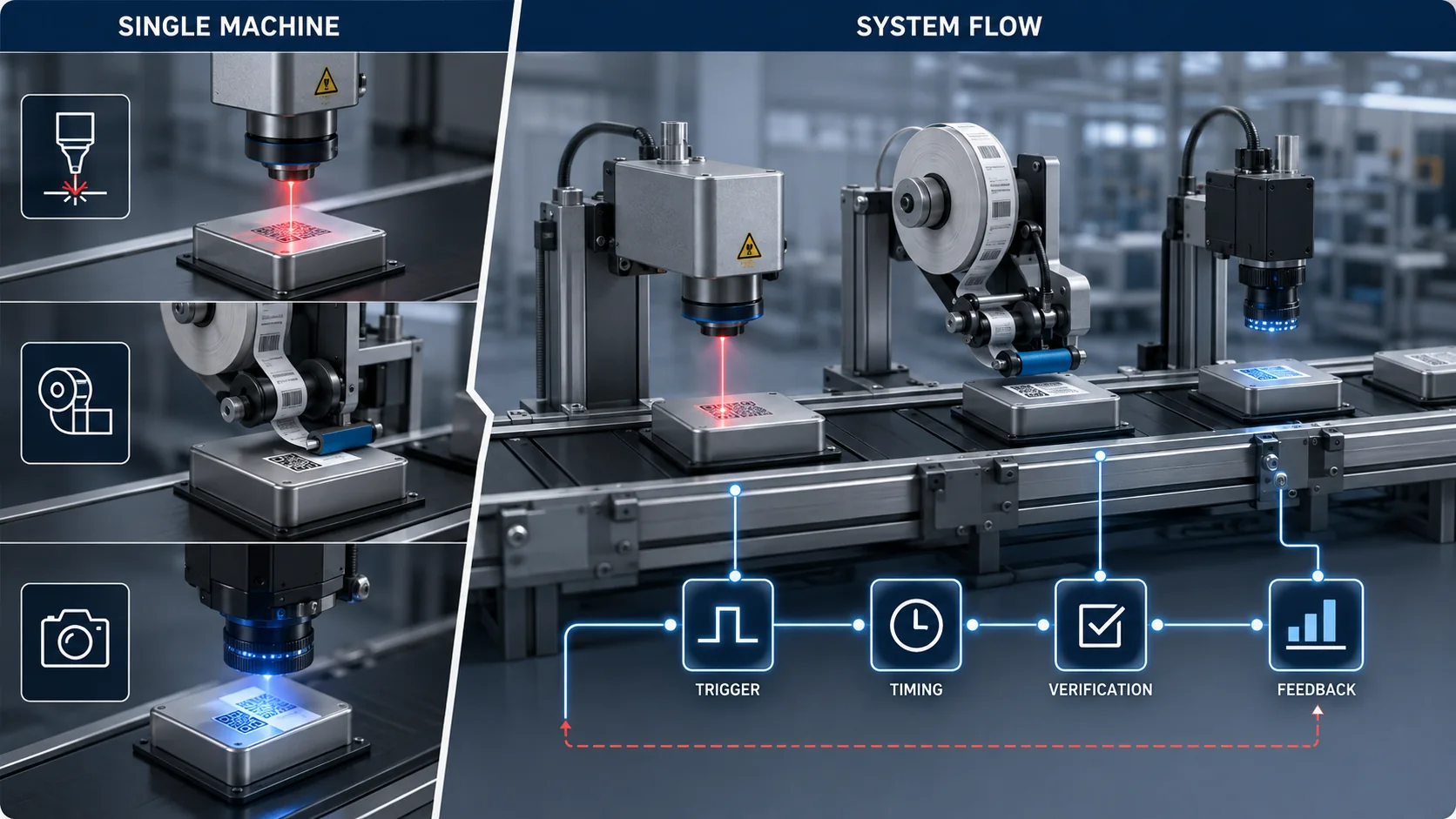
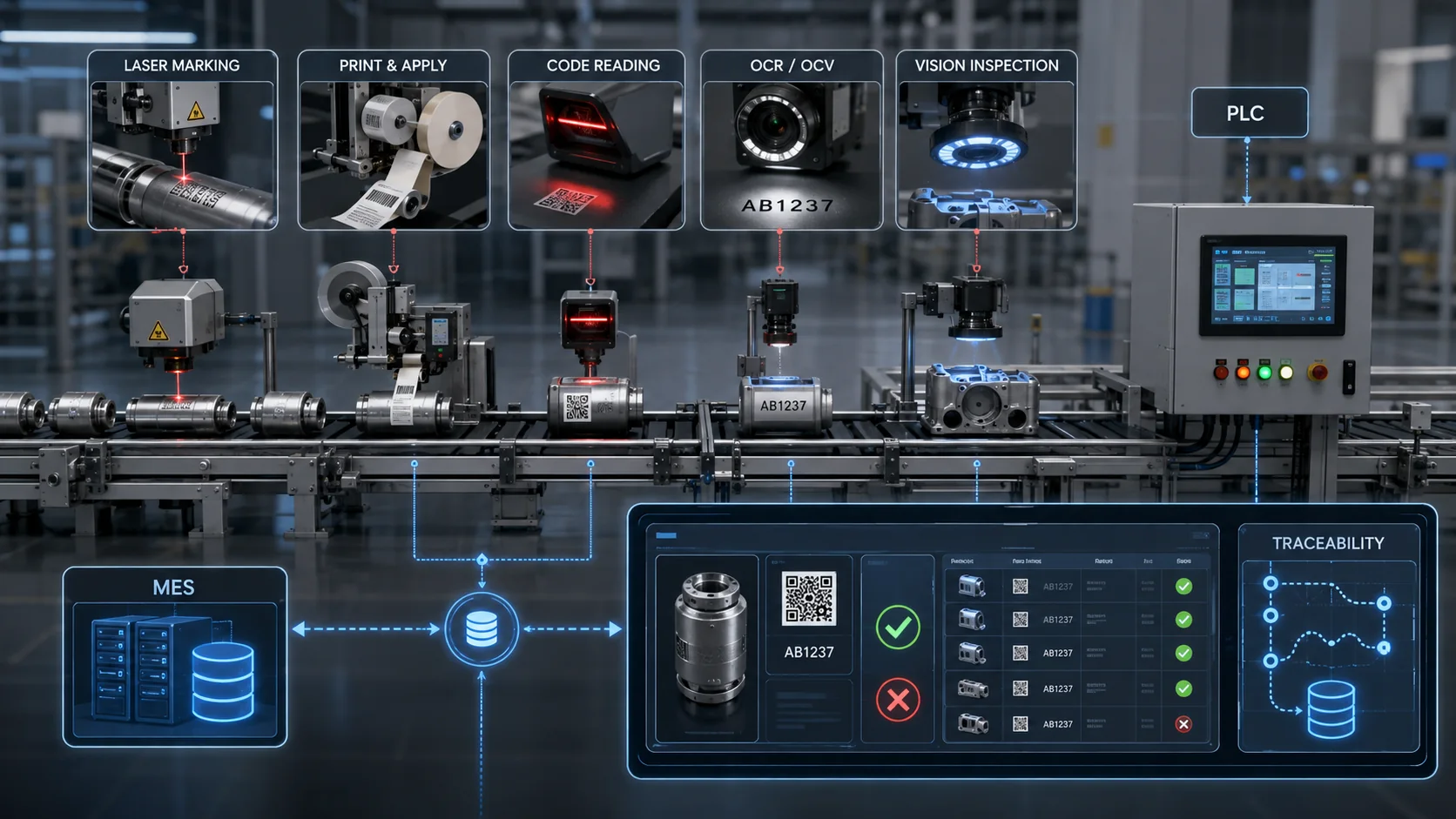
Industrial identification connects multiple layers
A complete system may include laser marking, print-and-apply labeling, code reading, OCR/OCV, vision inspection, PLC control, MES integration and traceability data.
The system must know which product is at which station, which data should be marked, whether the result is readable and how abnormal products are handled.
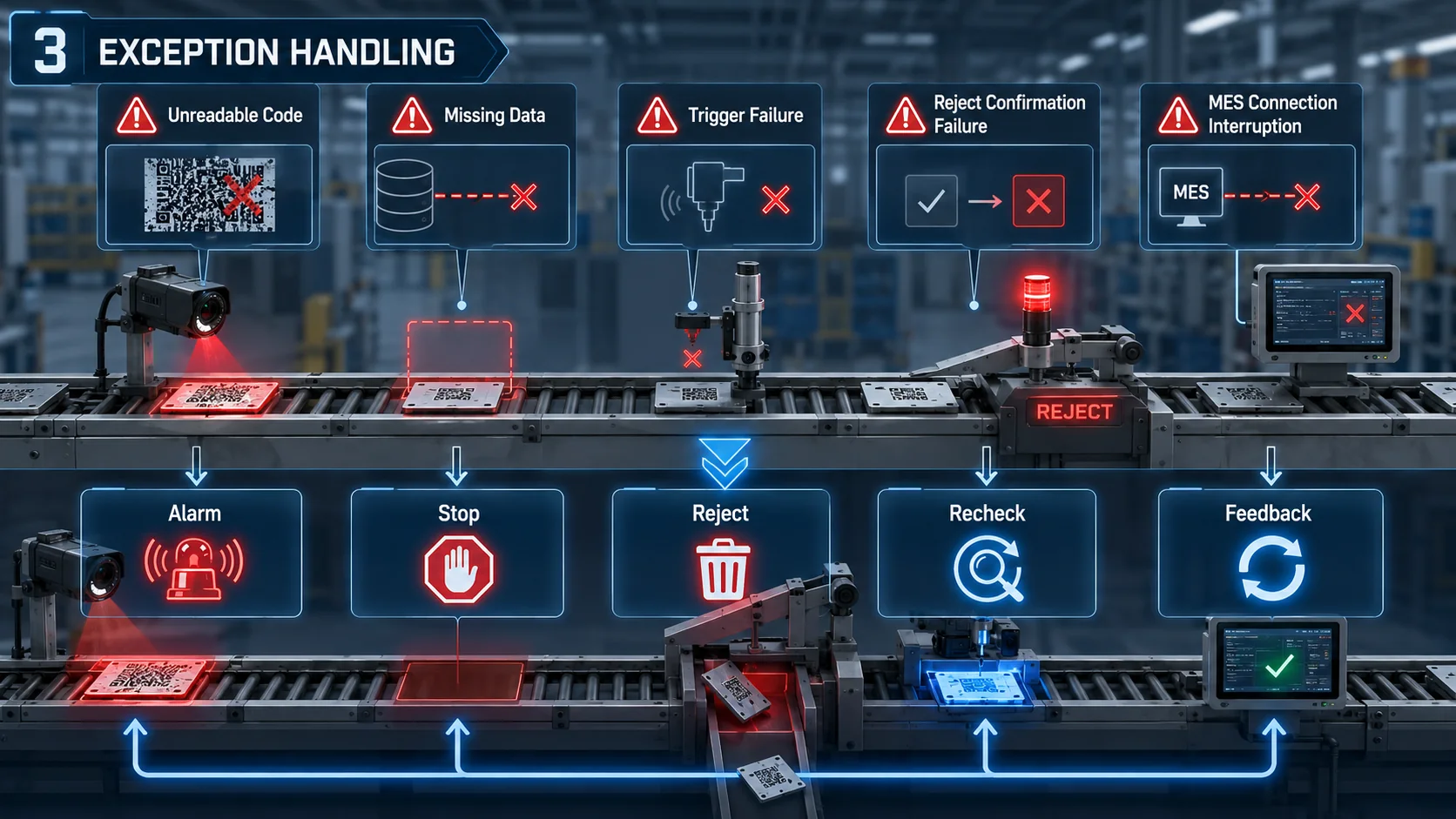
Exception handling is part of the solution
A project should define what happens when the code is unreadable, data is missing, the trigger fails, the rejection confirmation is not received or the MES connection is interrupted.
If these cases are not designed, the system may continue running while data and product flow diverge.
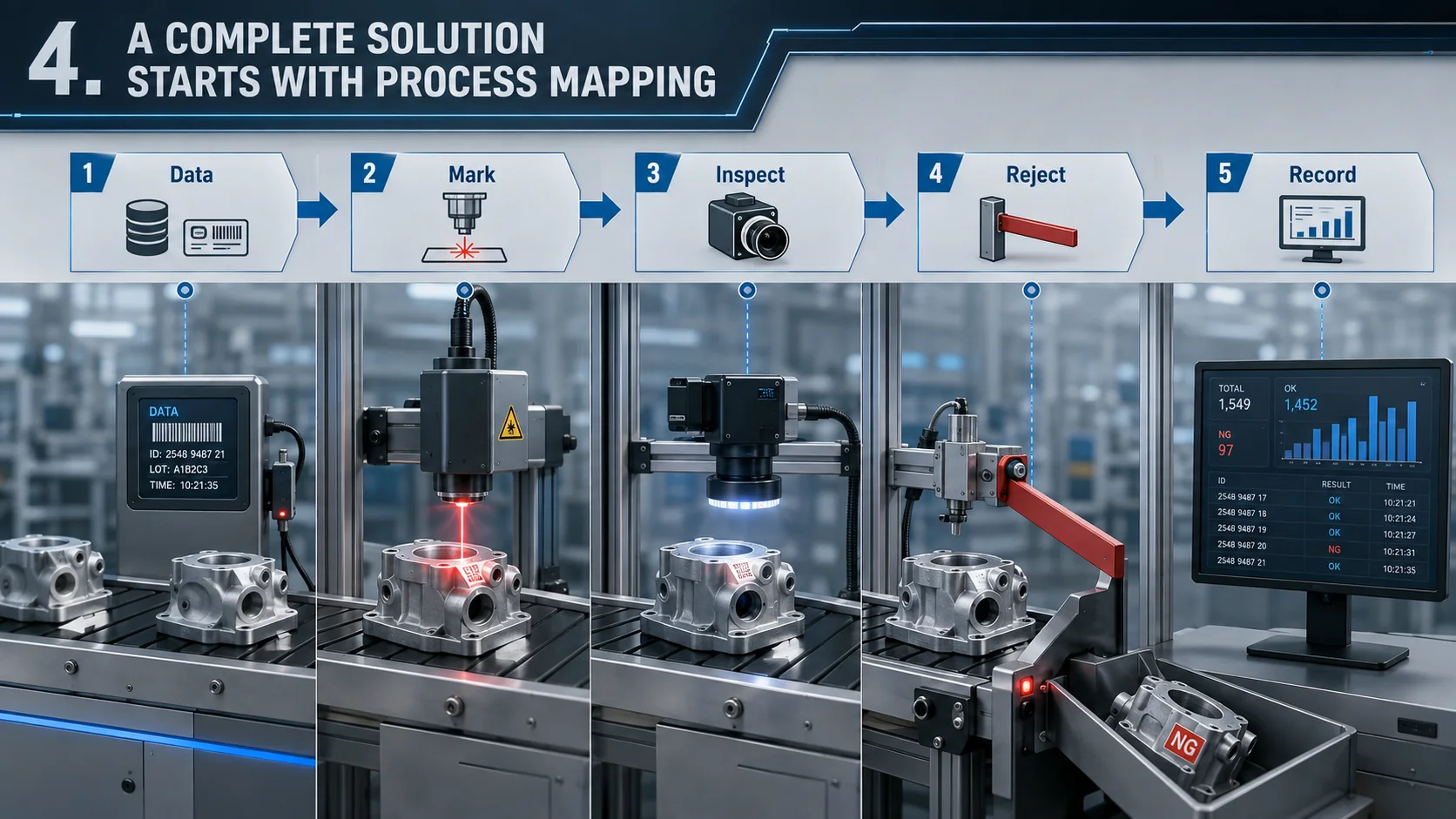
A complete solution starts with process mapping
Before choosing a machine, the team should map the product flow, data source, marking method, inspection point, rejection point and feedback record.
Only then can the right combination of laser, labeler, inspection and software interface be selected.
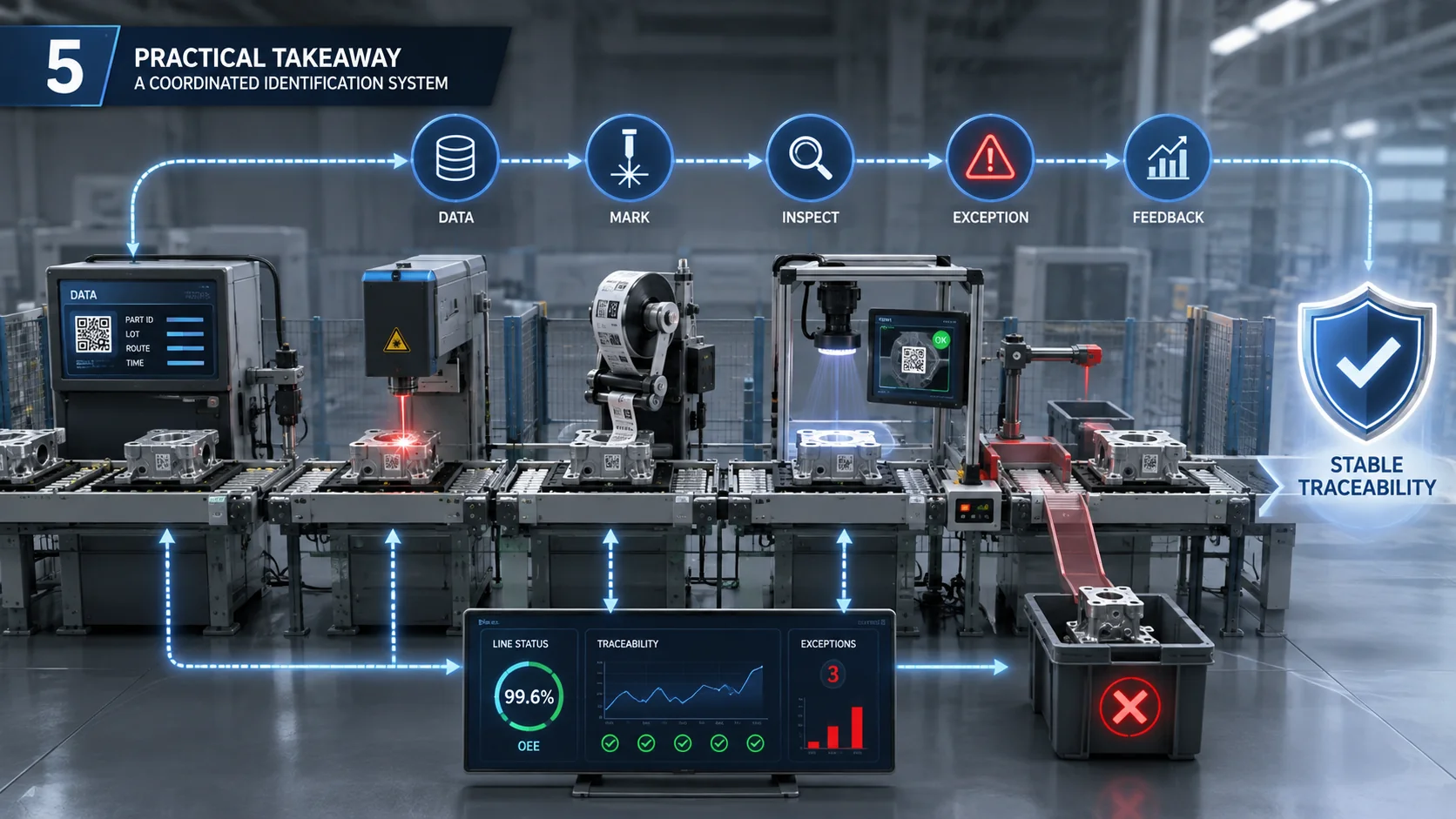
Practical takeaway
Industrial identification is a production-line system. A single laser marker may solve one action, but stable traceability requires coordinated data, marking, inspection, exception handling and feedback.
Need to evaluate a real production scenario?
Lugsicher can help review materials, marking targets, line speed, vision inspection and data feedback requirements before equipment selection.