
Laser Marking Project Pitfalls: Why Samples Pass but Production Lines Fail
Technical Articles
Laser Marking Project Pitfalls: Why Samples Pass but Production Lines Fail
High-reflection metals, transparent plastics and coated materials often pass sample testing but become unstable in real production without process-window validation.
Many laser marking projects look successful during sample testing. The mark is visible, the code looks clear and the surface appears acceptable. After the project enters production, however, the line may experience unstable marks, read failures, cosmetic defects or batch variation.
Sample testing answers only one question
A sample test answers whether a mark can be formed under the current condition. Production must answer a broader question: can the same process remain stable across real material variation, line speed, inspection conditions and maintenance intervals?
This difference is especially important for high-reflection metals, transparent plastics and coated materials.

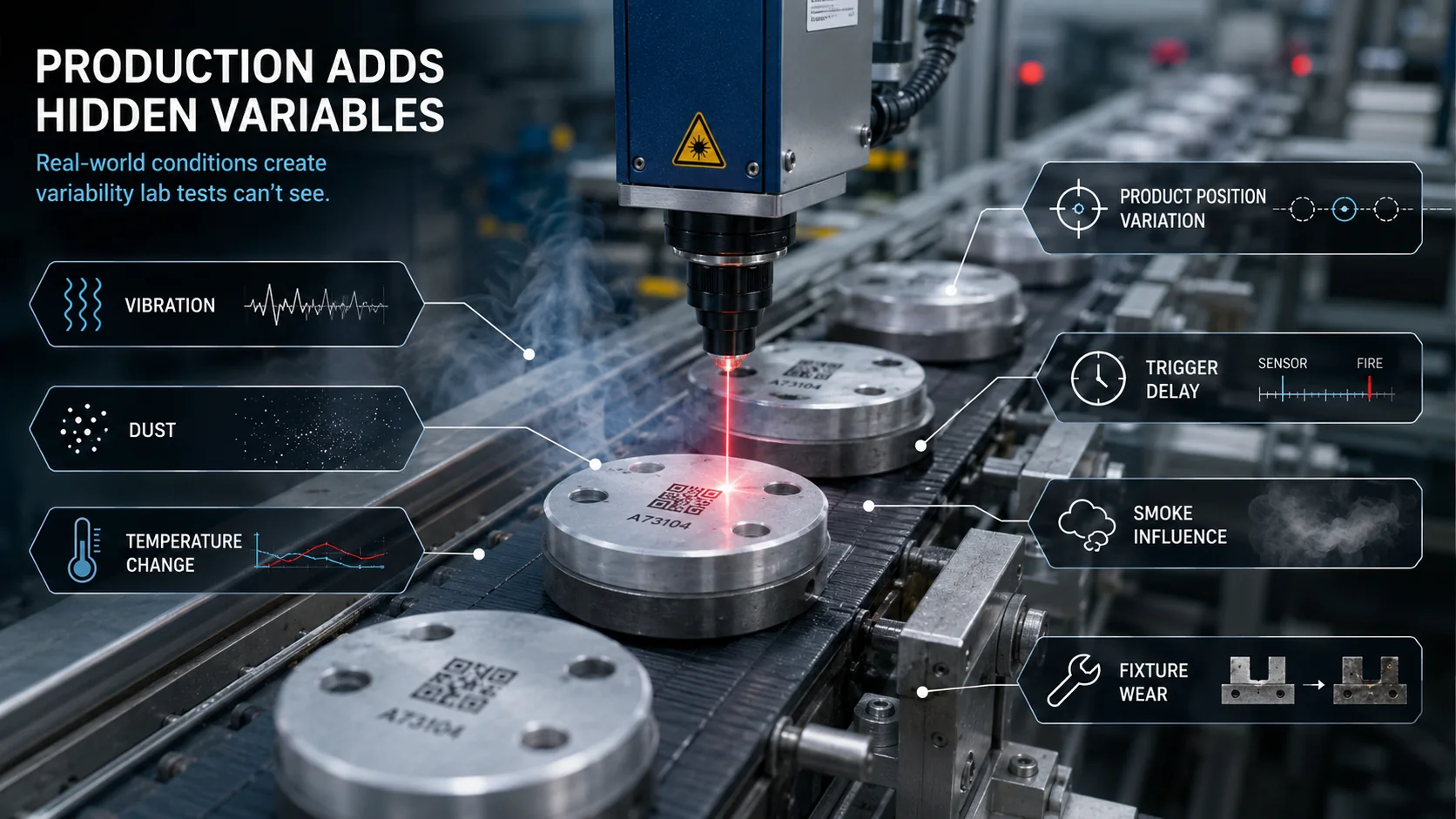
Production adds variables that samples hide
The line introduces vibration, dust, temperature changes, product-position variation, trigger delay, smoke influence and fixture wear. These variables may not appear in a small laboratory test.
A stable production process needs margin for these variables instead of relying on the best-looking parameter set.
Read rate and inspection stability should be tested early
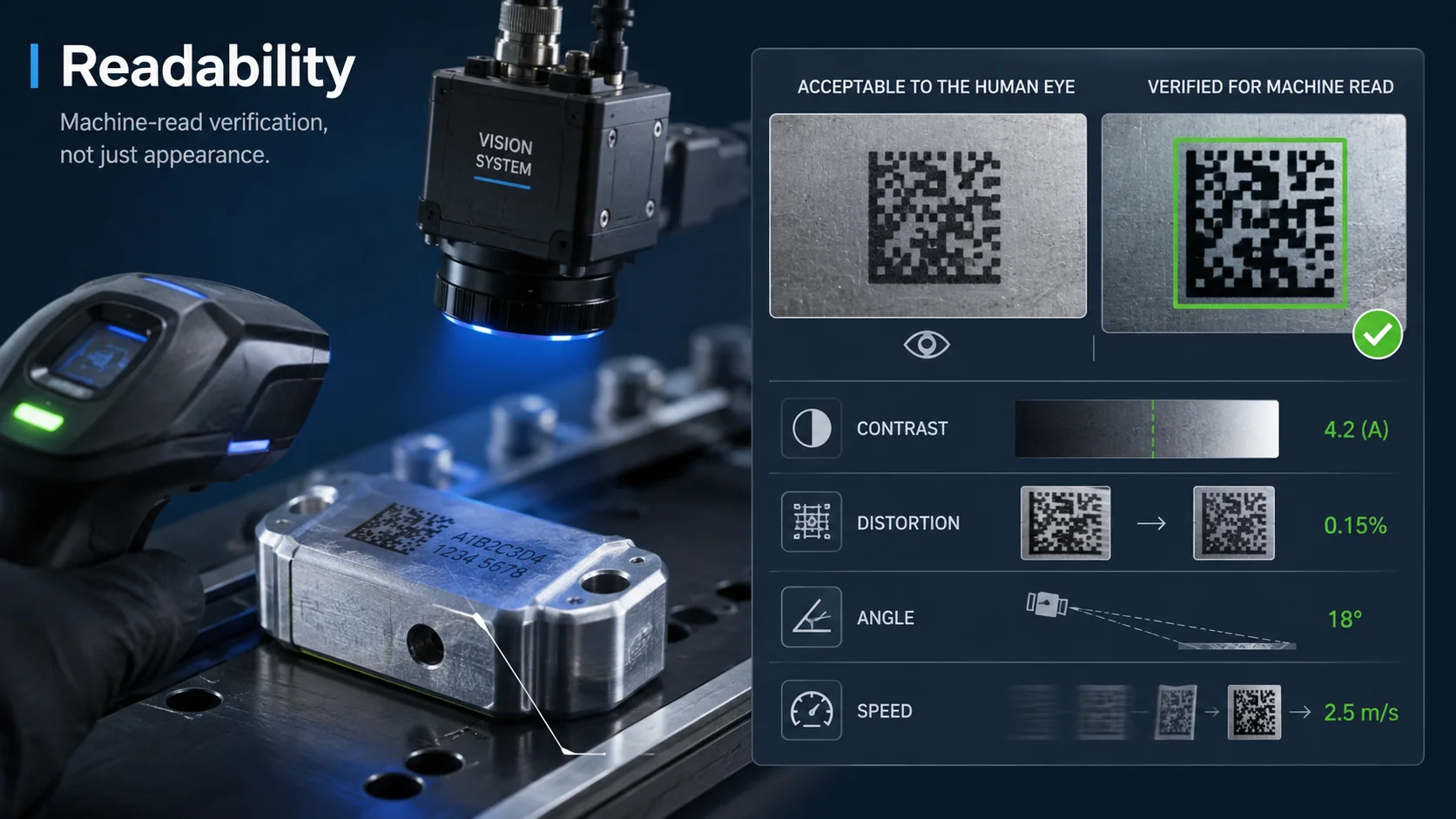
If the code must be read by a scanner or camera, readability should be verified during material testing. The test should include multiple batches, realistic code size, real speed and expected camera angle.
A mark that is acceptable to human eyes can still fail machine reading because of low contrast, distortion or surface reflection.
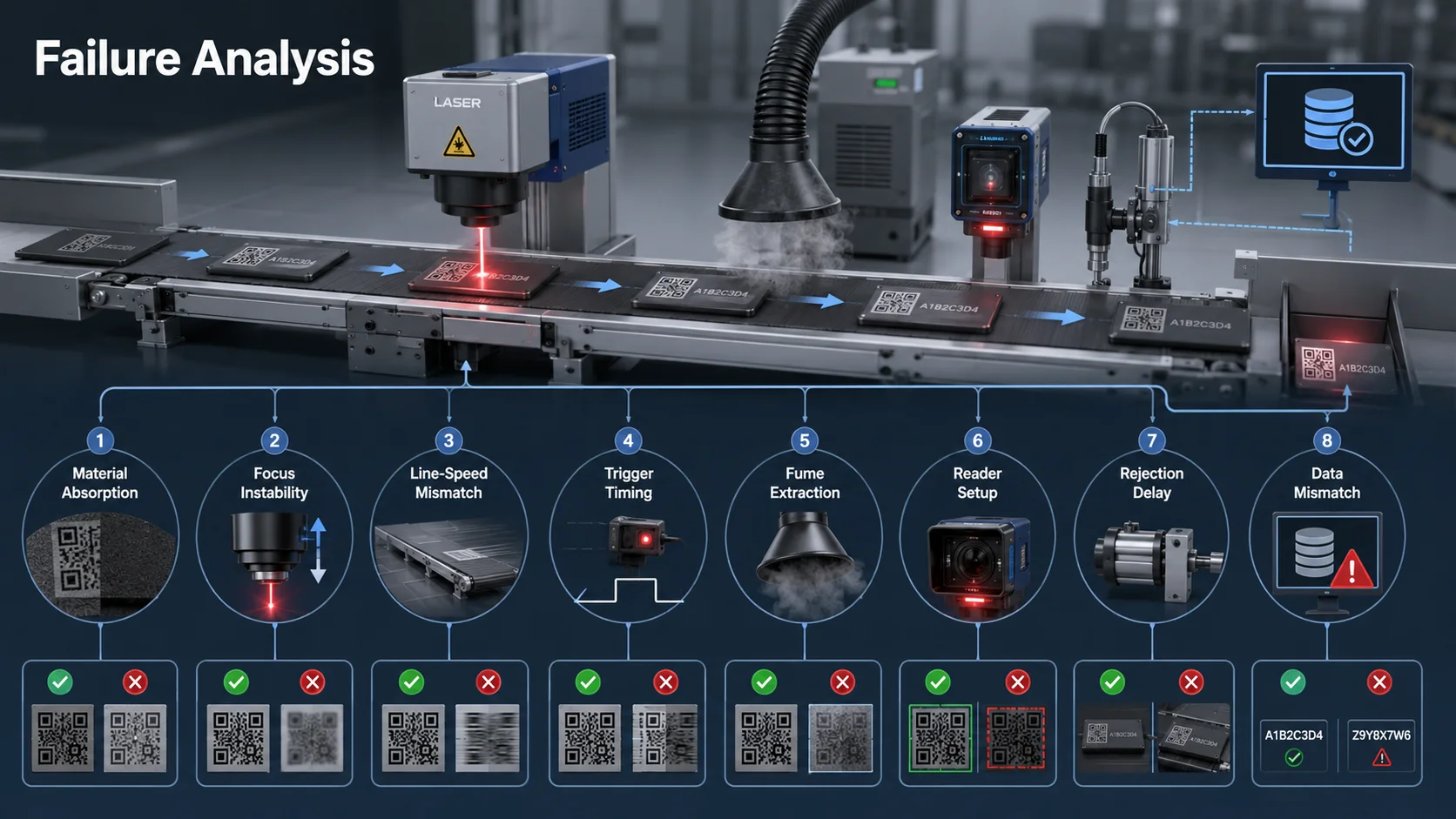
Failure analysis should include the complete chain
When a project fails, the cause may be material absorption, focus instability, line-speed mismatch, poor trigger timing, weak fume extraction, reader setup, rejection delay or data mismatch.
Treating every issue as a laser-parameter problem makes troubleshooting slow and incomplete.
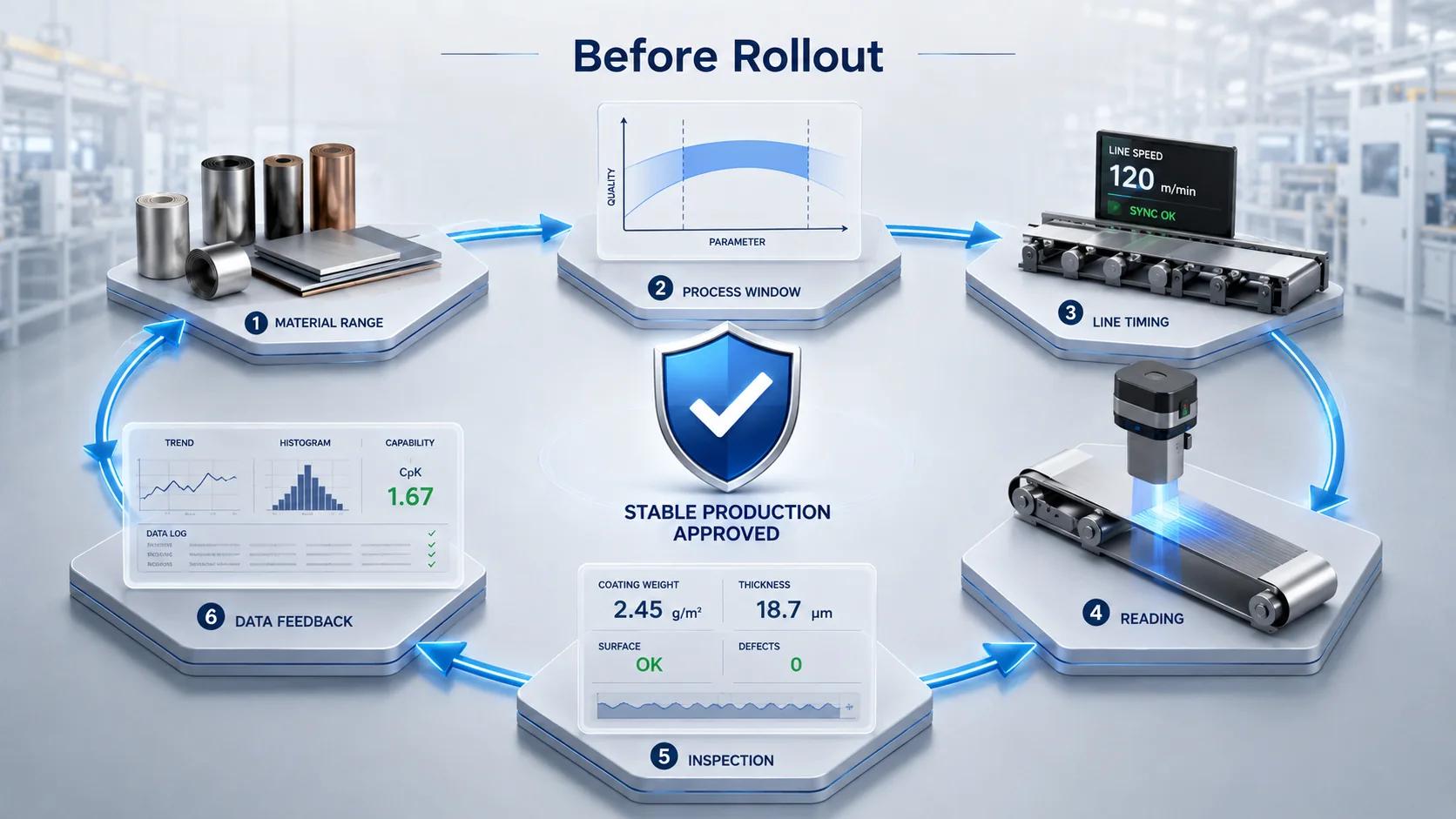
Practical takeaway
Sample success is useful, but it is not the same as production stability. A laser marking project should validate material range, process window, line timing, reading, inspection and data feedback before rollout.
Need to evaluate a real production scenario?
Lugsicher can help review materials, marking targets, line speed, vision inspection and data feedback requirements before equipment selection.