
Medical Device Traceability Marking as a System: Laser Marking, Vision Inspection and Data Feedback
Technical Articles
Medical Device Traceability Marking as a System: Laser Marking, Vision Inspection and Data Feedback
Medical device traceability marking should be designed as a data, marking, inspection and feedback system instead of a simple coding equipment purchase.
A medical device traceability project should not be understood only as buying a marking machine. In practice, it is a system that combines data generation, on-site marking, machine reading, vision inspection, exception handling and data feedback.
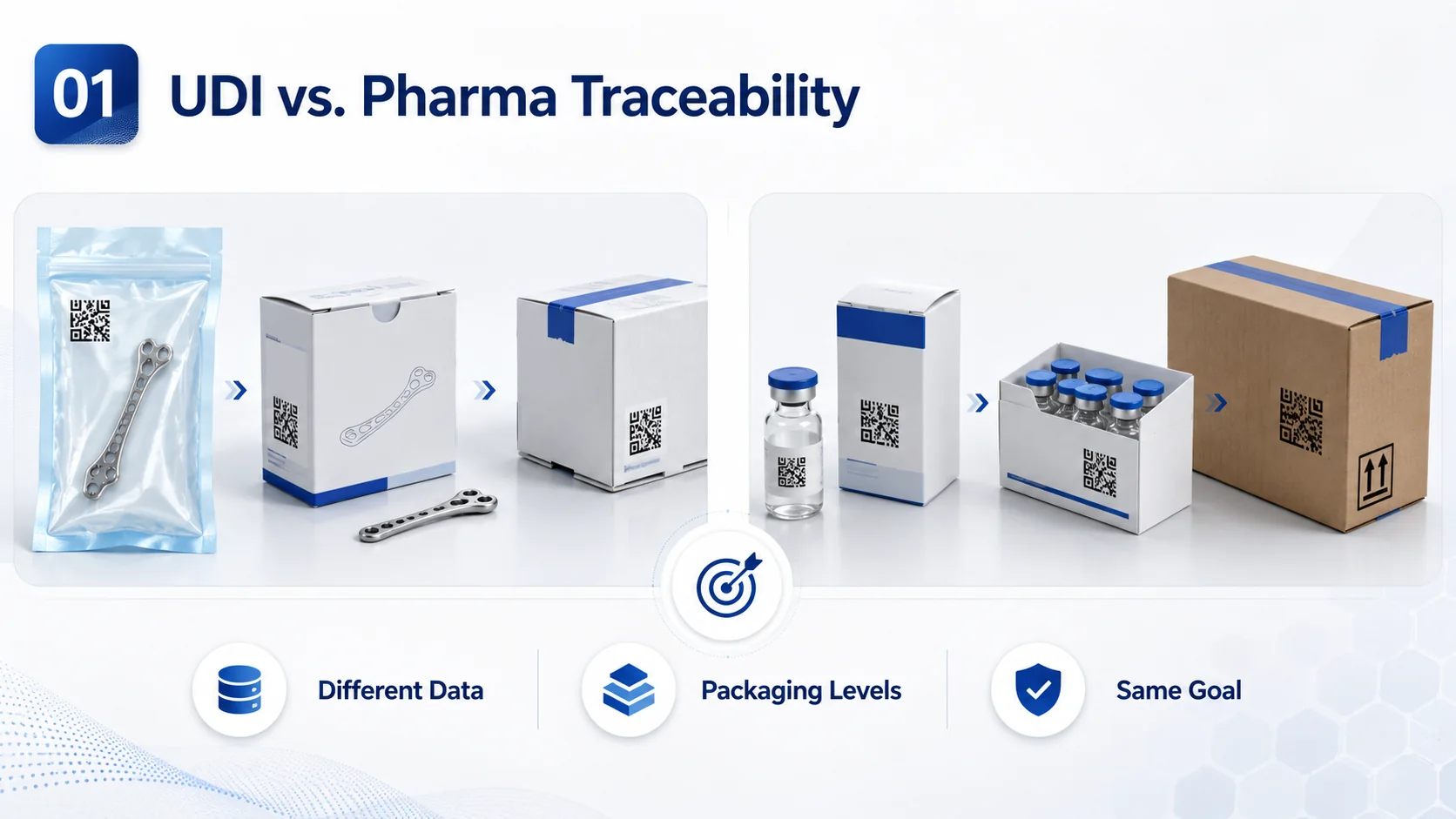
UDI and pharmaceutical traceability are related but not identical
Medical device UDI focuses on unique identification and lifecycle traceability of medical device products and packaging. Pharmaceutical traceability codes more often deal with drug sales units, cartons, bundles and outer cases. Both serve traceability, but the data object and packaging hierarchy are different.
Medical devices have more variation in product form, material and batch size. This makes on-site flexible marking more important than relying only on preprinted materials.
Laser marking becomes an execution node in the data chain
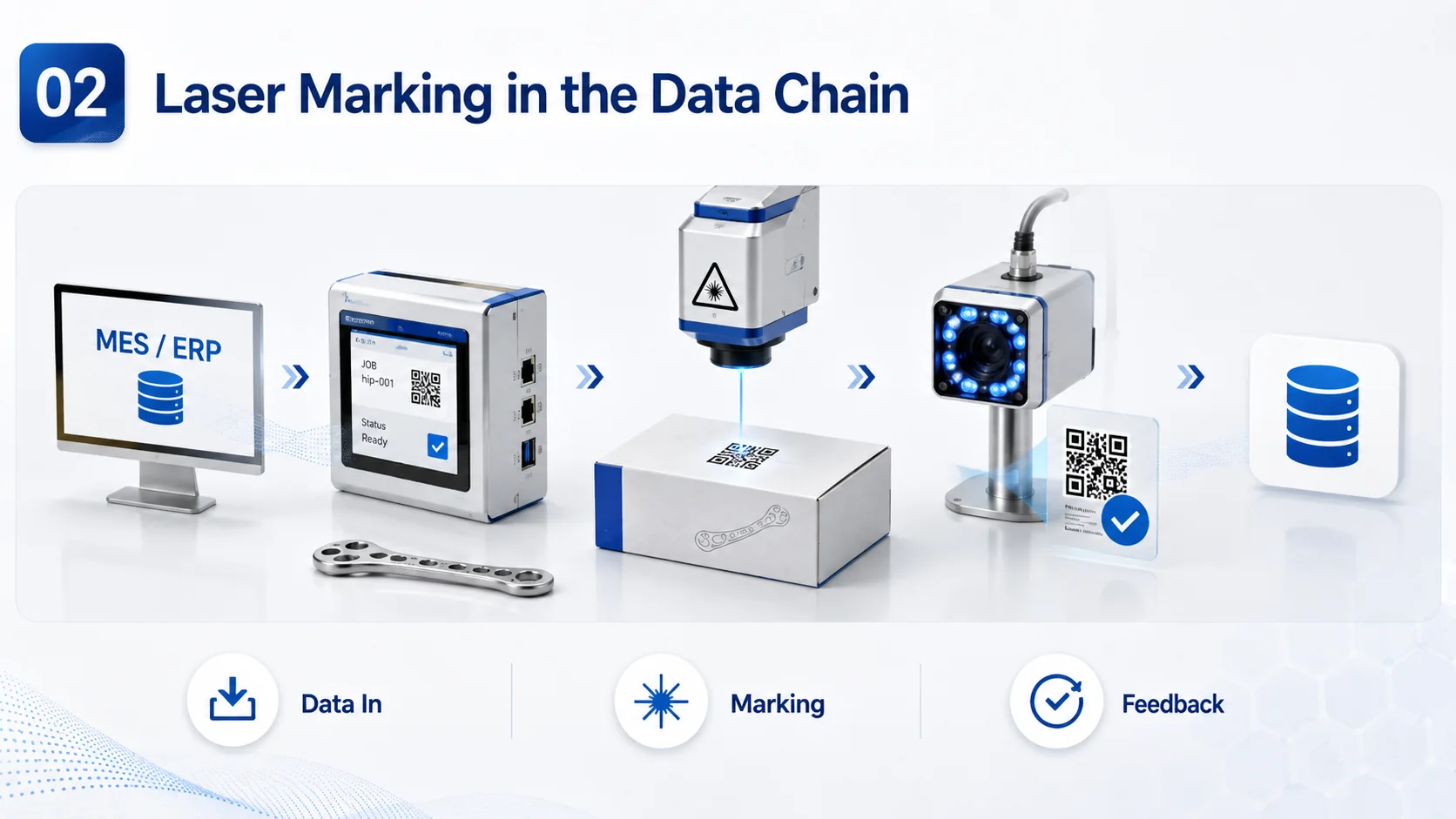
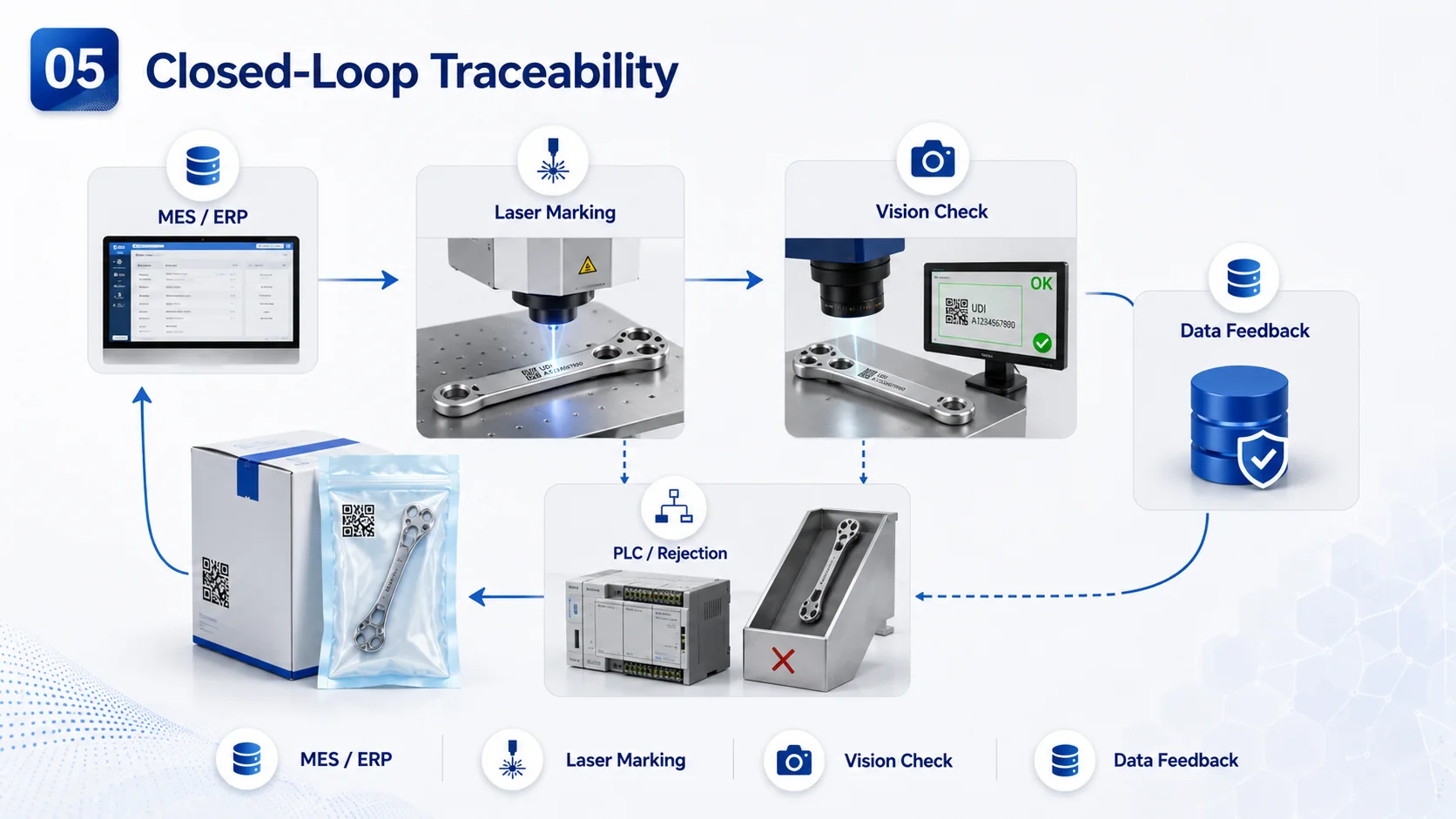
A typical process may start from MES, ERP, label management or a traceability platform. The data is passed to a controller or upper-level software, the laser marks the target position, the reader or vision system verifies the code, and the result is returned to the database.
The marking device therefore needs to handle trigger signals, template calls, code content, marking position, speed matching, completion signals and abnormal-state feedback.
Vision inspection confirms both content and quality
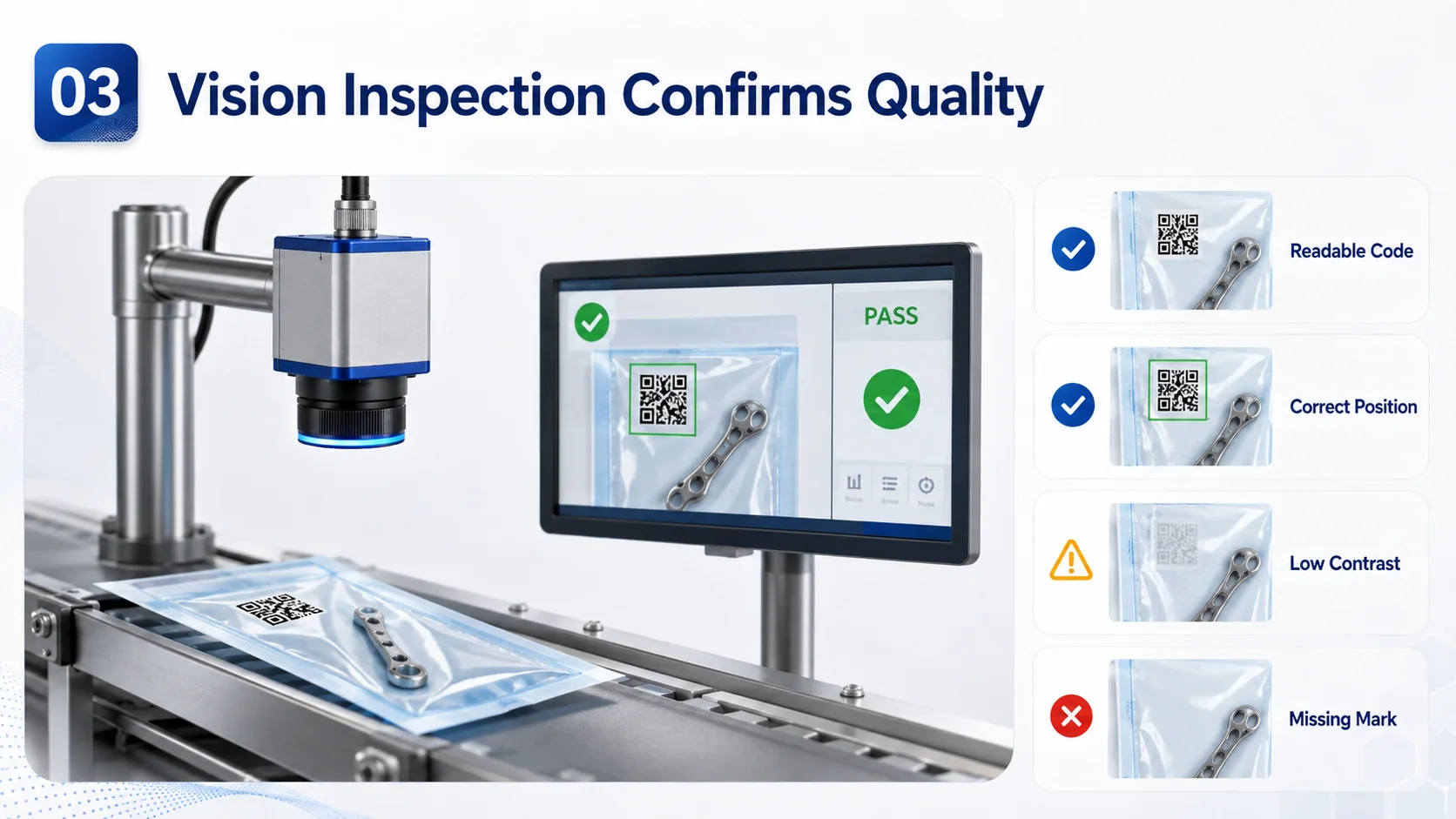
The inspection module may read QR or DataMatrix codes, verify readable text, detect position offset, identify missing marks, wrong marks, duplicate codes, low contrast or blurred content, and bind the result to the current product ID or packaging level.
If the inspection result cannot stay synchronized with product flow, rejection and record storage become unreliable.
Material testing decides the laser route
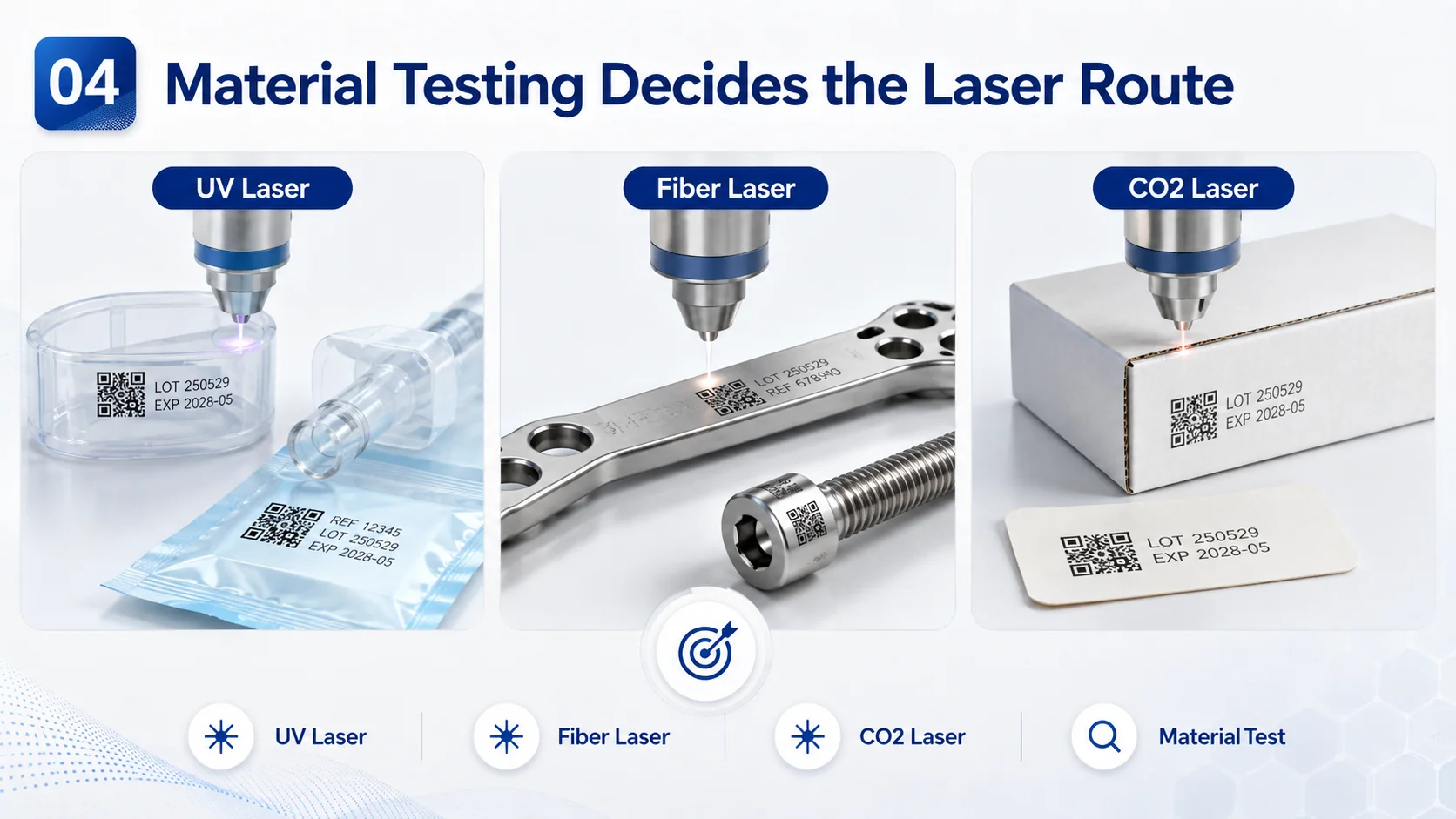
Laser marking can create stable permanent marks on suitable metals, plastics, coated parts and packaging materials, but different materials respond differently to UV, fiber and CO2 lasers. Sample testing must confirm readability, heat effect, contrast and long-term stability.
Interface planning should also include PLC communication, template management, user permissions, logging, abnormal retransmission and offline production strategy.
Practical takeaway
The technical focus is to evaluate marking as part of a complete system. Laser marking supports durable identification, vision inspection confirms quality, MES or ERP provides the data source, and PLC/rejection logic handles real production execution.
Need to evaluate a real production scenario?
Lugsicher can help review materials, marking targets, line speed, vision inspection and data feedback requirements before equipment selection.