
Why One-Item-One-Code Projects Are Not Pure Software Projects
Technical Articles
Why One-Item-One-Code Projects Are Not Pure Software Projects
One-item-one-code traceability depends on front-end marking, reading, inspection and line control, not only on MES, ERP or database functions.
In one-item-one-code projects, software functions are usually discussed first: code rules, master data, MES and ERP interfaces, traceability databases and reporting. From an engineering point of view, the platform is only part of the system. Data quality starts at the front-end marking process.
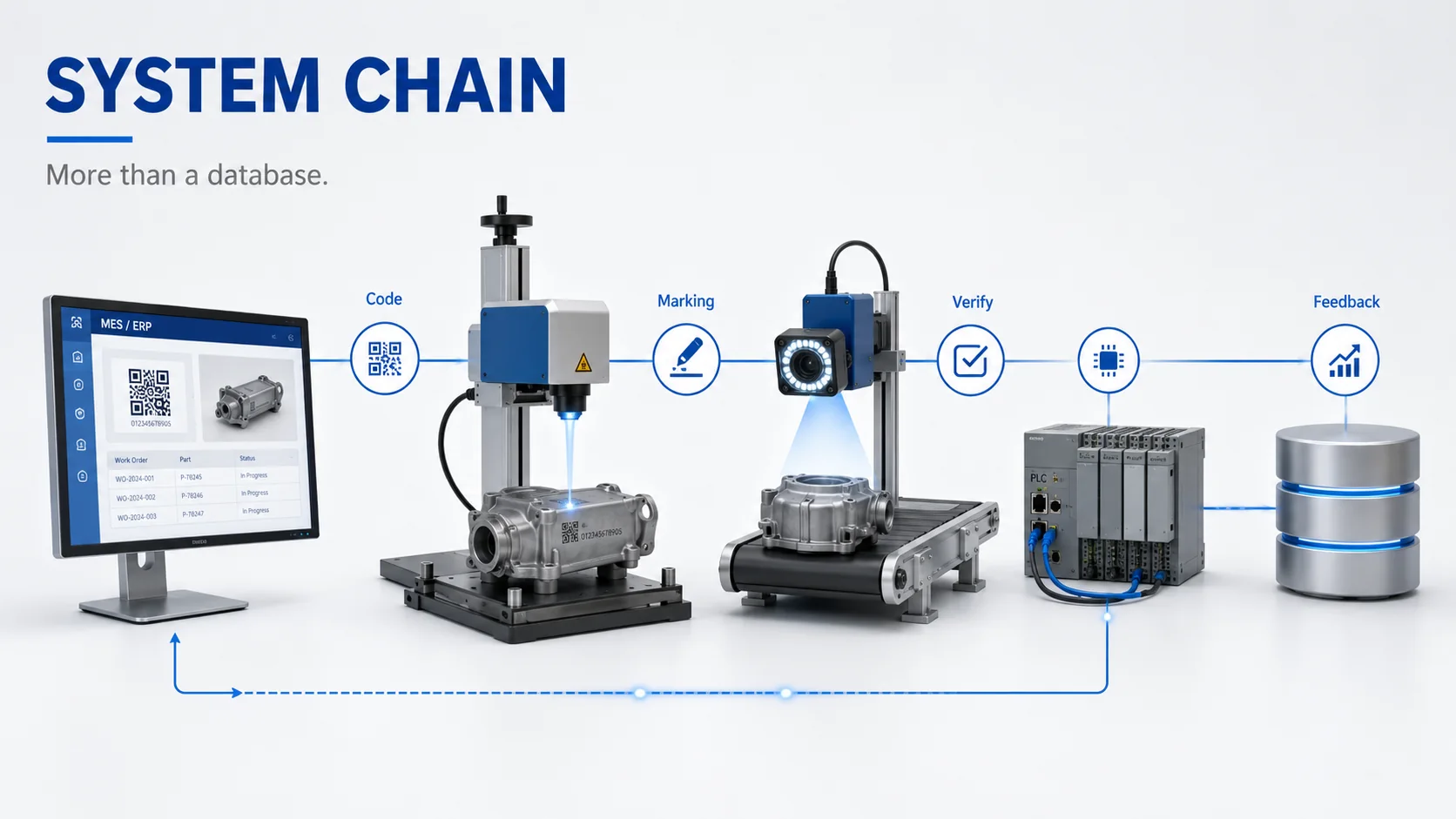
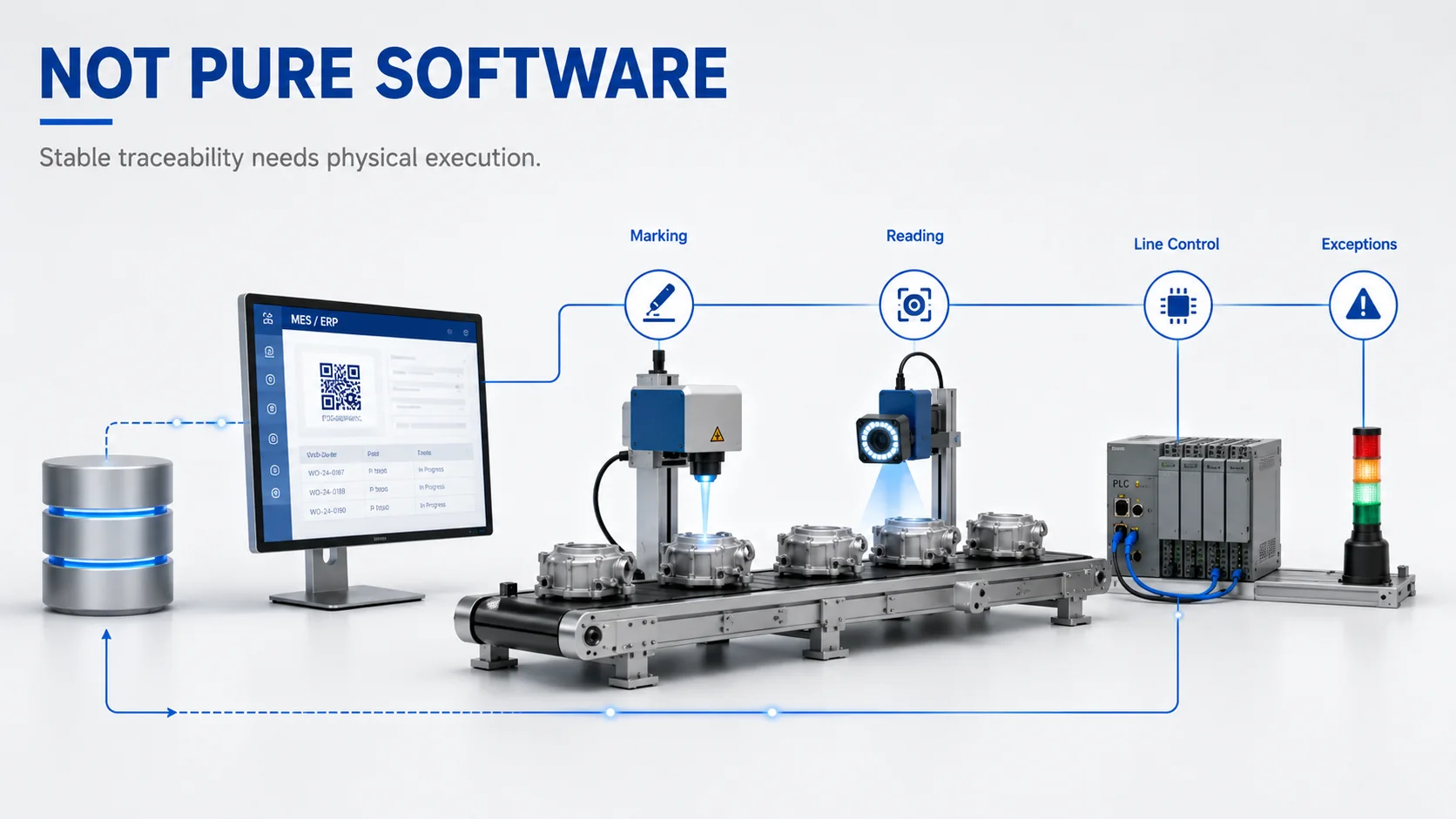
A typical system chain has more than a database
A complete project includes code generation, marking execution, online verification, line-speed control and data feedback. The code may come from orders, batches, serial numbers or product master data. Execution may be laser marking, label printing, print-and-apply labeling or another coding method.
Online verification then checks the printed or marked content using code readers, vision inspection, OCR or OCV. PLC signals, encoders, buffers, rejection mechanisms and alarms keep the physical product synchronized with the digital record.
Data validity comes from front-end verification
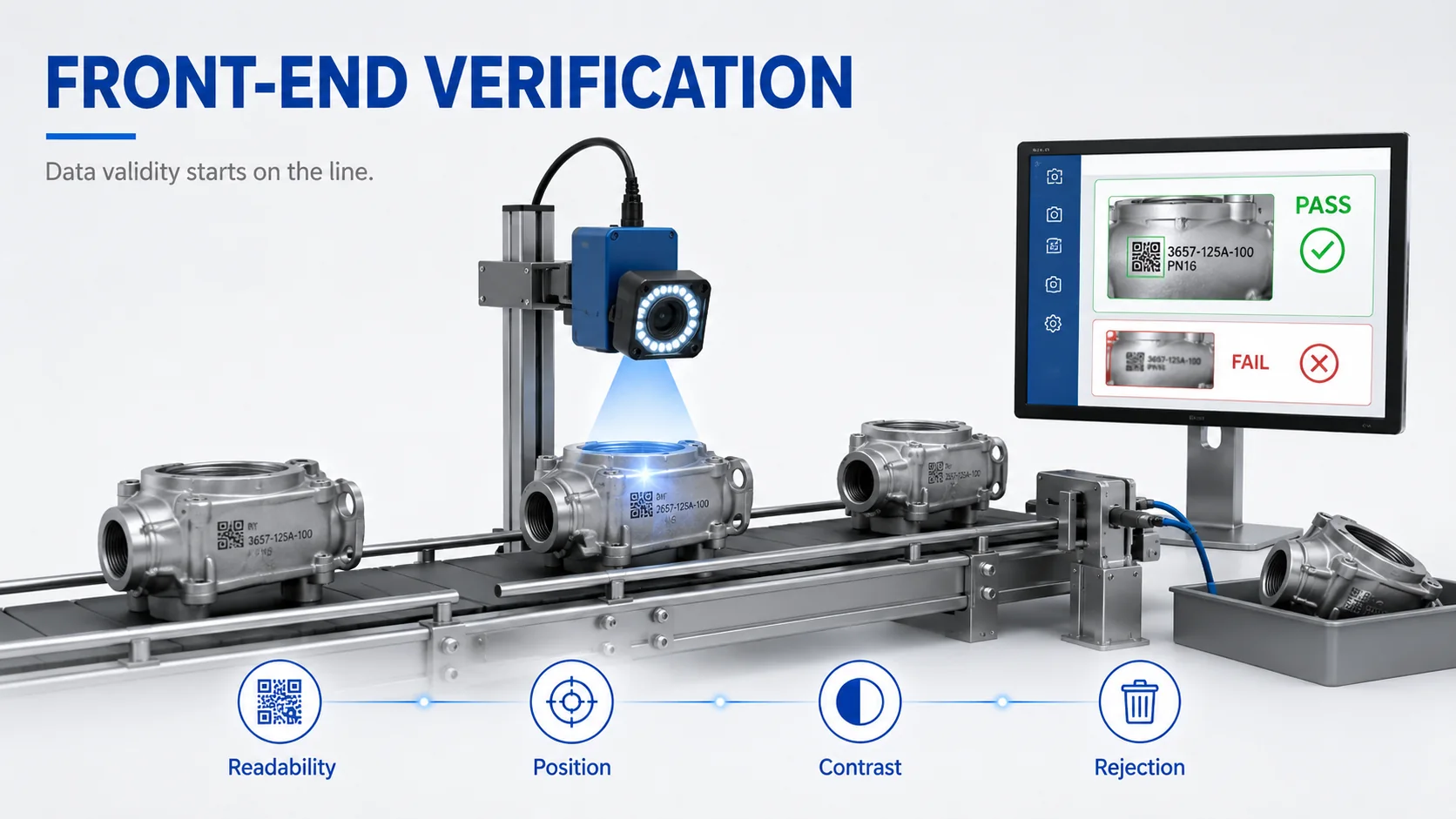
Code generation only proves that the system assigned a value. It does not prove that the value was correctly marked, readable, positioned correctly or attached to the right product.
If the system ignores marking contrast, label position, read rate, trigger stability and rejection timing, it may show complete software data while the real production line remains unstable.
Marking technology must fit the carrier
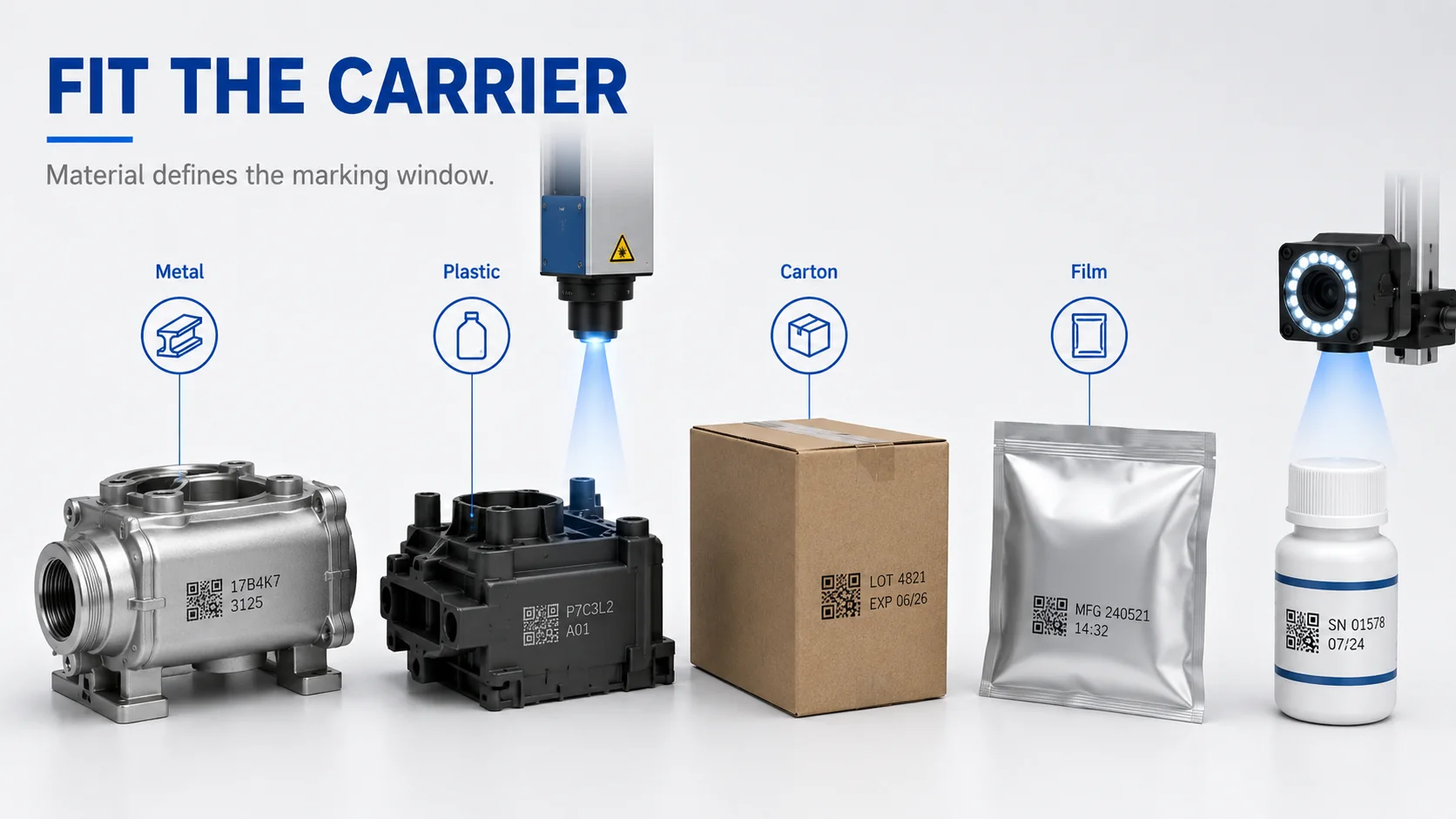
Different carriers create different risks. Metal parts, plastic housings, cartons, films, bottles and pallets require different marking windows and verification logic. A QR code that is readable on one material may become unreliable after a supplier batch change or surface treatment change.
For this reason, code content, mark size, readable area, camera position and rejection logic should be validated together rather than designed as separate tasks.
Traceability is a closed-loop project
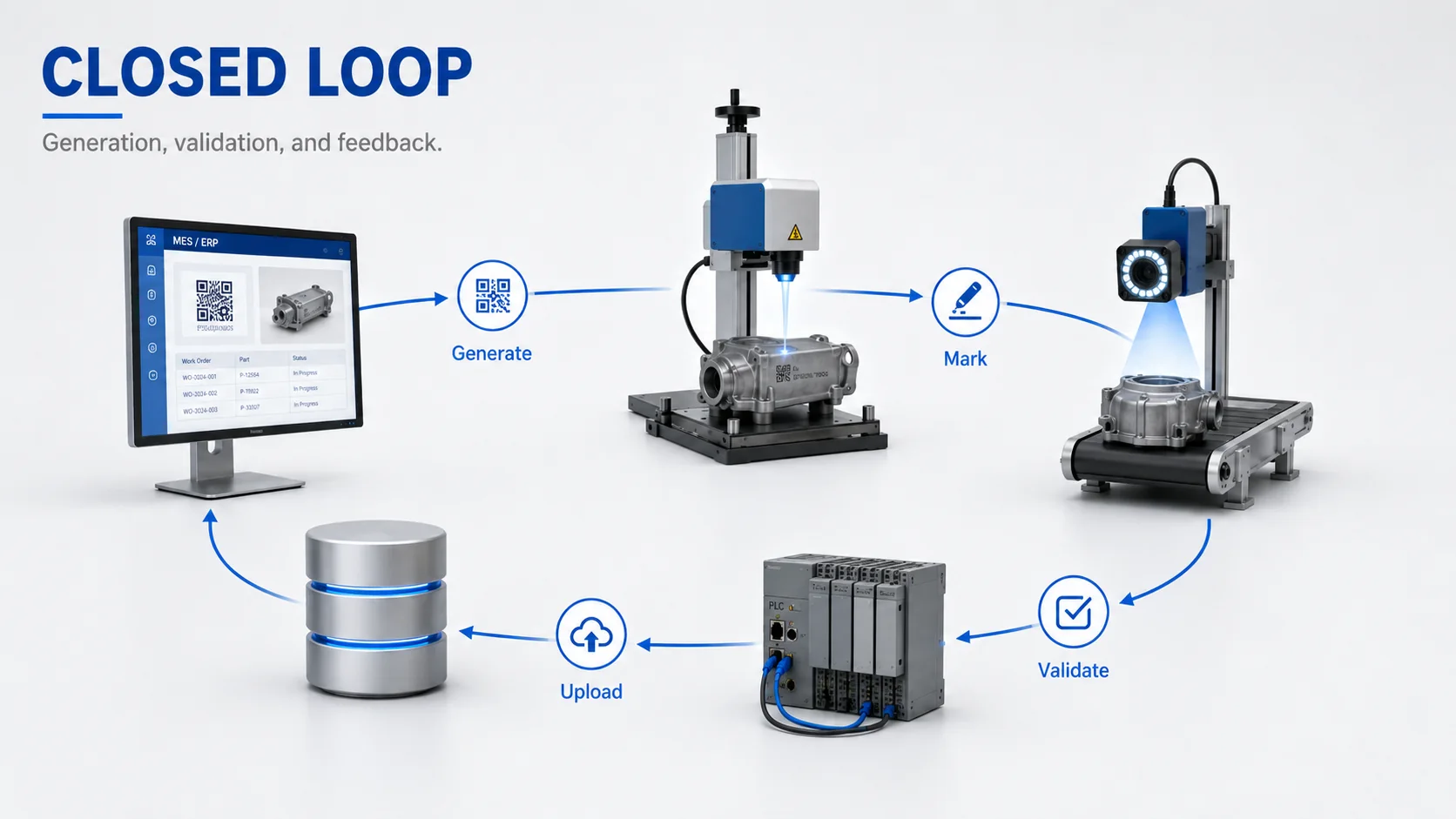
A one-item-one-code project becomes useful only when generation, execution, reading, validation, exception handling and data upload form one closed loop. Missing any of these links creates a gap between the product and its digital record.
The best project sequence is to define the physical coding process and verification logic at the same time as the software interface.
Practical takeaway
A traceability platform can manage rules, but it cannot guarantee physical execution. Stable one-item-one-code implementation requires reliable marking, readable codes, synchronized line control, inspection and exception handling.
Need to evaluate a real production scenario?
Lugsicher can help review materials, marking targets, line speed, vision inspection and data feedback requirements before equipment selection.