
Online Headspace Oxygen Inspection on Pharmaceutical Packaging Lines: Position, Speed, Data and Traceability
Technical Articles
Online Headspace Oxygen Inspection on Pharmaceutical Packaging Lines: Position, Speed, Data and Traceability
Headspace oxygen inspection becomes valuable when it is integrated with line position, product handling, PLC/MES interfaces, abnormal handling and traceability data.
From an engineering integration perspective, the challenge of adding headspace oxygen inspection to a pharmaceutical packaging line is not only whether oxygen content can be measured. The real question is whether the inspection can be inserted into a continuous production process in a stable and traceable way.
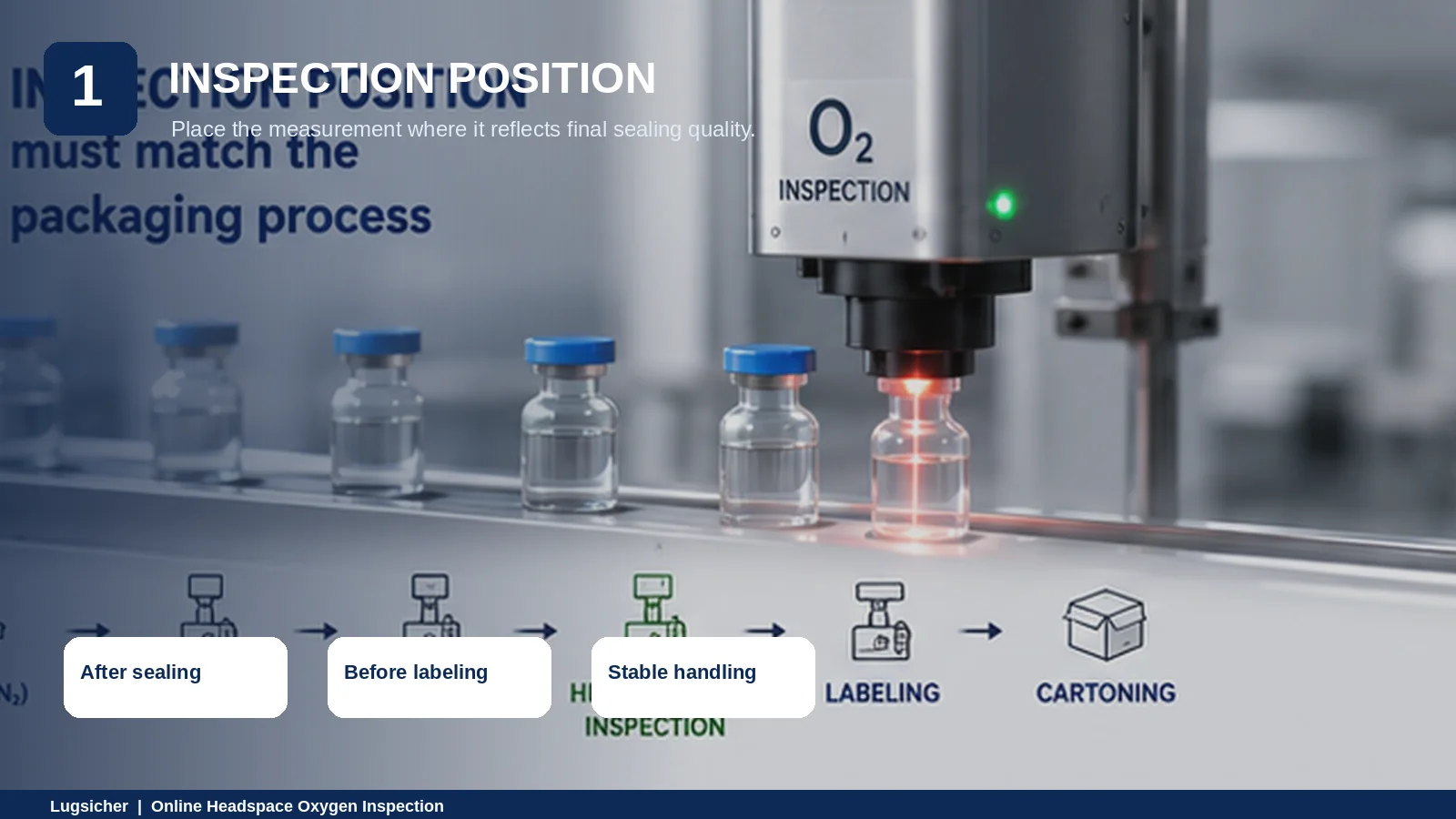
Inspection position must match the packaging process
For ampoules, vials and other sealed containers, headspace oxygen level can reflect nitrogen filling, vacuum stability, sealing status and potential leakage risk. The inspection point should be selected according to the actual packaging sequence and available handling space.
If the inspection position is too early, the result may not reflect final sealing quality. If it is too late, the line may have fewer options for rejection, recheck or process correction.
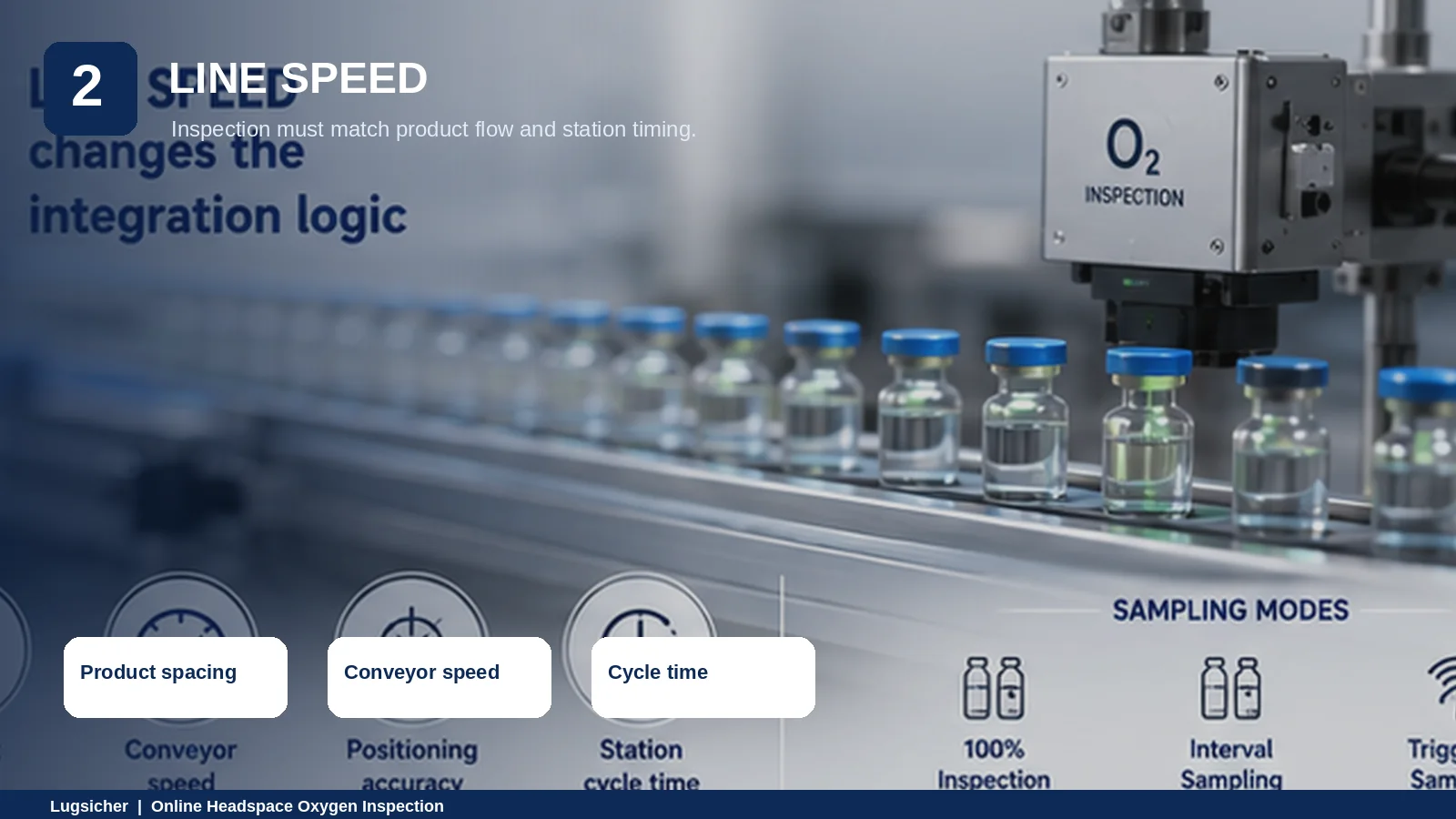
Line speed changes the integration logic
Offline sampling can tolerate manual handling and longer measurement time. Online inspection must match product spacing, conveyor speed, positioning accuracy and station cycle time.
Before integration, the project should define whether the inspection is full inspection, interval sampling or triggered sampling. Each mode requires different mechanical handling, buffer design and data interpretation.
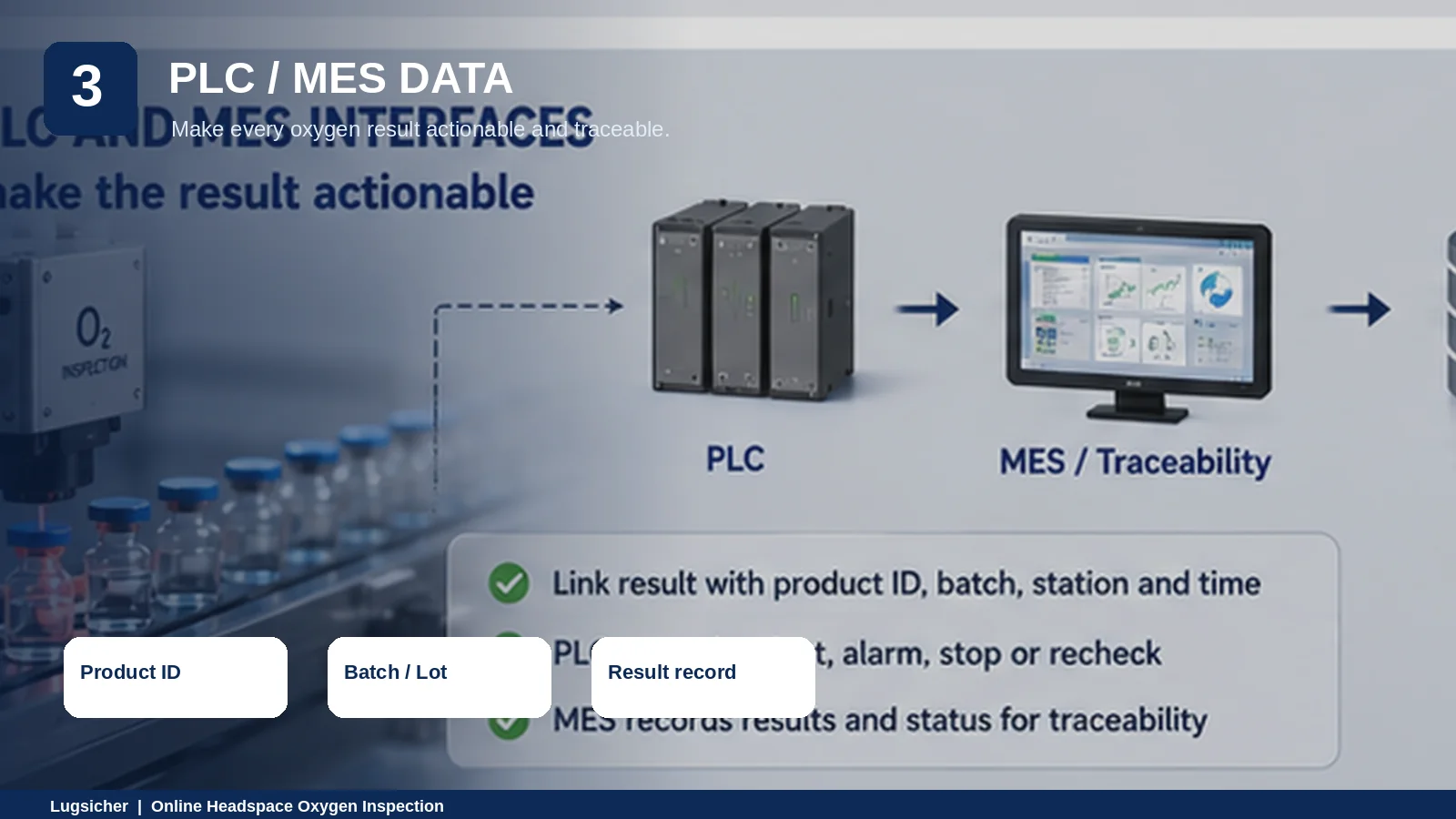
PLC and MES interfaces make the result actionable
The inspection result should not remain only inside the measuring device. It should be linked with product ID, batch, station, time and handling action. PLC logic may control reject, alarm, stop or recheck.
MES or traceability platforms should receive valid result records, abnormal records and status information. This turns oxygen inspection into a quality data node instead of a standalone test.
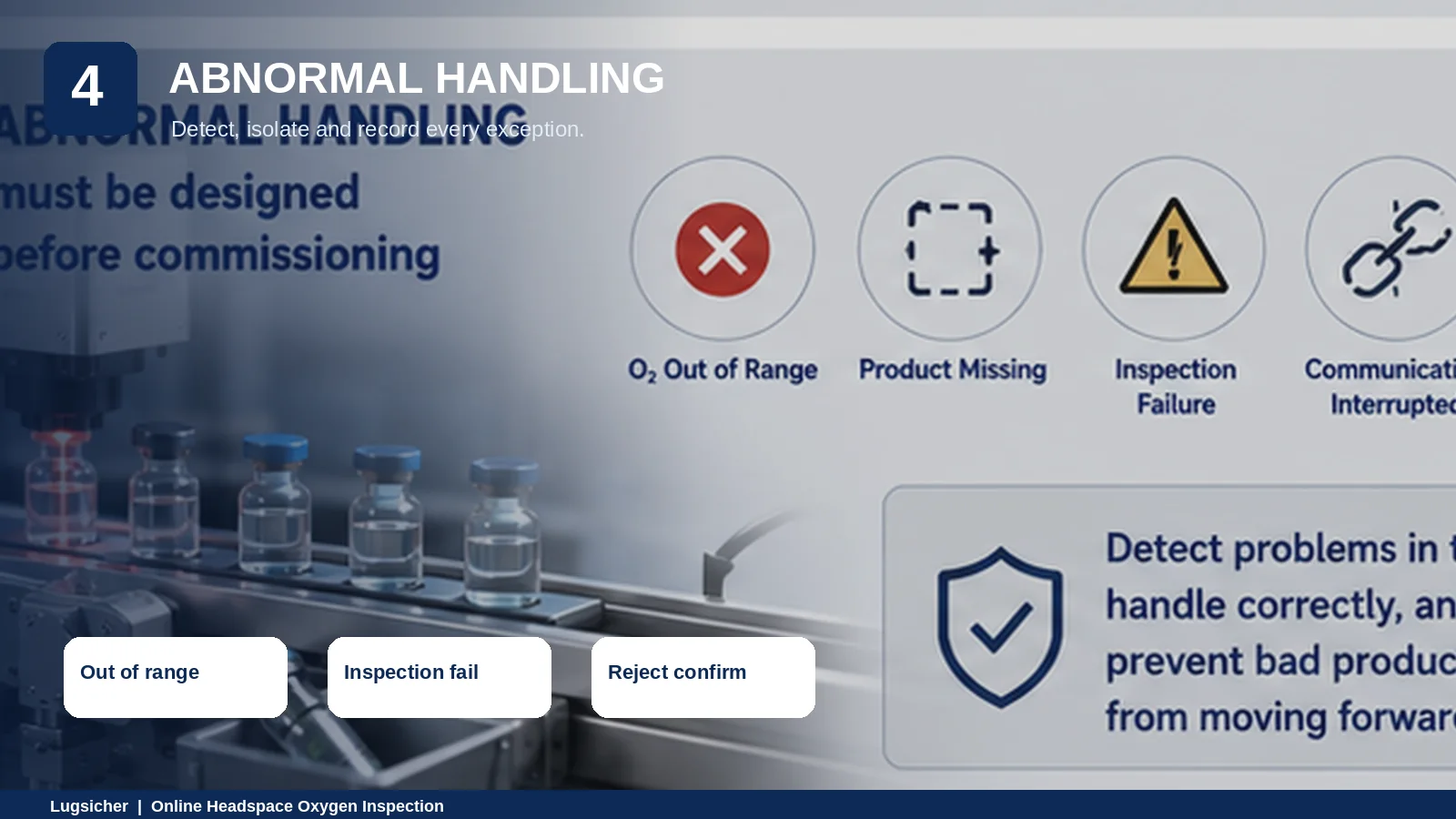
Abnormal handling must be designed before commissioning
Projects should define what happens when oxygen is out of range, when the product is missing, when the inspection fails, when communication is interrupted or when the rejection confirmation is not received.
Without these rules, the inspection station may detect a problem but fail to prevent the abnormal product from entering the next process.
Practical takeaway
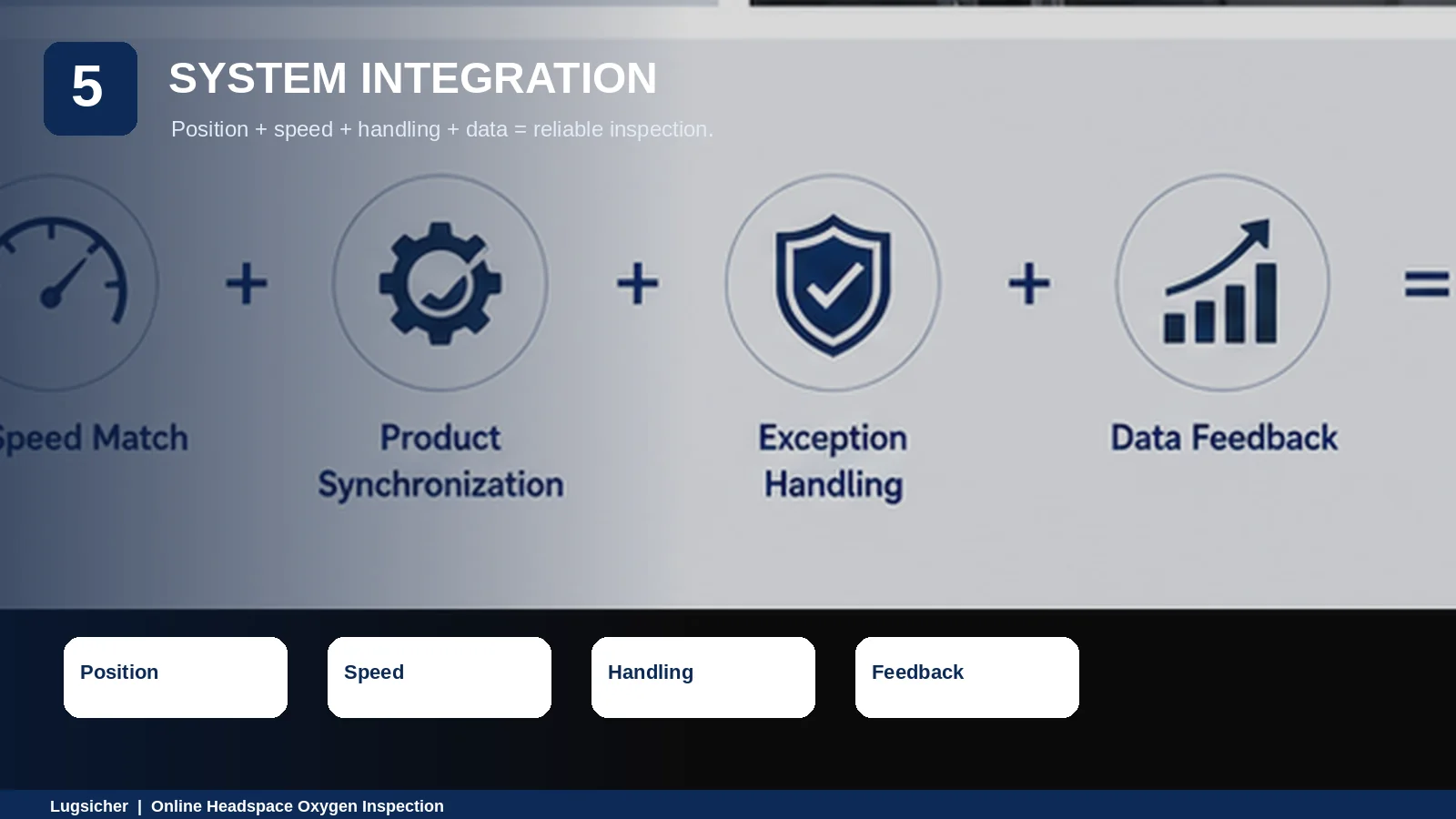
Online headspace oxygen inspection is a system-integration task. Stable value comes from the combination of measuring position, line speed, product synchronization, exception handling and data feedback.
Need to evaluate a real production scenario?
Lugsicher can help review materials, marking targets, line speed, vision inspection and data feedback requirements before equipment selection.