
CO2 Laser Marking for Non-Metal Packaging: Material, Line Speed and Maintenance Boundaries
Technical Articles
CO2 Laser Marking for Non-Metal Packaging: Material, Line Speed and Maintenance Boundaries
CO2 laser marking on non-metal packaging should be evaluated through material response, trigger timing, code readability, smoke handling and maintenance limits.
CO2 laser marking is often used on paper-based packaging, coated surfaces and selected non-metal materials. However, the category name non-metal is not enough to decide whether a system is suitable. The project should be evaluated through material response, line speed, interface triggering and maintenance boundaries.
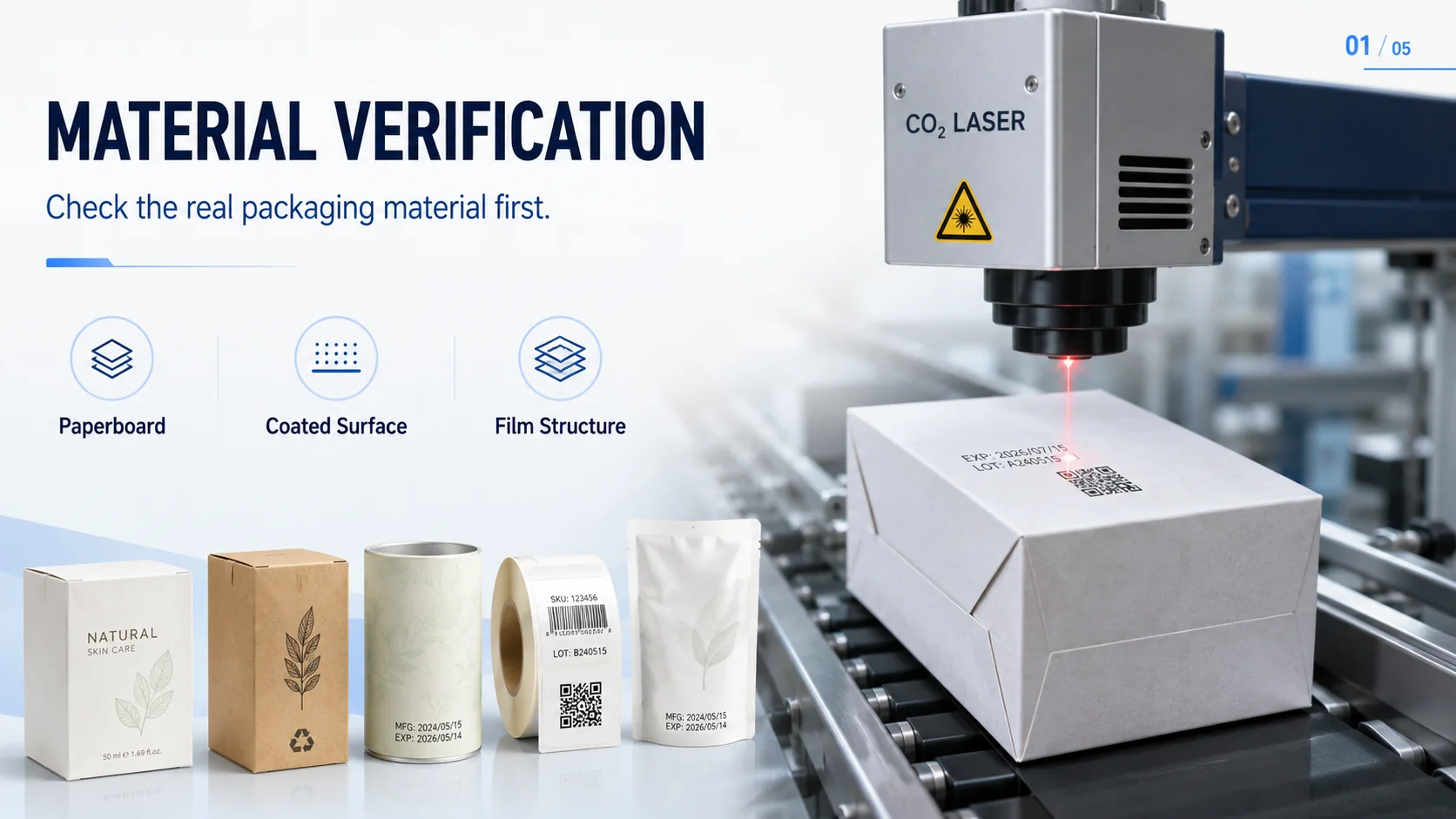
Start with material verification
The first step is to identify the material type, surface coating, film structure, printed layer and target marking area. Paper boxes and card stock can often be tested first, while composite films, thin films and thermal-sensitive materials require closer attention.
The test should check deformation, burn-through, whitening, insufficient contrast and QR-code readability. A visible mark is not the same as a stable industrial code.
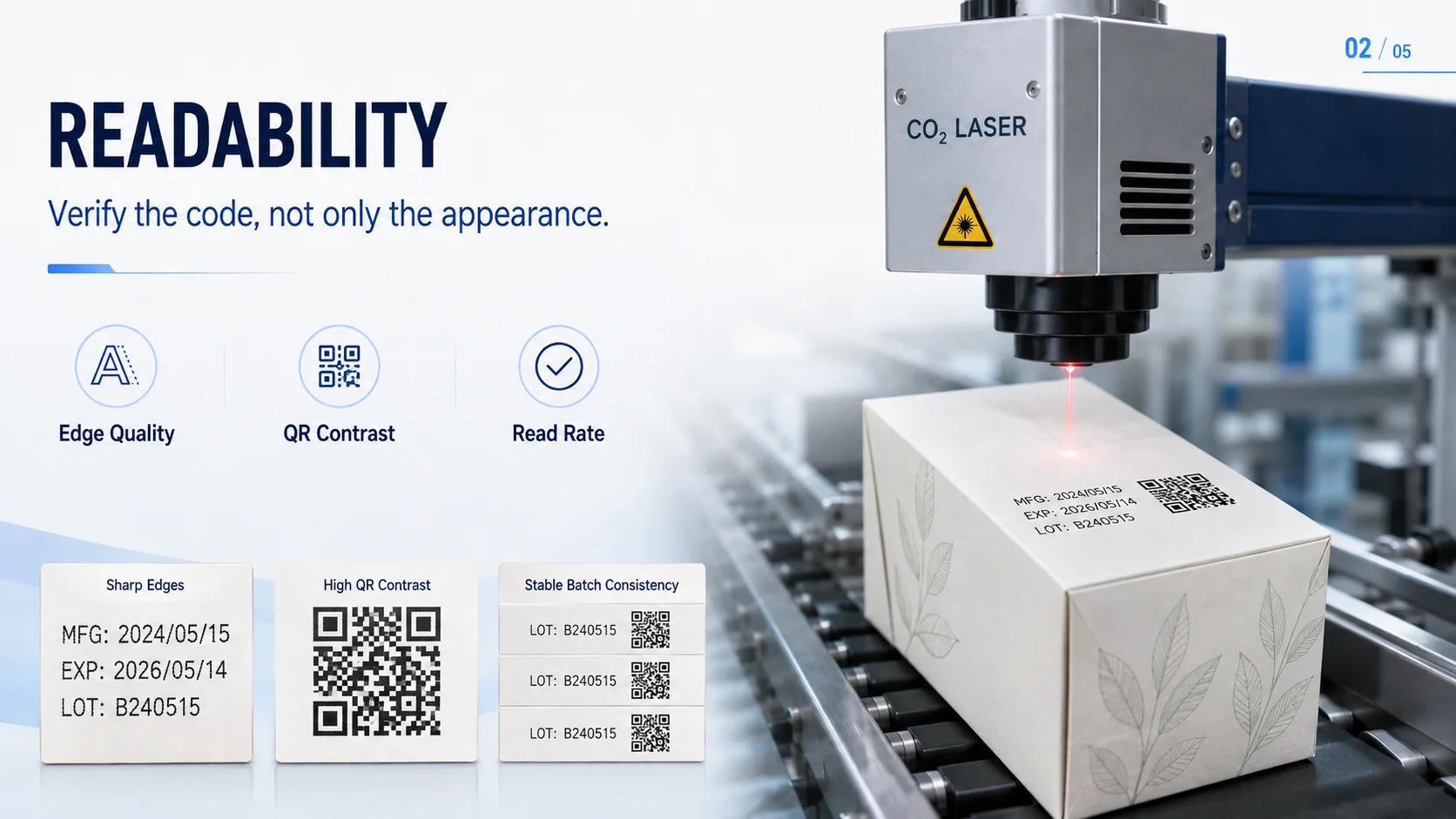
Verify the marking result beyond appearance
Evaluation should include character edge quality, QR-code contrast, read rate, batch consistency and stability during high-speed operation. If the code is part of traceability, the reading device or vision inspection should be tested at the same time.
For packaging lines, the target is not only to mark a date. The result must stay readable when materials, speed and operating conditions change.
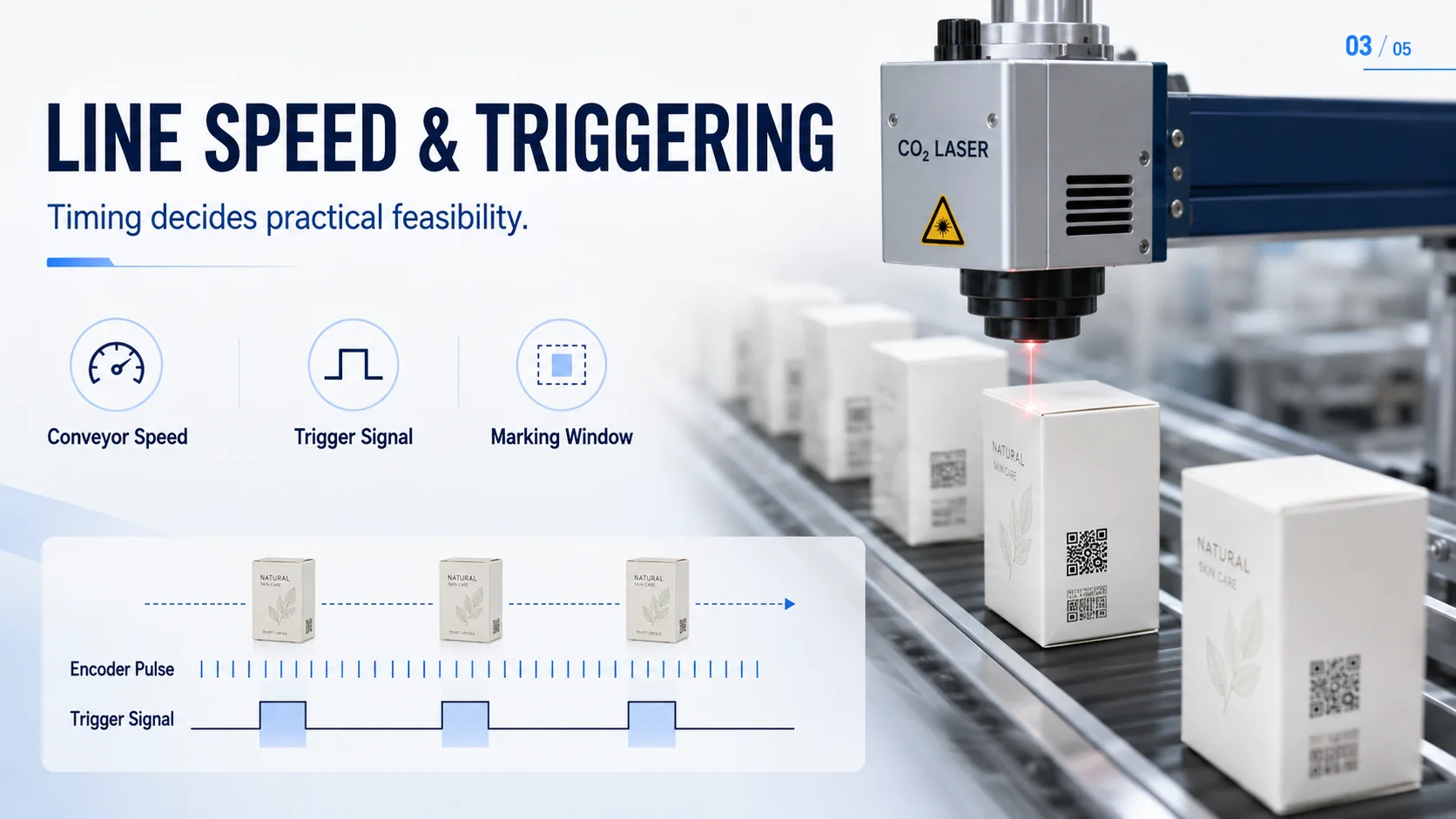
Line speed and triggering decide practical feasibility
The project should confirm conveyor speed, product spacing, trigger-signal source, product positioning stability, encoder synchronization and marking-window length. Poor triggering causes position drift, missed marks, duplicate marks and dragging.
CO2 systems also need proper fume extraction, lens cleaning intervals and maintenance planning. These items affect long-term running cost more than the first sample result.
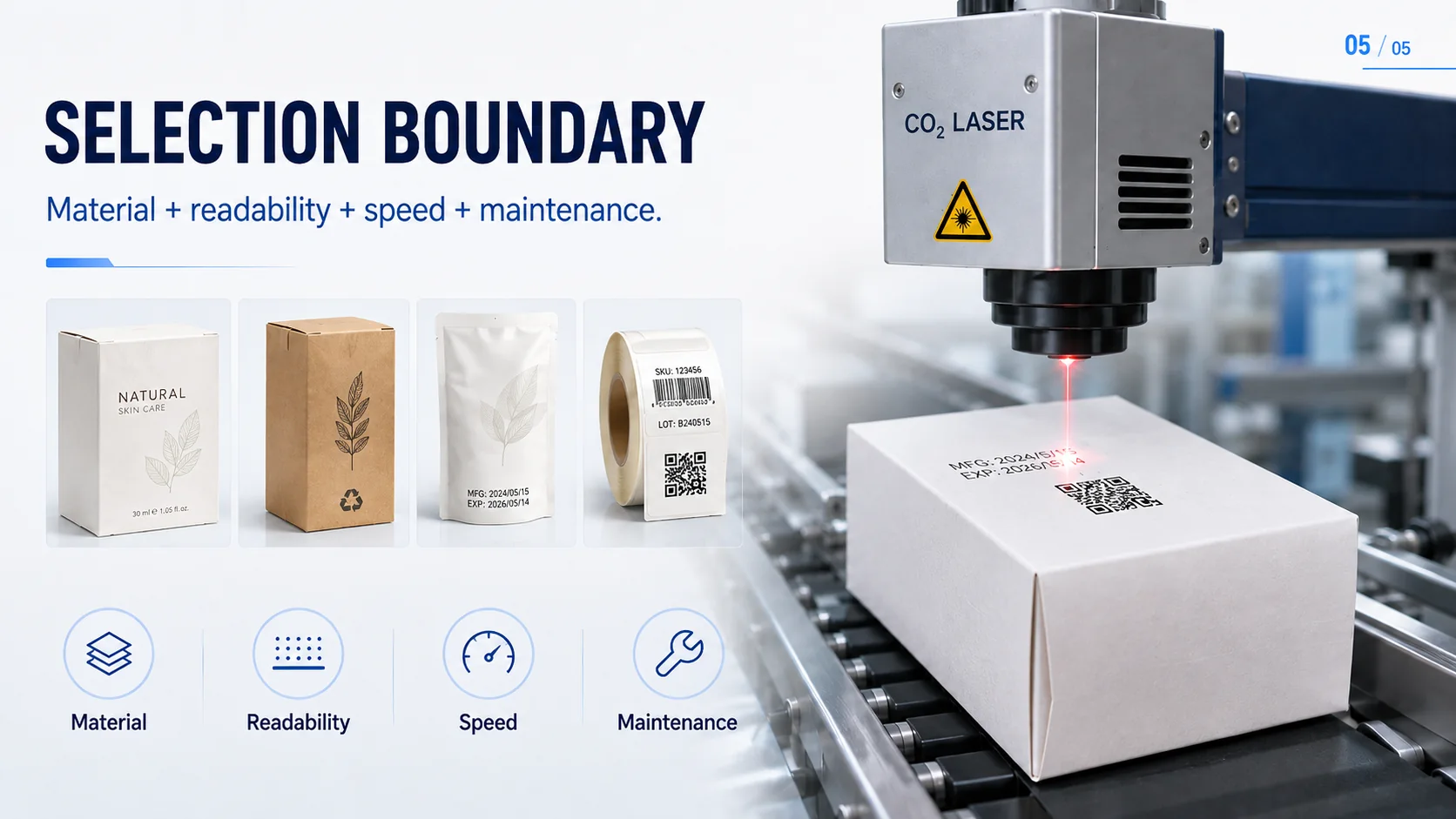
Define the boundary before purchase
A reliable selection process should document suitable materials, unsuitable materials, speed limits, code-size limits, smoke-removal requirements, cleaning intervals and integration signals.
This prevents the equipment from being evaluated only by price or by a single good-looking sample.

Practical takeaway
For non-metal packaging, CO2 laser selection is not a simple material-category decision. It is a combined assessment of material behavior, mark readability, production speed, trigger logic and maintenance boundary.
Need to evaluate a real production scenario?
Lugsicher can help review materials, marking targets, line speed, vision inspection and data feedback requirements before equipment selection.