
Why UV Laser Marking Is Better Suited to Sensitive Materials and High-Density QR Codes
Technical Articles
Why UV Laser Marking Is Better Suited to Sensitive Materials and High-Density QR Codes
UV laser marking is often useful for films, coatings, light plastics, electronics housings and medical packaging where low heat influence and small code readability matter.
In industrial marking, the question is not only whether a mark can be created. For films, coatings, light plastics, electronics housings and medical packaging, the more important questions are whether the material is damaged, whether a high-density QR code remains readable and whether the process can match line speed.
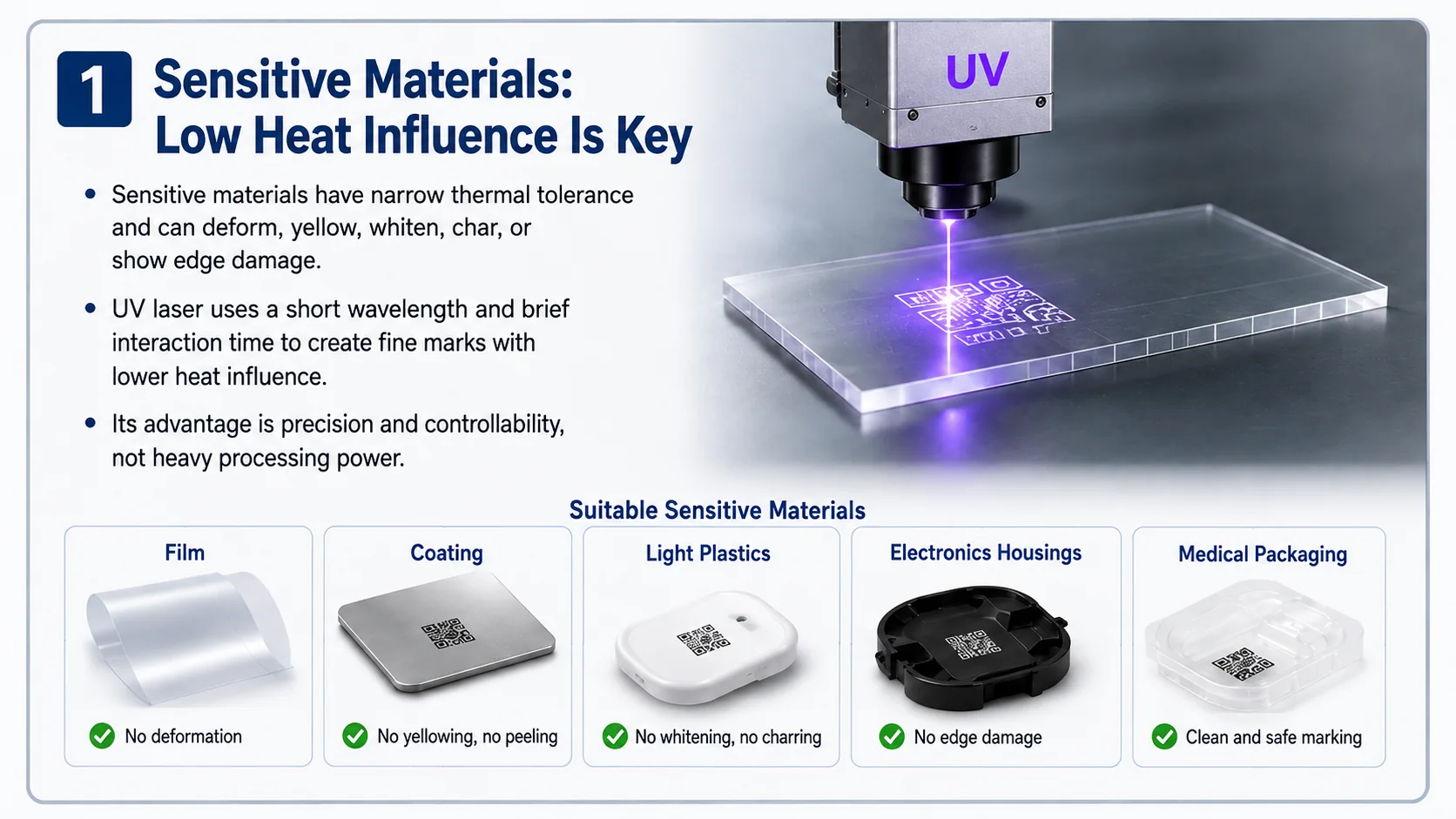
Sensitive materials require low heat influence
Sensitive materials have narrow thermal tolerance. Films may deform, coatings may yellow or peel, transparent and light plastics may whiten or char, and electronic housings may show visible edge damage.
UV laser is often selected because it can create fine marks with lower heat influence than many high-thermal processes. The advantage is precision rather than heavy processing power.
High-density codes need stable edge quality
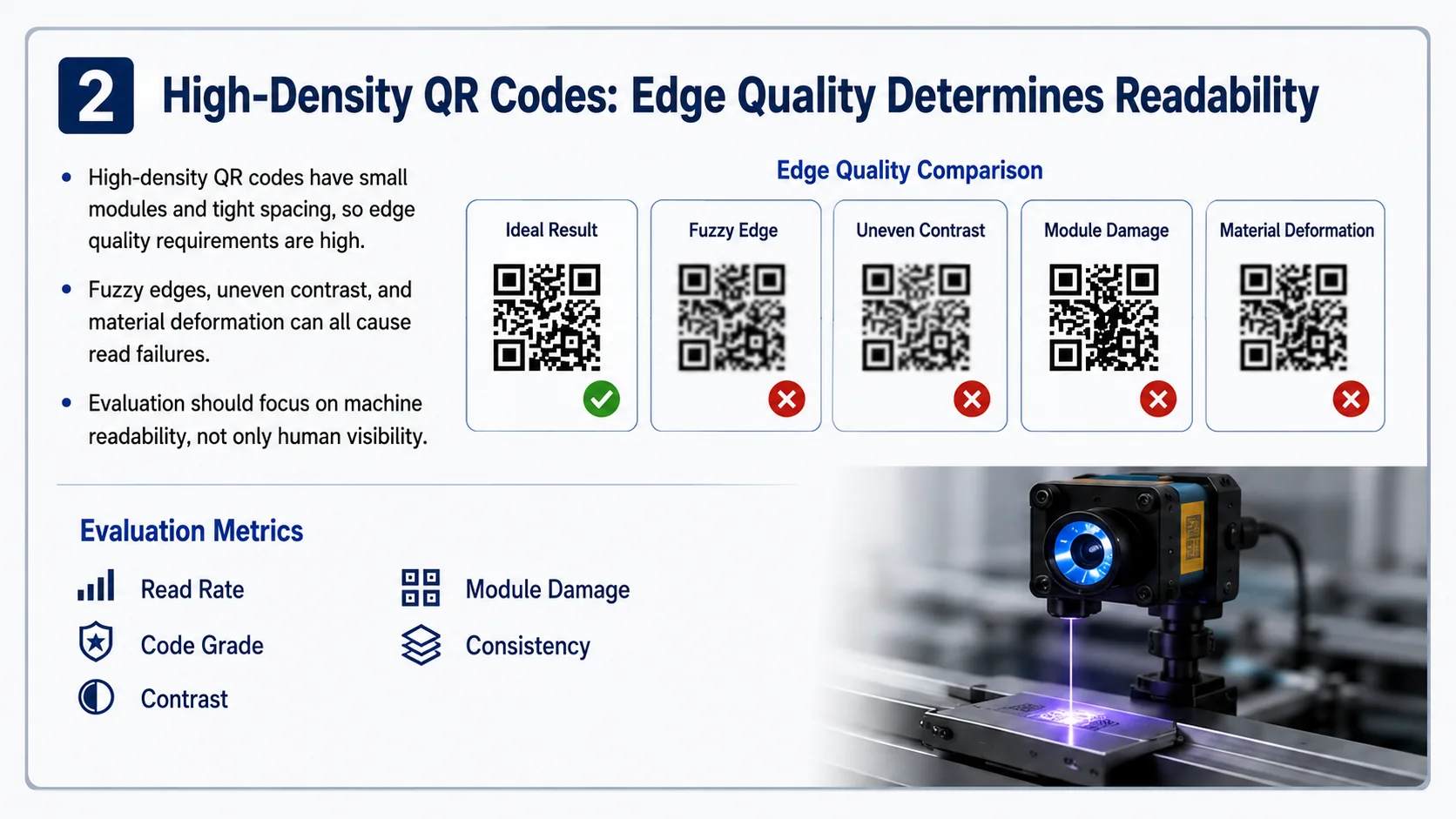
A high-density QR or DataMatrix code contains small modules and tight spacing. If edges become fuzzy, contrast becomes uneven or the material deforms, the code may be visible but not reliably readable.
The evaluation should include read rate, code grade, contrast, module damage and consistency over multiple samples.
Process window is more important than one sample
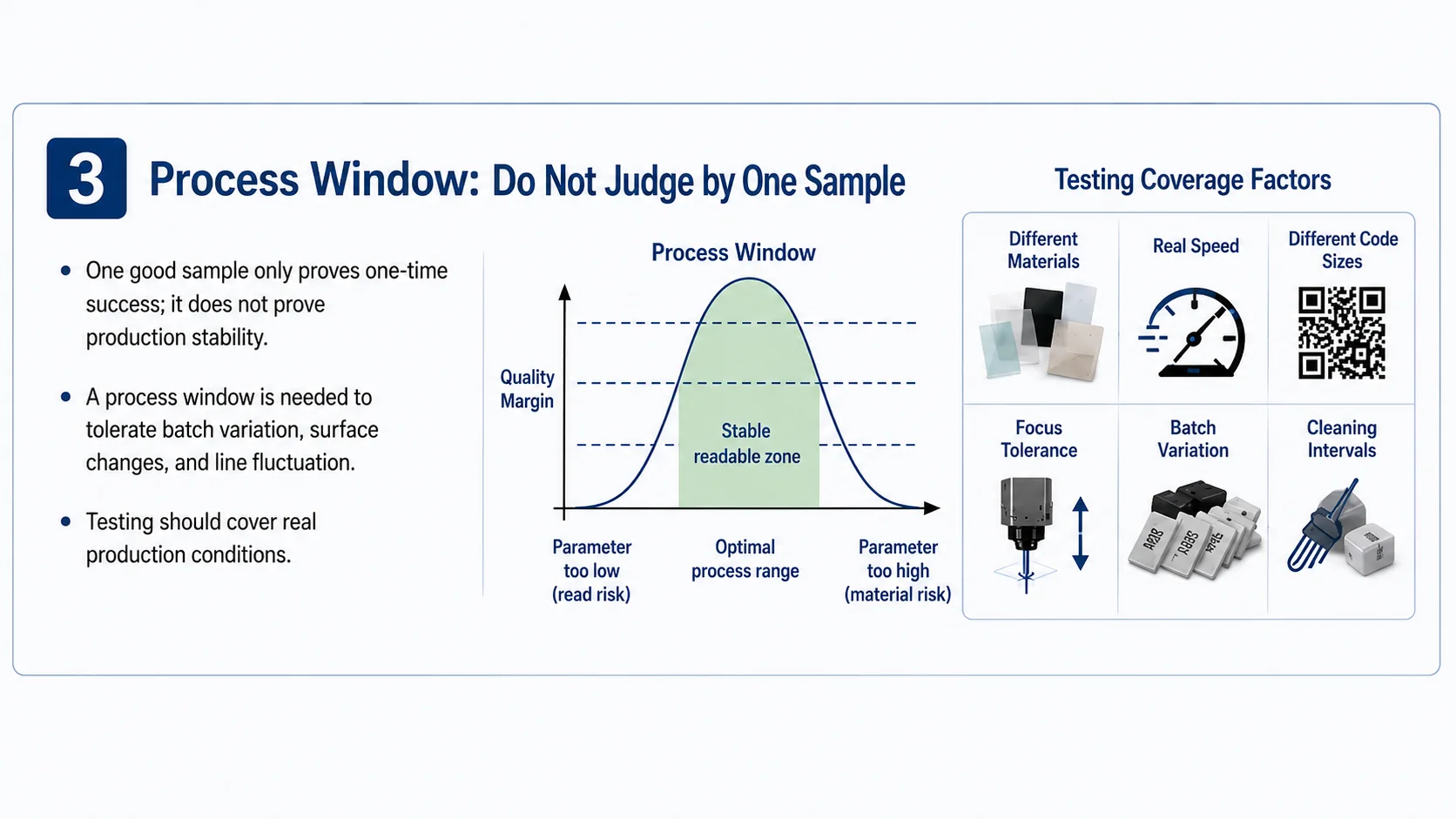
A good sample proves only that one parameter set worked once. For production, the project needs a process window that tolerates batch variation, surface condition changes and normal line fluctuation.
Testing should include different materials, real speed, code size, focus tolerance and cleaning intervals.
System integration keeps the code useful
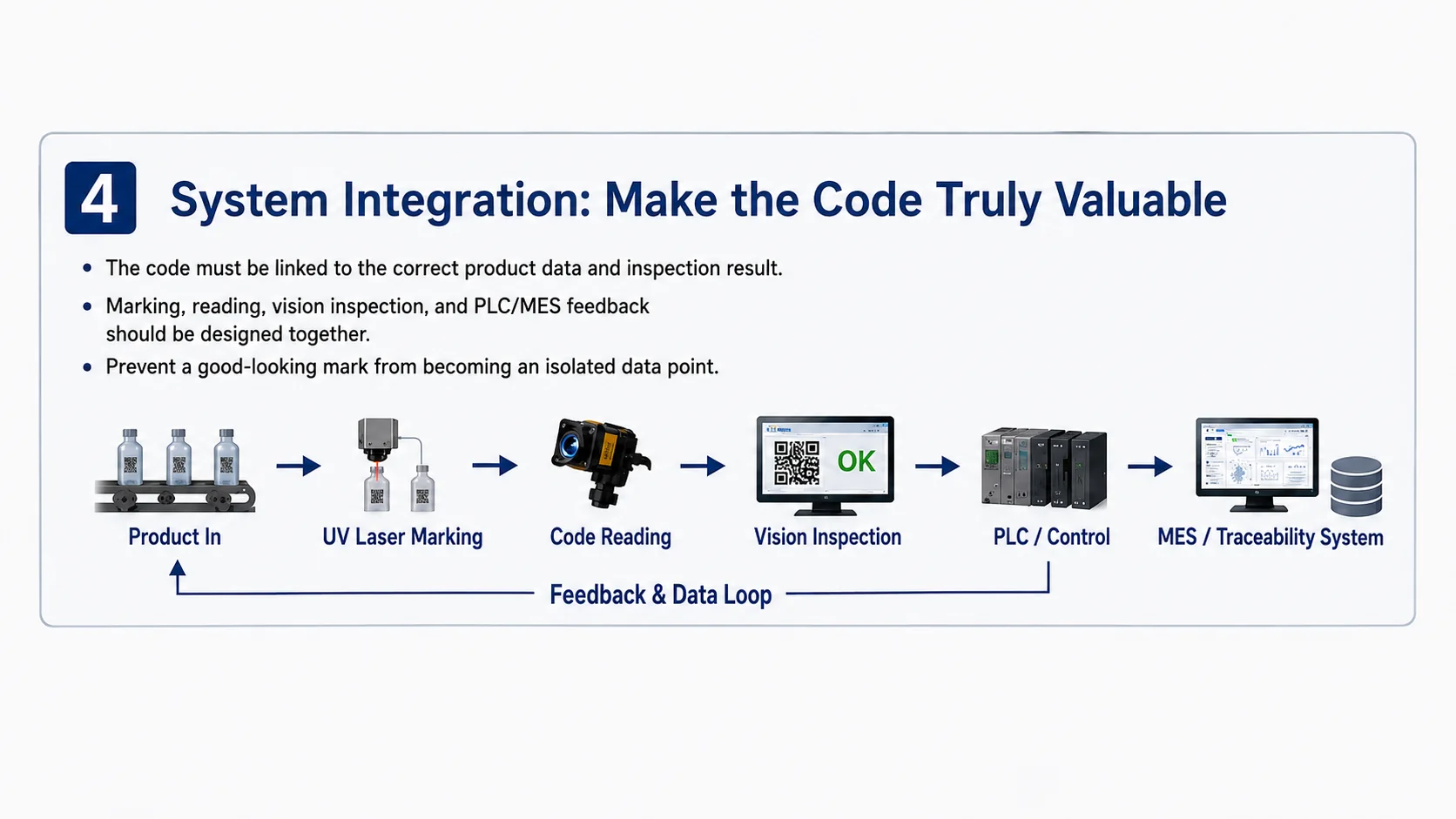
For traceability, the code must be linked to the correct product data and inspection result. The marking station, reader, vision inspection and PLC/MES feedback should be designed together.
This prevents a visually good mark from becoming a disconnected data point.
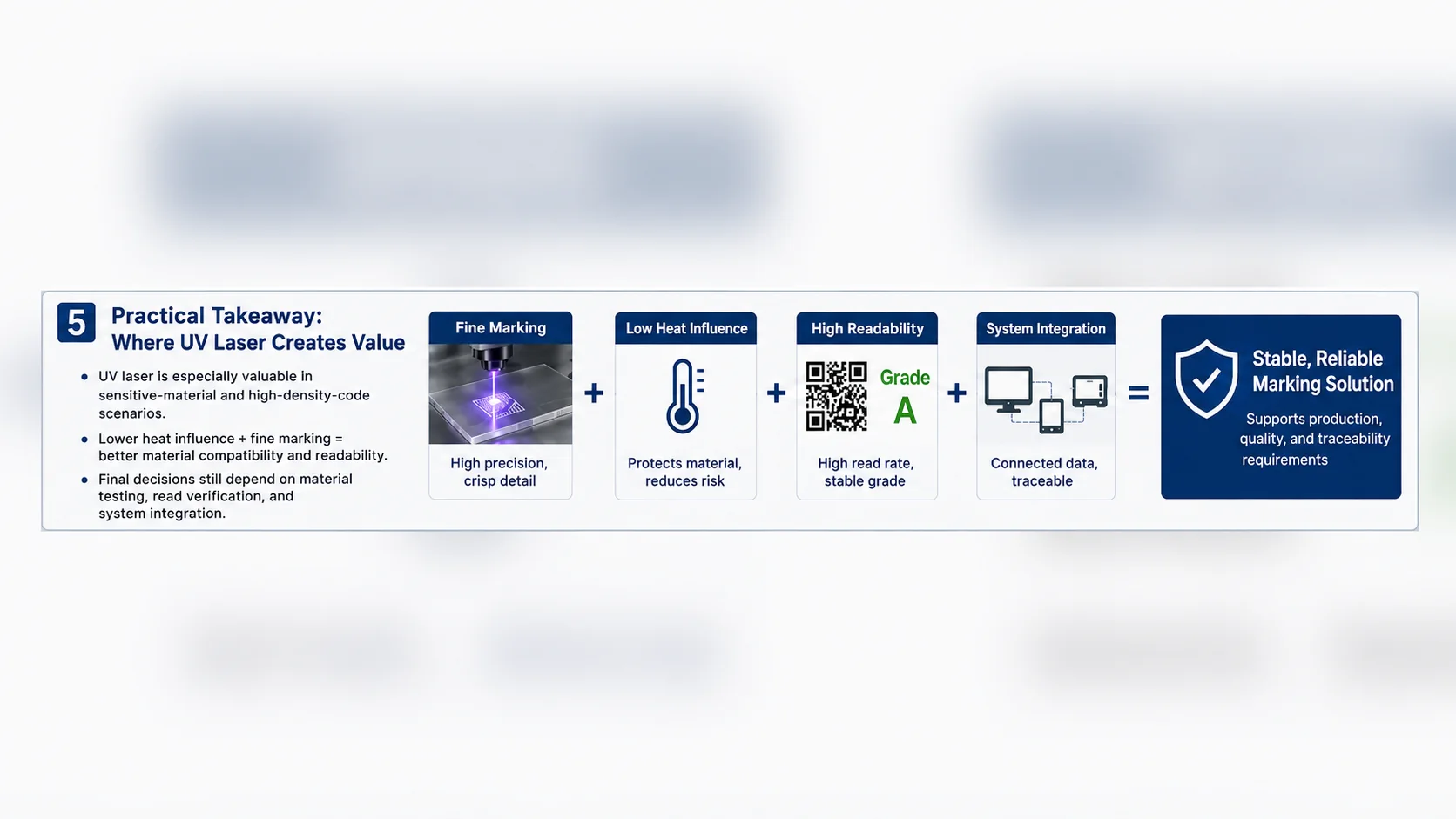
Practical takeaway
UV laser is valuable in sensitive-material and high-density-code scenarios because it supports fine marking with lower heat influence. The final decision still depends on material testing, code readability and system integration.
Need to evaluate a real production scenario?
Lugsicher can help review materials, marking targets, line speed, vision inspection and data feedback requirements before equipment selection.