
Laser Marking Material Testing: Why a Good Sample Does Not Prove Mass Production Stability
Technical Articles
Laser Marking Material Testing: Why a Good Sample Does Not Prove Mass Production Stability
Material testing should validate process window, line speed, batch variation, readability and system integration, not only the best-looking sample.
Material testing is one of the most visible steps before selecting laser marking equipment. After a supplier produces a good-looking sample, purchasing teams may judge the solution by character clarity, QR-code contrast, position accuracy and surface appearance. This is useful, but it is not enough.
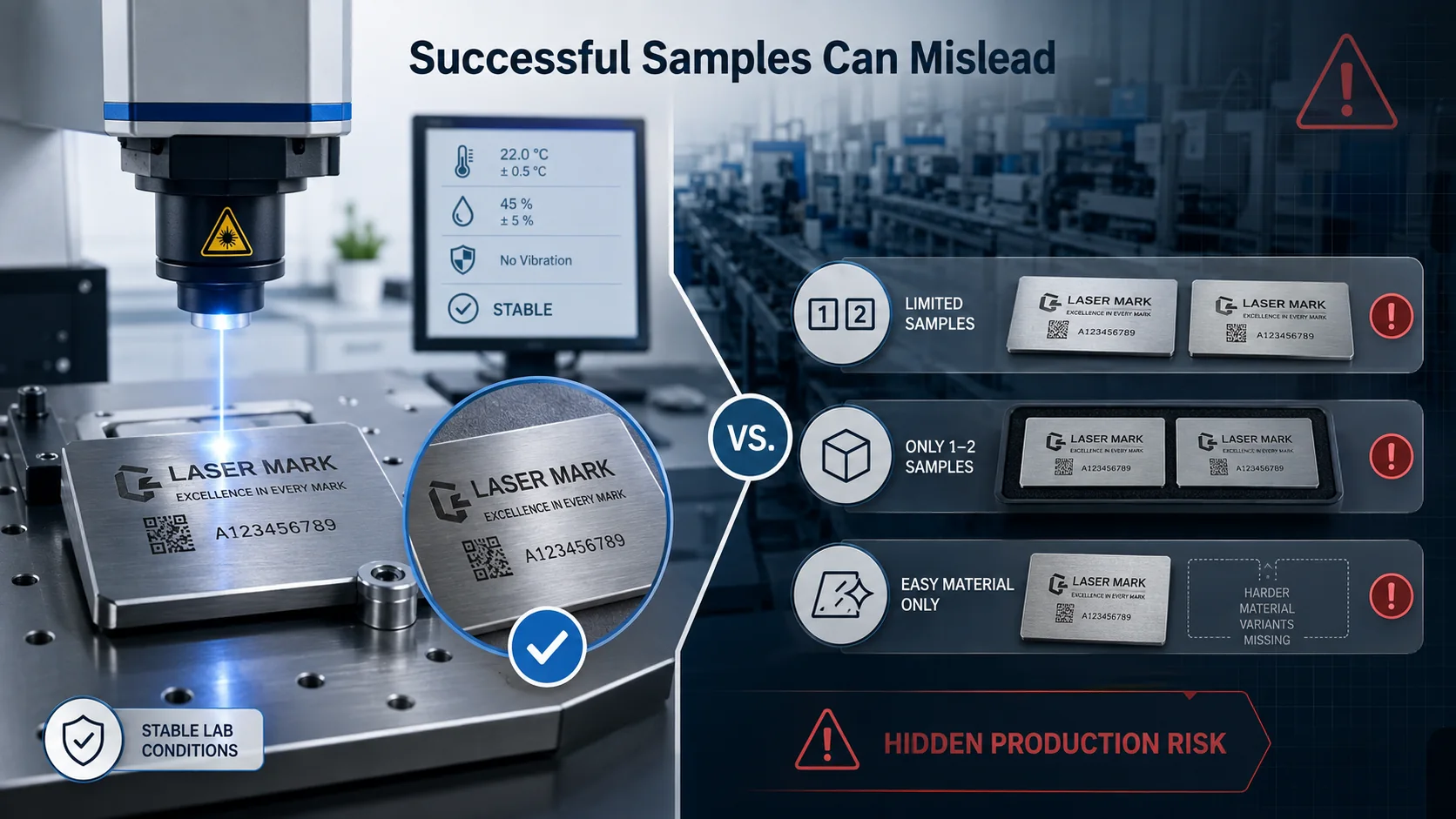
Three types of successful samples can be misleading
The first type works only under ideal laboratory conditions: stable material, adjustable speed, repeated parameter optimization and no real line vibration. The second type is based on only one or a few samples, which says little about continuous operation.
The third type uses only the easiest material. Real projects often include different colors, transparency, coatings, roughness and supplier batches. Testing only the easiest sample shows the best-case limit, not the production boundary.
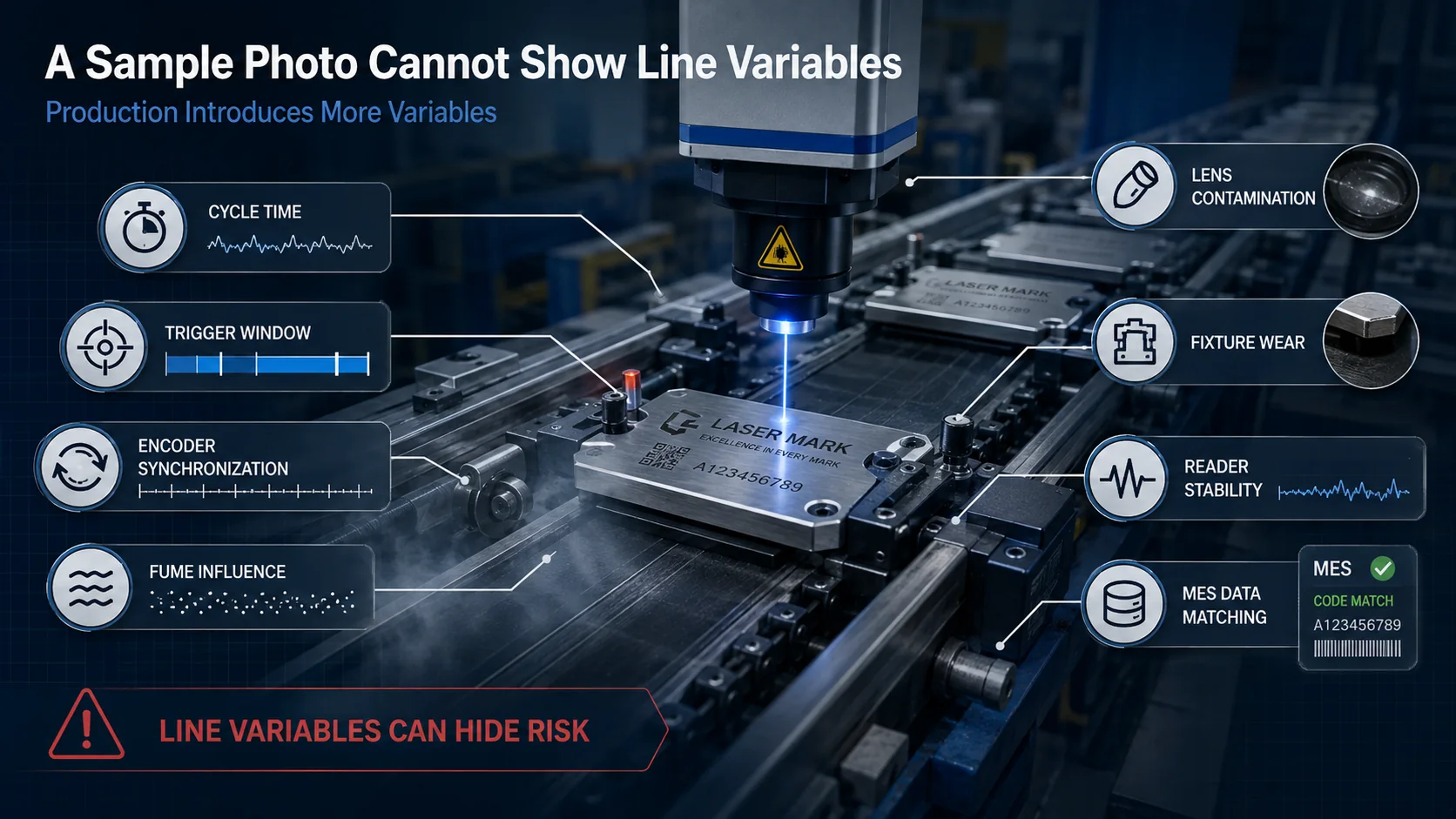
A sample photo cannot show line variables
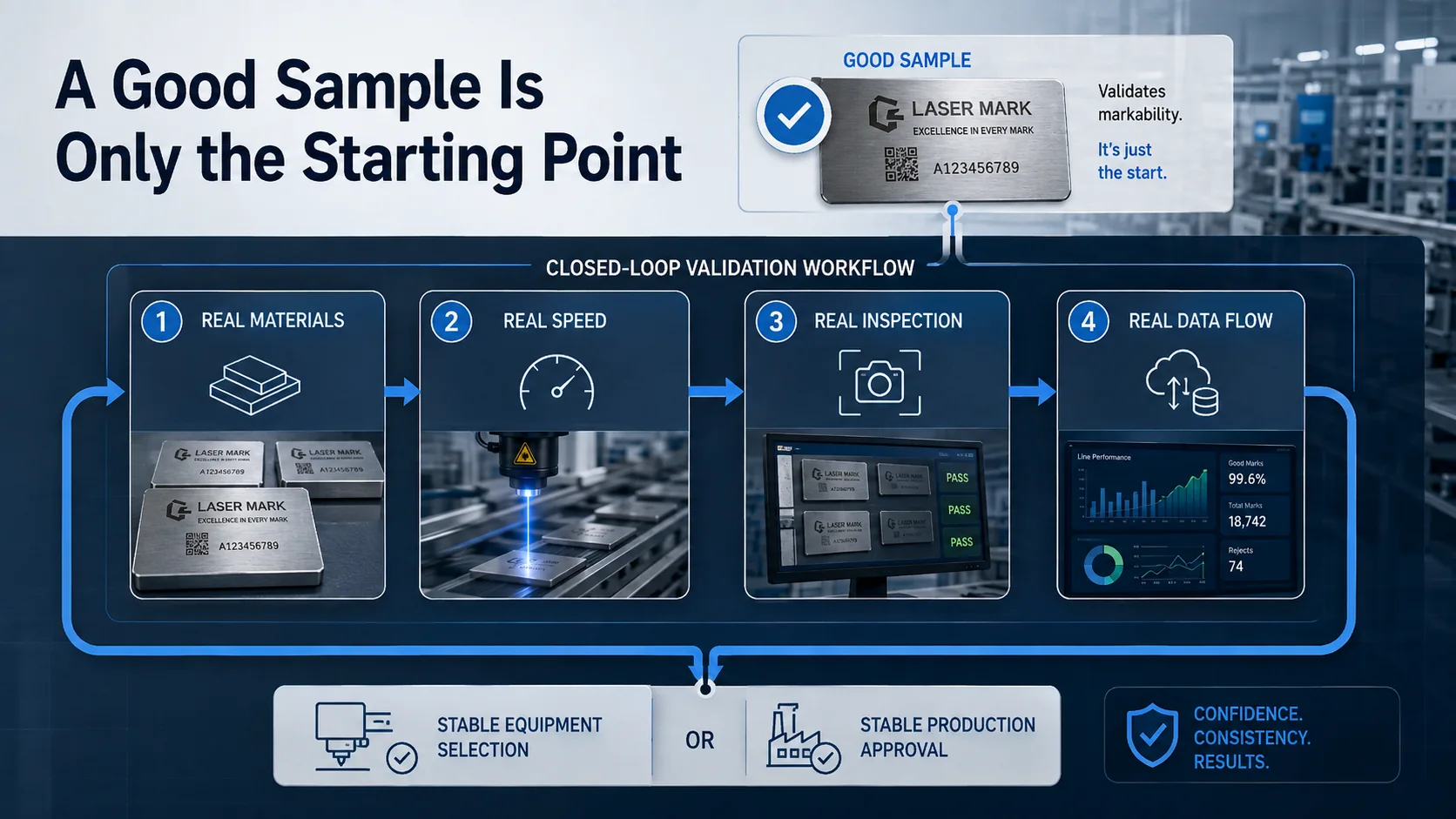
A photo may show that the mark looks clear. It does not show cycle time, trigger window, encoder synchronization, fume influence, lens contamination, fixture wear, reader stability or MES data matching.
Production introduces more variables than sample testing, so the test plan must include them before purchase decisions are finalized.
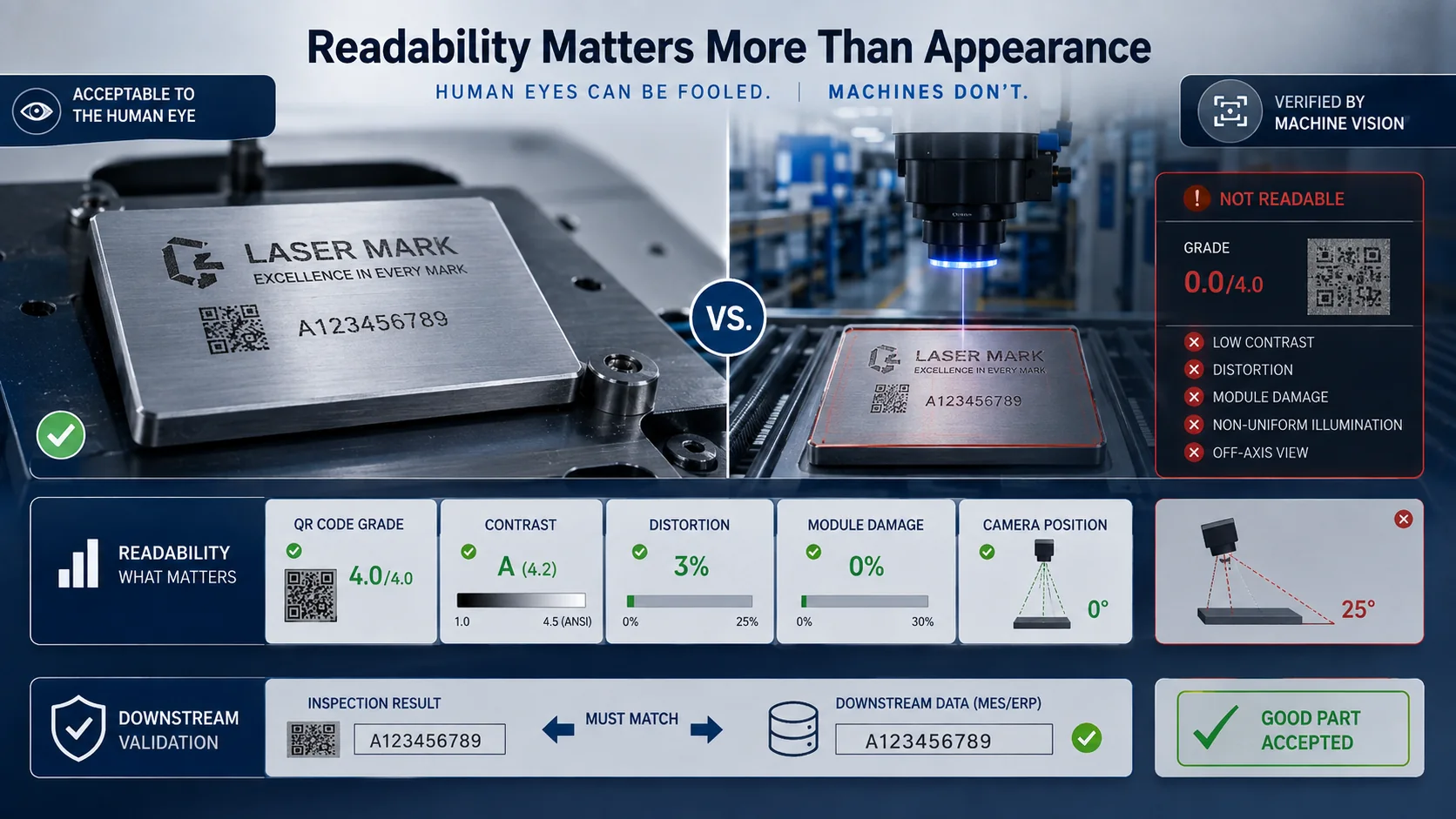
Readability matters more than appearance
For traceability codes, a visually clear mark may still have low read stability. QR-code grade, contrast, distortion, module damage and camera position should be tested under real or simulated line conditions.
If the code must drive downstream data, the inspection result and product ID must also be verified.
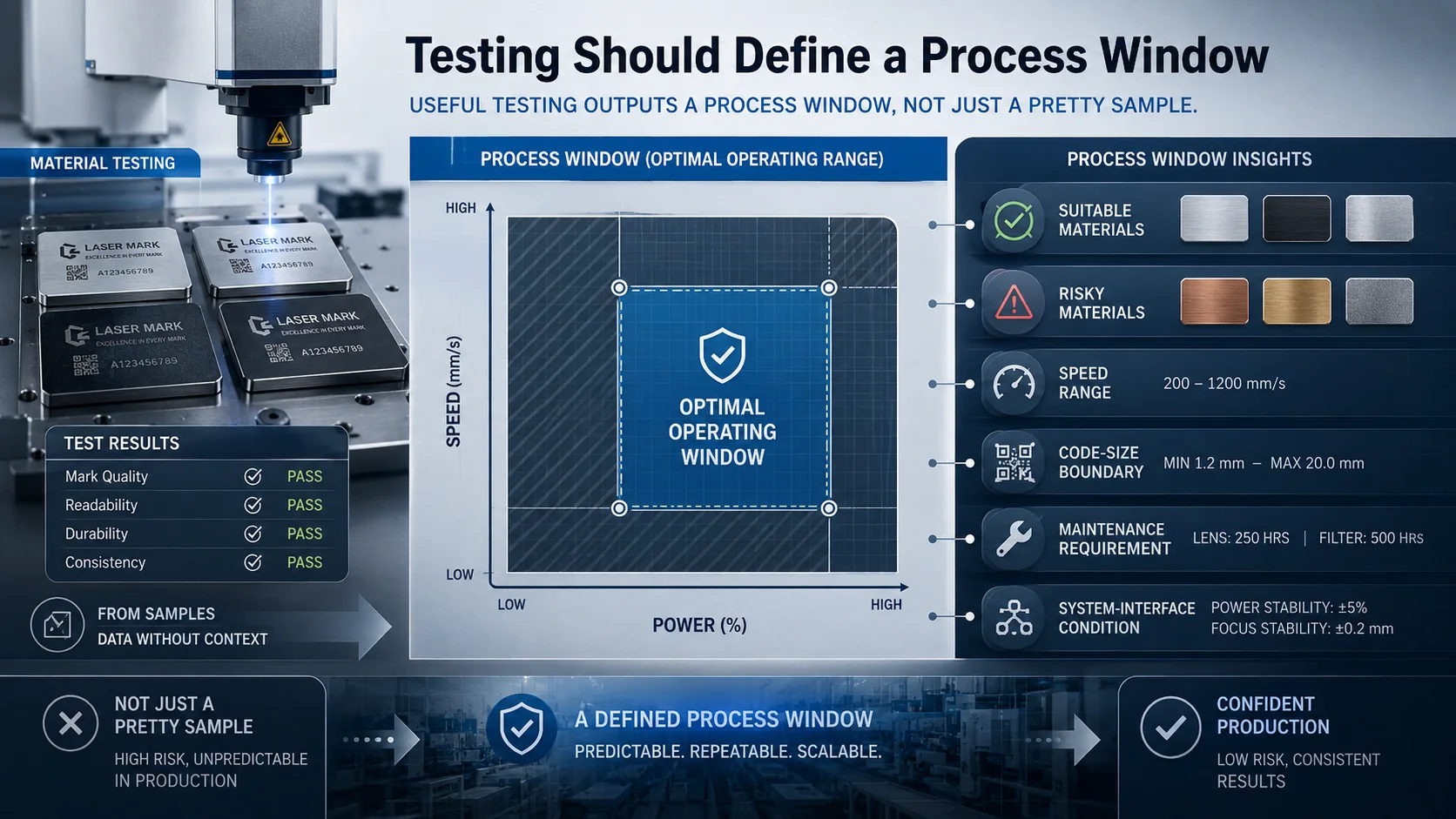
Testing should define a process window
A useful material test should output not only a sample, but a process window: suitable materials, risky materials, speed range, code-size boundary, maintenance requirement and system-interface condition.
This turns testing from a sales demonstration into an engineering evaluation.
Practical takeaway
A good sample is only the starting point. Reliable equipment selection depends on whether the marking process remains stable under real materials, real speed, real inspection and real data flow.
Need to evaluate a real production scenario?
Lugsicher can help review materials, marking targets, line speed, vision inspection and data feedback requirements before equipment selection.