
Industrial Marking Equipment Procurement: From Single-Machine Parameters to System Capability
Technical Articles
Industrial Marking Equipment Procurement: From Single-Machine Parameters to System Capability
Procurement teams should compare industrial marking solutions through process target, material conditions, line speed, integration interfaces and lifecycle cost.
Industrial marking equipment procurement is often simplified into a comparison of brand, power, speed and price. For projects that must connect to production lines, this is not enough. A machine parameter can answer whether equipment can work, but not whether the system can run reliably for years.
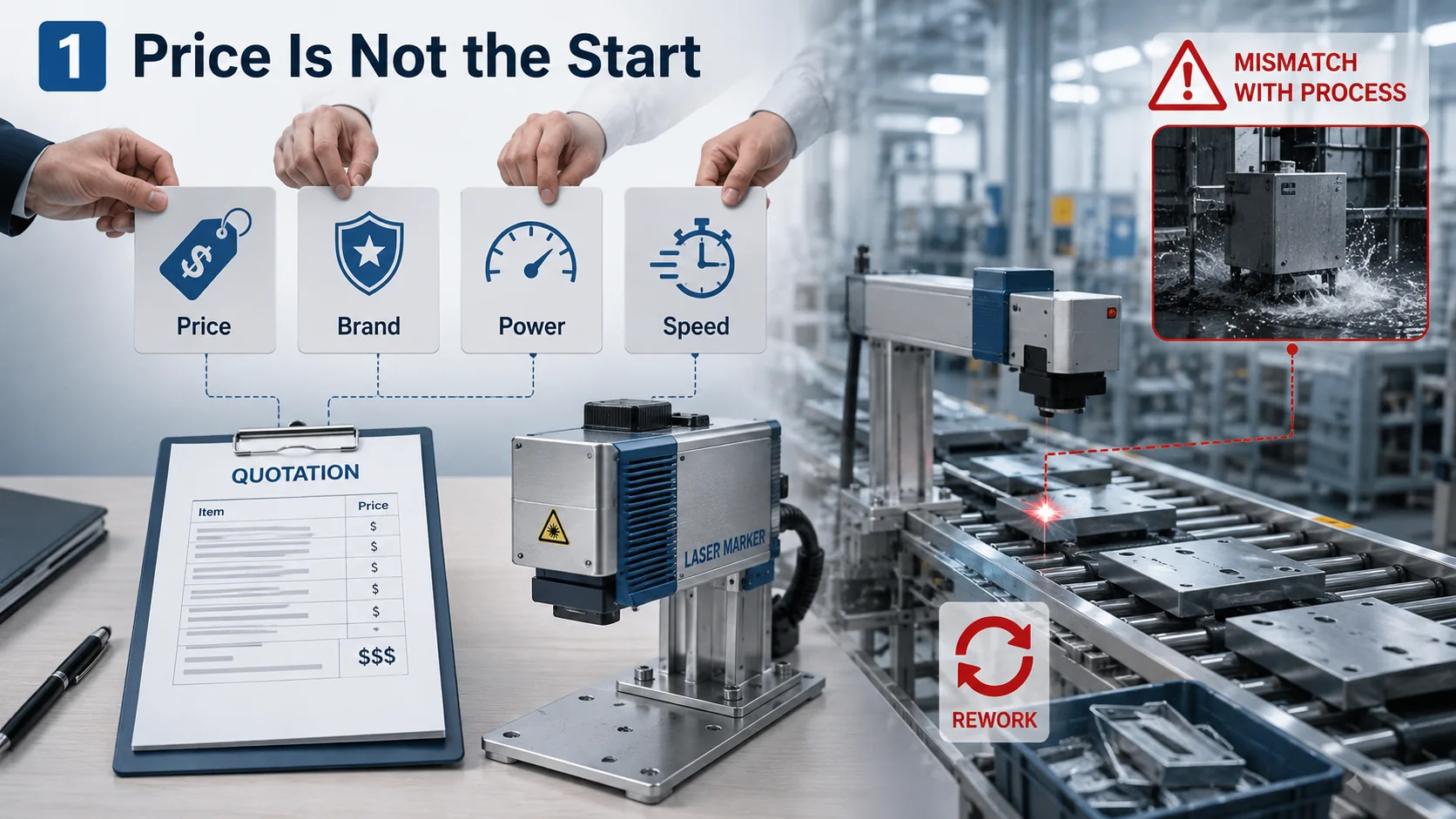
Price comparison should not be the first step
A common mistake is to ask for brand and quotation first, compare power and speed second, and only later confirm material, installation space, interface and traceability requirements.
This sequence often leads to rework because the selected equipment may not fit the actual process boundary.
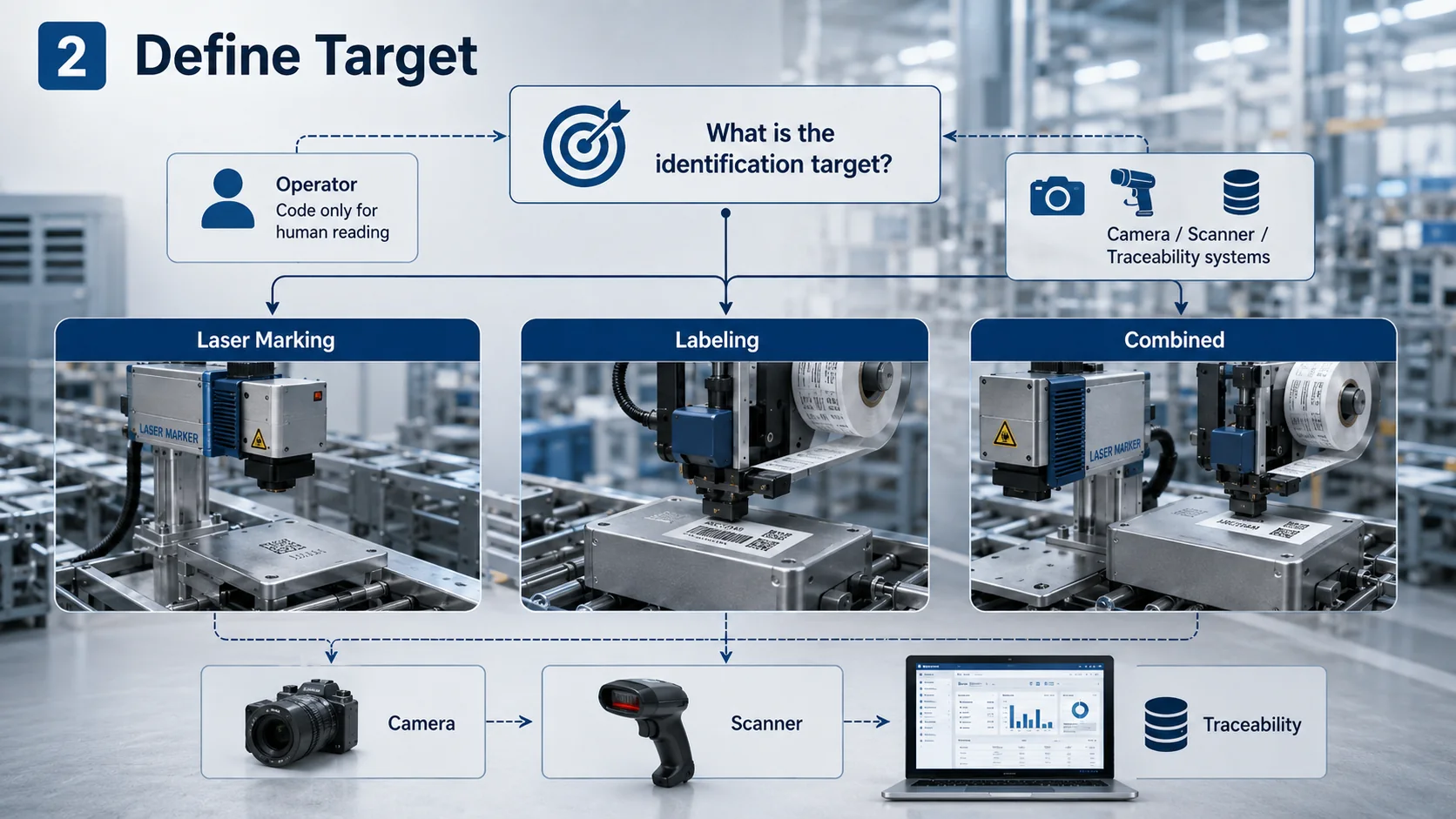
Define process and identification target
The project should first define whether the target is permanent marking, label-based management or a combined solution. It should also define whether the code is only for operators or must be read by cameras, scanners and traceability systems.
This decision affects laser type, labeler selection, camera design and data interface.
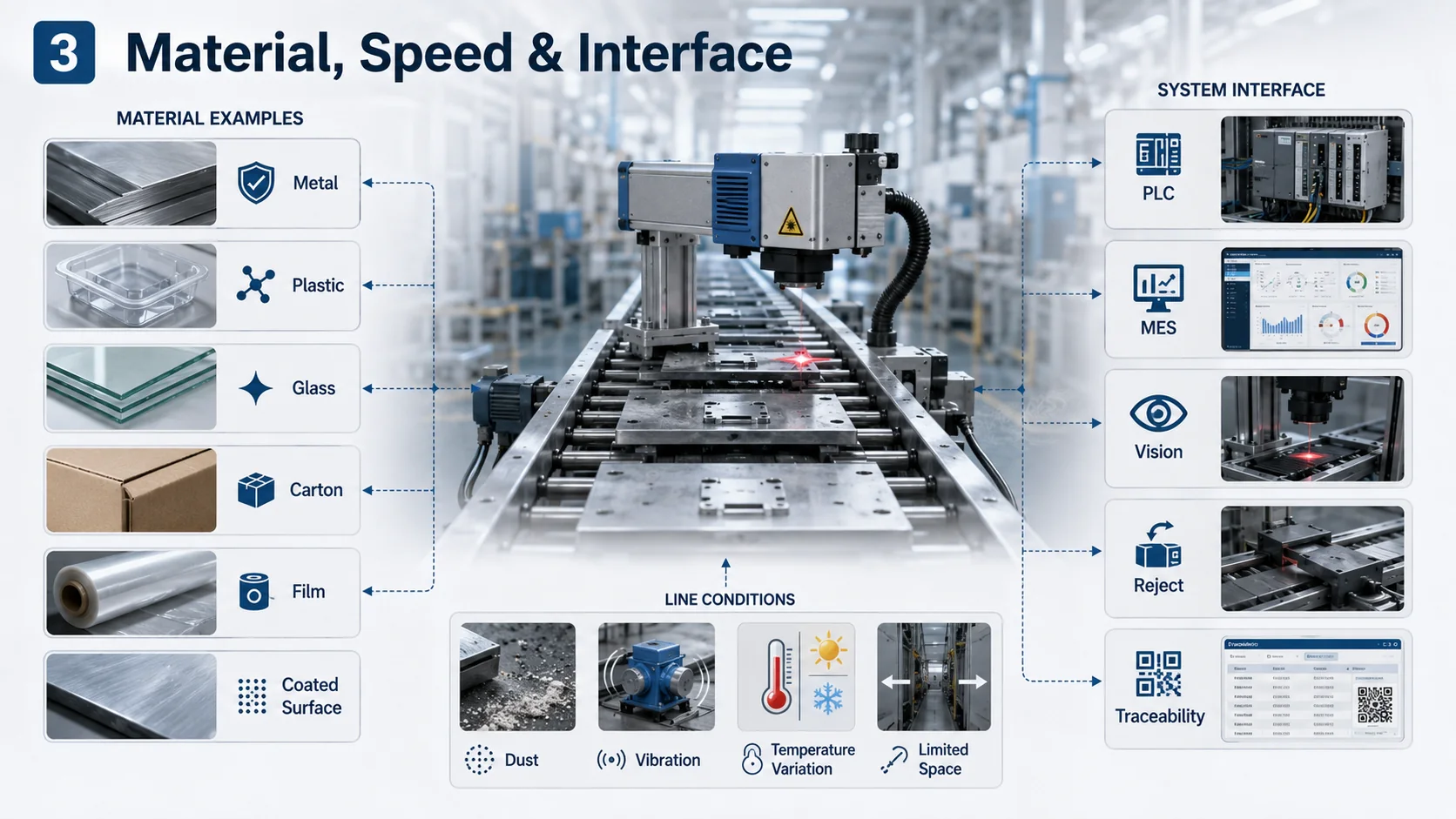
Confirm material, speed and interface conditions
Material may be metal, plastic, glass, carton, film or coated surface. The line may include dust, vibration, temperature variation or limited installation space. These conditions decide the real selection boundary.
PLC, MES, vision inspection, rejection devices and traceability platforms should be considered before the equipment model is frozen.
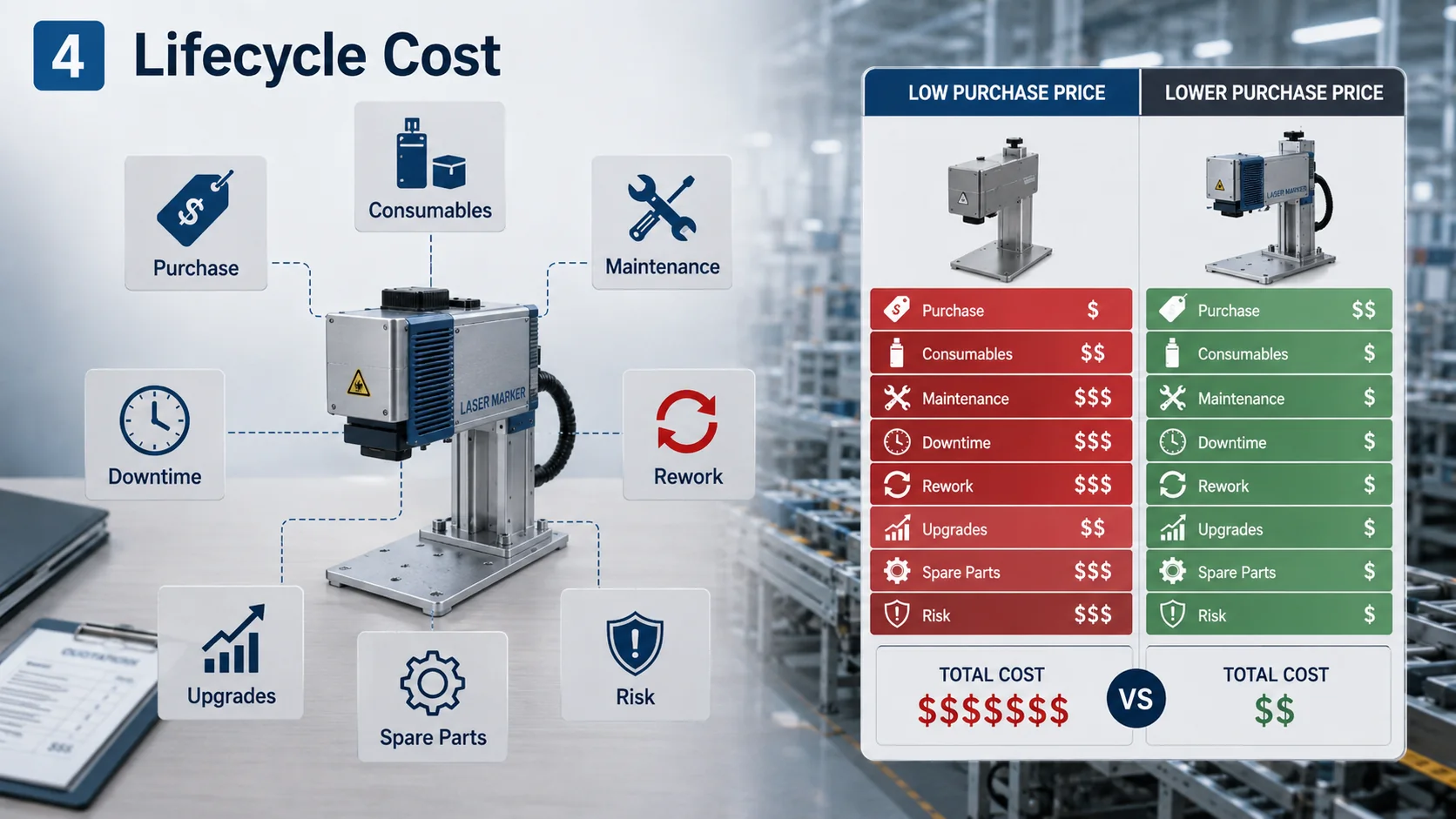
Lifecycle cost is broader than purchase price
The total cost includes purchase, consumables, maintenance, downtime, rework, upgrades, spare parts and quality risk. A cheaper machine can become expensive if it causes repeated adjustment or unstable reading.
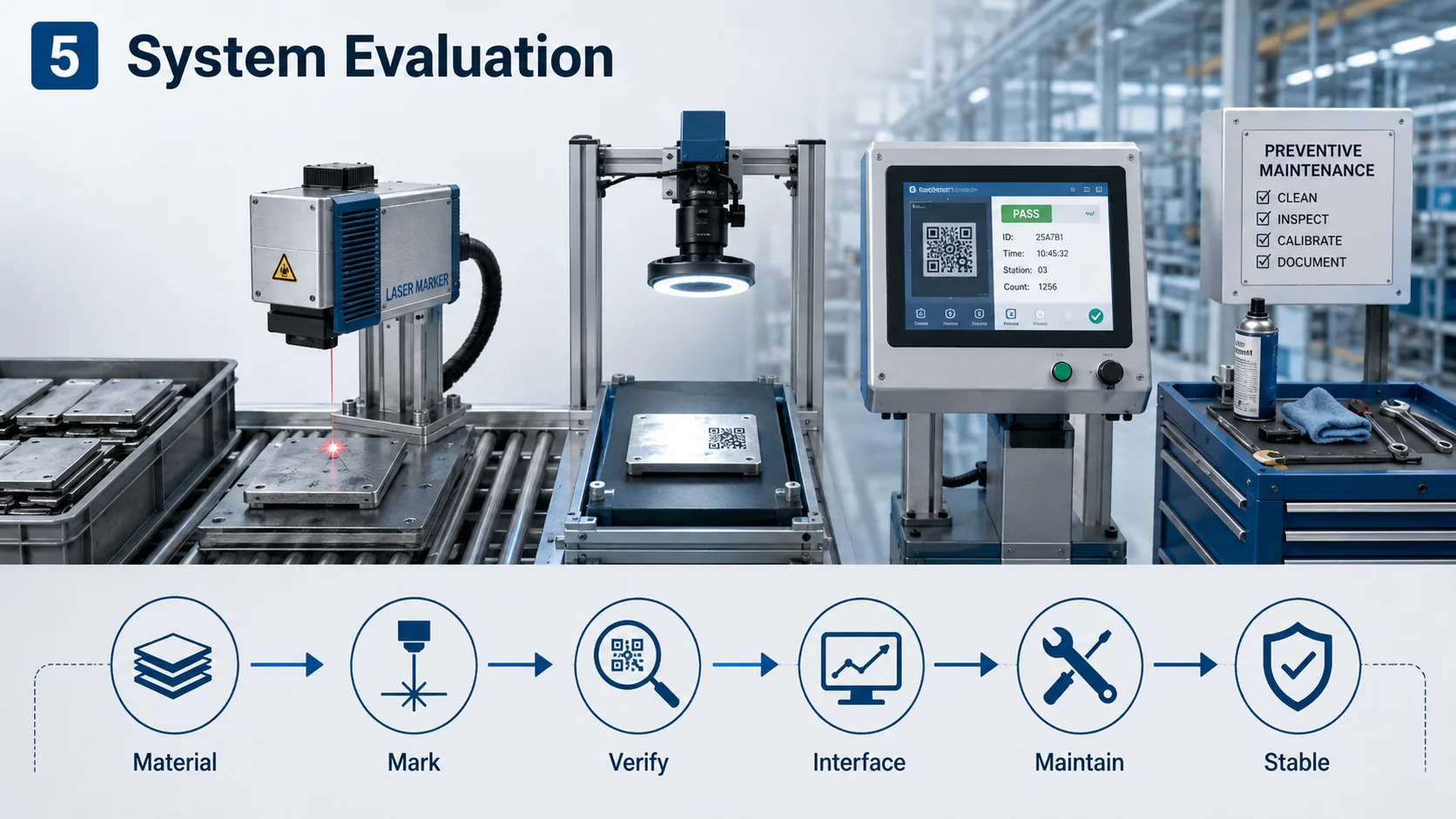
A practical procurement evaluation compares system capability and lifecycle cost rather than a single quotation.
Practical takeaway
Industrial marking procurement should move from machine comparison to system evaluation. The right solution is the one that fits material, speed, interface, verification and long-term maintenance.
Need to evaluate a real production scenario?
Lugsicher can help review materials, marking targets, line speed, vision inspection and data feedback requirements before equipment selection.