Traceability
Carry identifiers plus batch, date or serial data when the application requires variable information.

Industrial Identification, Inspection and Traceability Solutions
Industrial Identification, Inspection and Traceability Solutions
GS1 2D Codes & European Product Data
Move from a code concept to reliable production: select the right carrier, print or mark variable data, verify readability and connect the result to line control.
What Sunrise 2027 means
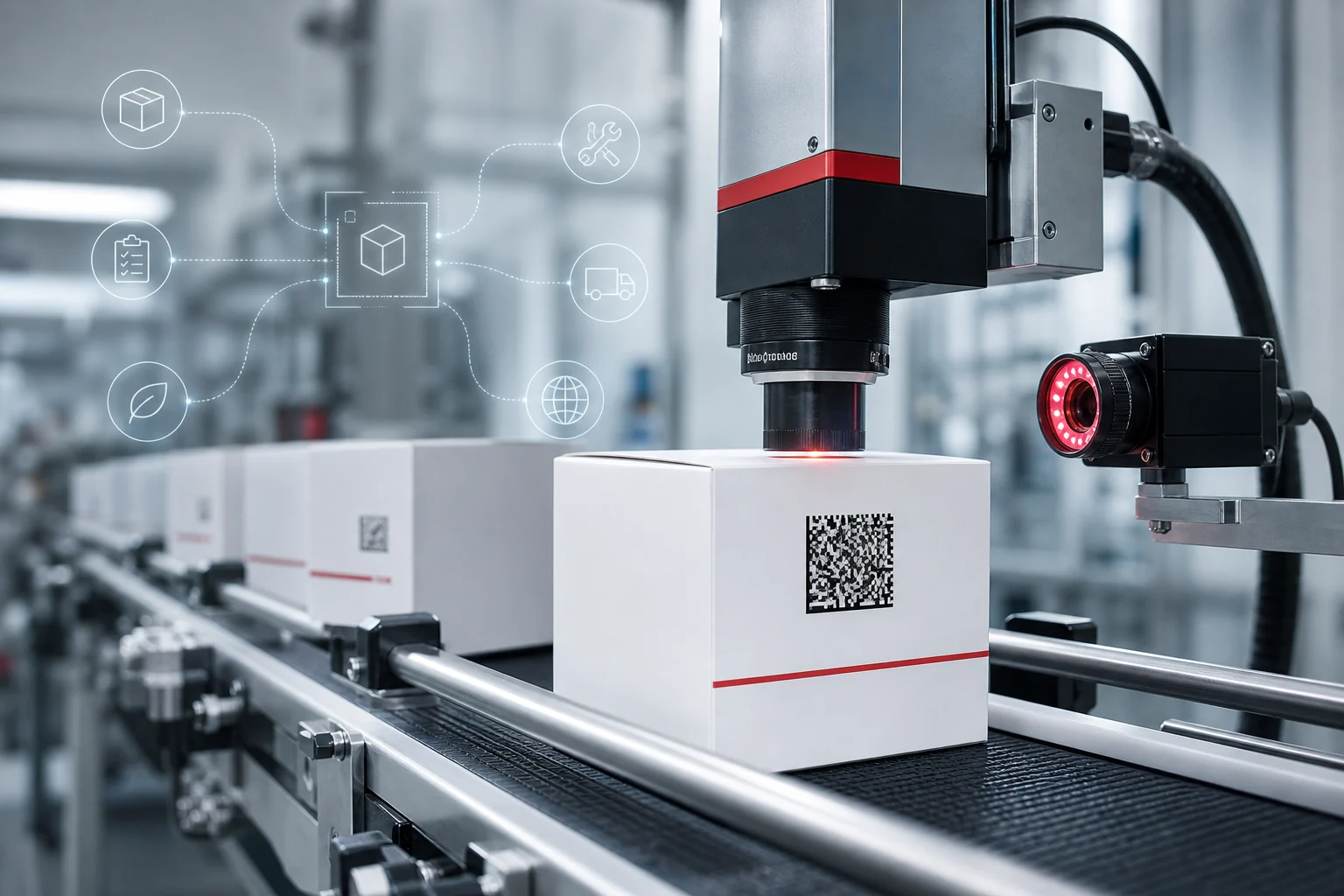
GS1 is preparing retail systems to process 2D codes at point of sale by the end of 2027. The transition supports richer product identification, traceability and digital information, while actual timing and carrier choice still depend on each market and application.
Carry identifiers plus batch, date or serial data when the application requires variable information.
Use GS1 Digital Link to connect product identity with online information and services.
Support scanning, verification, rejection and production records with one consistent data workflow.
The first production decision
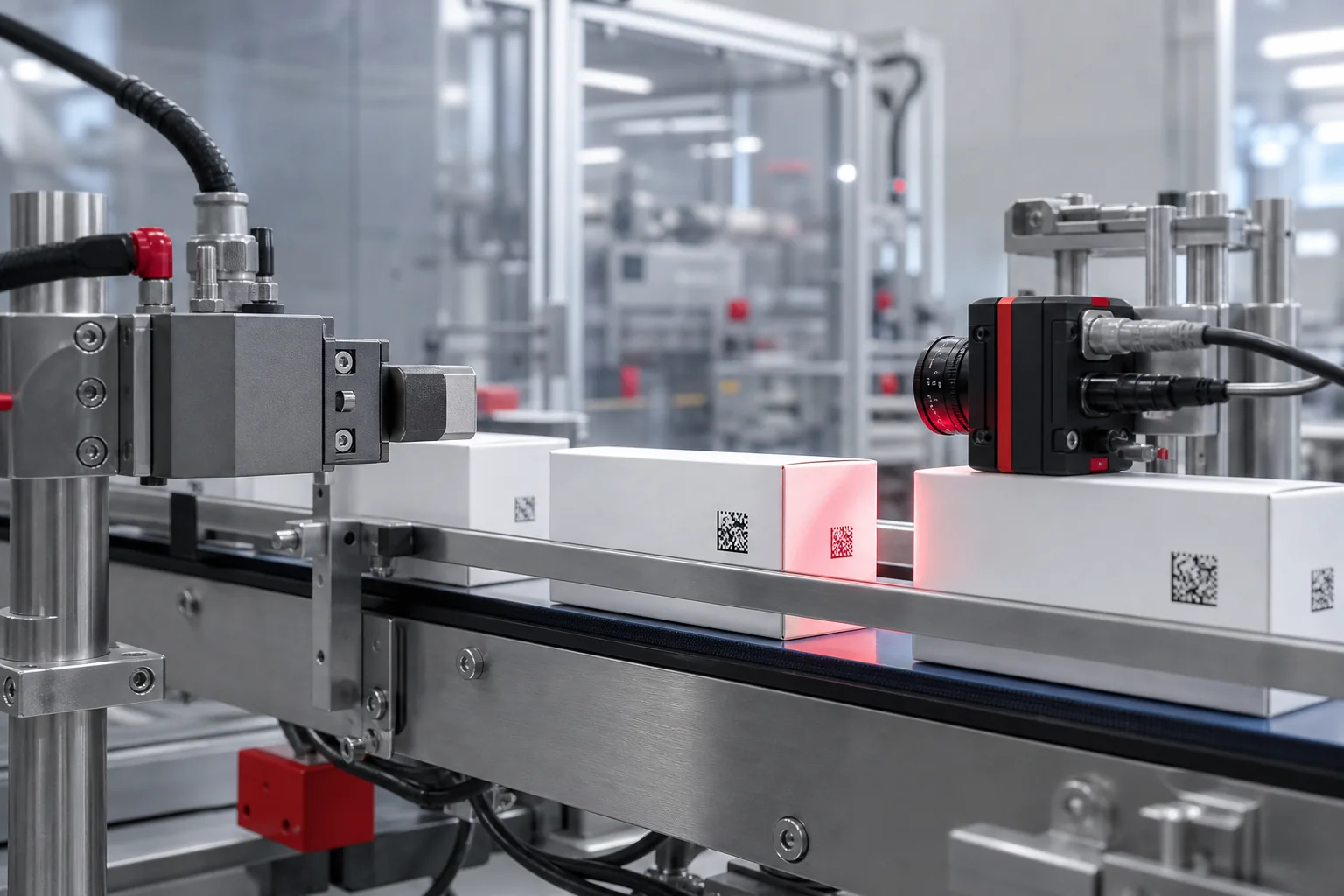
A static GTIN or fixed web destination can often be incorporated into packaging artwork when every pack carries the same content.
Batch, expiry date, serial number or production-specific information must be generated and applied during production.
Test code size, contrast, placement and readability on the actual substrate at normal line speed—not only on a laboratory sample.
From data to a verified pack
Confirm the carrier, identifiers, variable fields and the system that creates each code.
Match laser marking or label application to the package material, code size and speed.
Check presence, content, contrast, geometry and readability with machine vision.
Connect alarms, rejects and production records so incorrect codes do not move downstream.
Three practical questions
Use the carrier required by your sector and trading partners. QR Codes powered by GS1 are well suited to connected product information; GS1 DataMatrix is compact and common in healthcare, direct marking and space-constrained applications.
Not every product does. EU requirements and dates are being defined by product group. A GS1-compatible 2D code may support the data-carrier strategy, but the code alone does not establish full compliance.
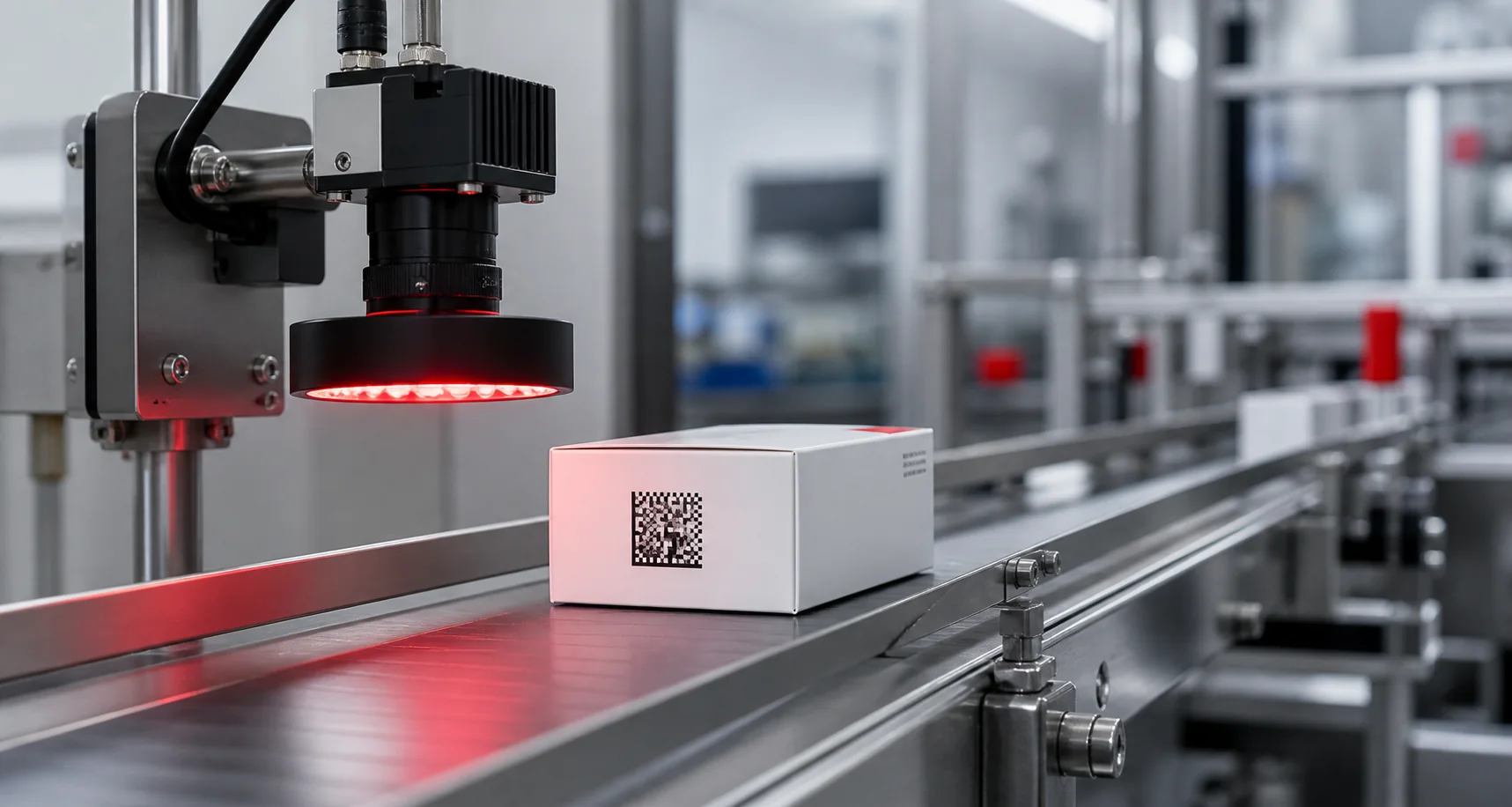
Send real materials, artwork, target code content and size, line speed, available installation space and the required verification or reject workflow.

Putting standards into practice
Lugsicher GmbH has been part of the GS1 Germany Solution Partner network since 2026. This connects standards expertise with the practical design of marking, code verification, line control and traceability workflows.
Note: Solution Partner status is not blanket product certification. Code content, marking quality and process conformity still need to be validated for each application.
Send the package, required data, target size and production speed. Lugsicher can compare marking and verification directions before a formal quotation.