
CO₂ Laser Marking on PET Bottles: From Sample to Production Line
CO₂ Laser Marking on PET Bottles: From Sample to Production Line
A clearly readable mark on a single PET bottle does not answer every question for the filling line. What matters is the interaction with the actual bottle material, the condition at the marking location and the behaviour during conveying. A useful trial therefore combines material assessment with the complete marking content and the intended operating conditions.
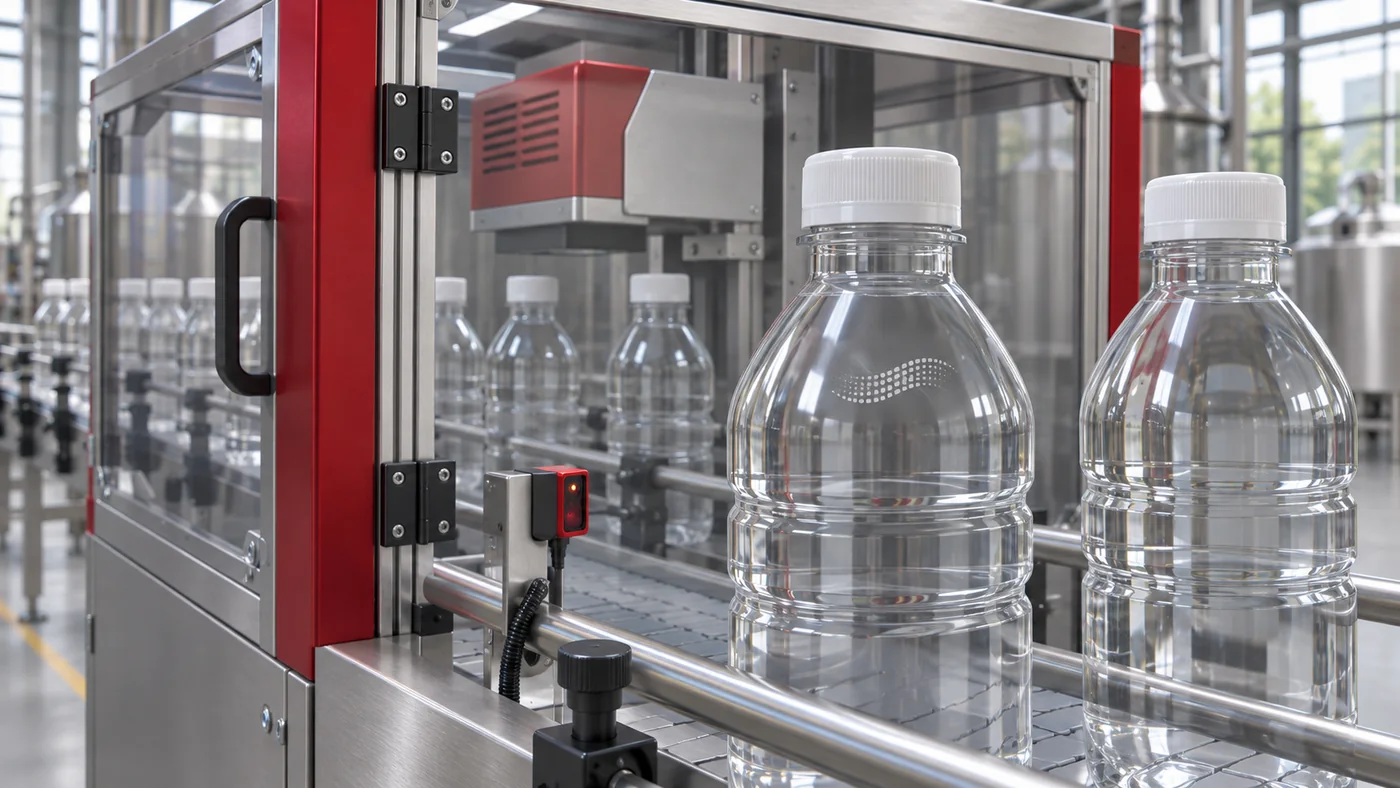
Put wavelength in the context of system selection
CO₂ lasers are offered at different wavelengths. Laser power alone is therefore not enough to select a system. For PET, Videojet describes a dedicated 9.3 µm configuration compared with conventional 10.6 µm technology in a manufacturer white paper. The results discussed there relate to the manufacturer technology described; they do not establish the properties of another device.
If quotations specify 9.3, 10.2 or 10.6 µm, ask suppliers to confirm the exact configuration and compare it using the same original bottles. A wavelength specification replaces neither material trials nor approval of the finished packaging.
Assess the finished bottle and the actual marking location
Use the bottle design intended for production in the trials. A preform or flat PET sample represents the finished, blown bottle only to a limited extent. Record the manufacturer, material variant, colour, bottle size and intended marking position. Include available variants and batches within the agreed scope of testing.
For thin-walled bottles, assess the local wall thickness at the marking location. A visually distinct mark is not sufficient evidence that packaging function remains unchanged. The packaging quality team responsible for the application should define the required leak-tightness, mechanical strength or other packaging-property tests.
Test the complete code rather than a short sample
Test the date, batch, additional text lines and, where applicable, a two-dimensional code at the intended size. Typeface, character spacing, line paths and areas traversed more than once can affect the result. A short word in large letters is therefore not an equivalent substitute for the eventual production content.
Alongside the laser and optics configuration, document working distance, focal position, parameters and the approved template. This makes it possible to distinguish later deviations caused by the material, the setup or a changed marking file. An unchanged filename is not sufficient evidence of version control.
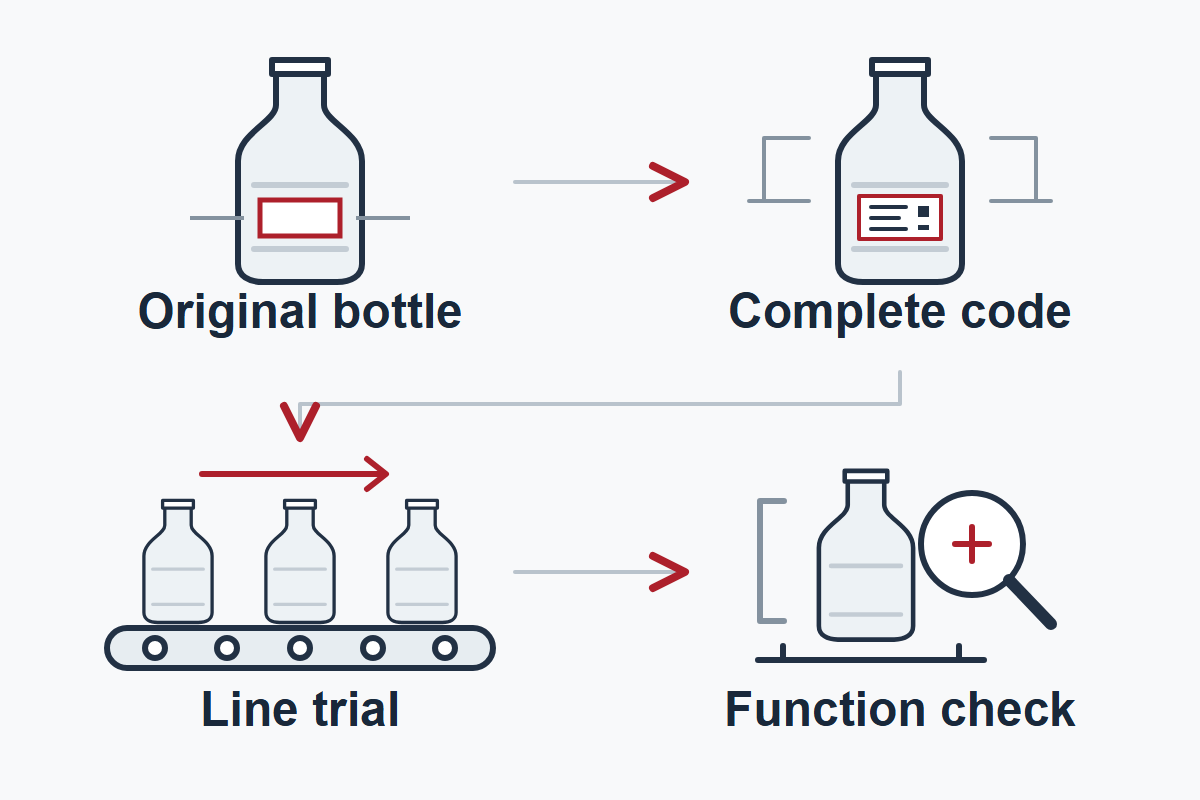
Consider movement, filled condition and inspection together
After the stationary trial, test under the intended line conditions. These include the speed range, bottle spacing, guidance, bottle rotation or wobble, and sensor and encoder signals. Observe position, character geometry and completeness during startup, speed changes and restart as well.
Assess readability in the intended filled condition and with the planned lighting. Contents, colour and background can affect visual perception. For camera-read codes, successful decoding, correct data content and any required code quality are separate test points. The trial should also establish how a missing or incorrect code is detected and assigned to the correct product.
Use a traceable approval matrix
Agree on test conditions and acceptance criteria before the line trial. The following matrix provides a basis for discussion; limits must suit the packaging and the process.
| Test point | Evidence to record |
|---|---|
| Bottle and material | Design, batch, marking location and condition of the test sample |
| Configuration | Wavelength, optics, working distance, parameters and template version |
| Marking | Complete content, dimensions, position and agreed reading criteria |
| Packaging function | Tests specified by the packaging quality team and their results |
| Line operation | Speed, spacing, transition conditions and observed deviations |
| Error handling | Detection, product assignment and agreed response |
Approve the exact combination that was tested. Changes to the bottle, supplier, marking position, content or line guidance should trigger a documented assessment. Whether retesting is required, and its scope, depends on the particular change.
Review your application with Lugsicher
Describe the material, code content, line cycle and the issue you have observed. This helps define the next checks for your application.
Discuss your project