
Replacing TTO with UV Laser on Packaging Lines: Synchronization, Interface and Verification Logic
Technical Articles
Replacing TTO with UV Laser on Packaging Lines: Synchronization, Interface and Verification Logic
UV laser can replace TTO in selected packaging scenarios, but the decision should be based on material response, line synchronization, code quality and integration verification.
Thermal transfer overprinting is widely used on flexible packaging, but some projects start to evaluate UV laser because they want to reduce consumables, improve mark permanence or simplify maintenance. The key is not to ask whether UV laser is more advanced, but whether it fits the material, speed and control logic of the line.
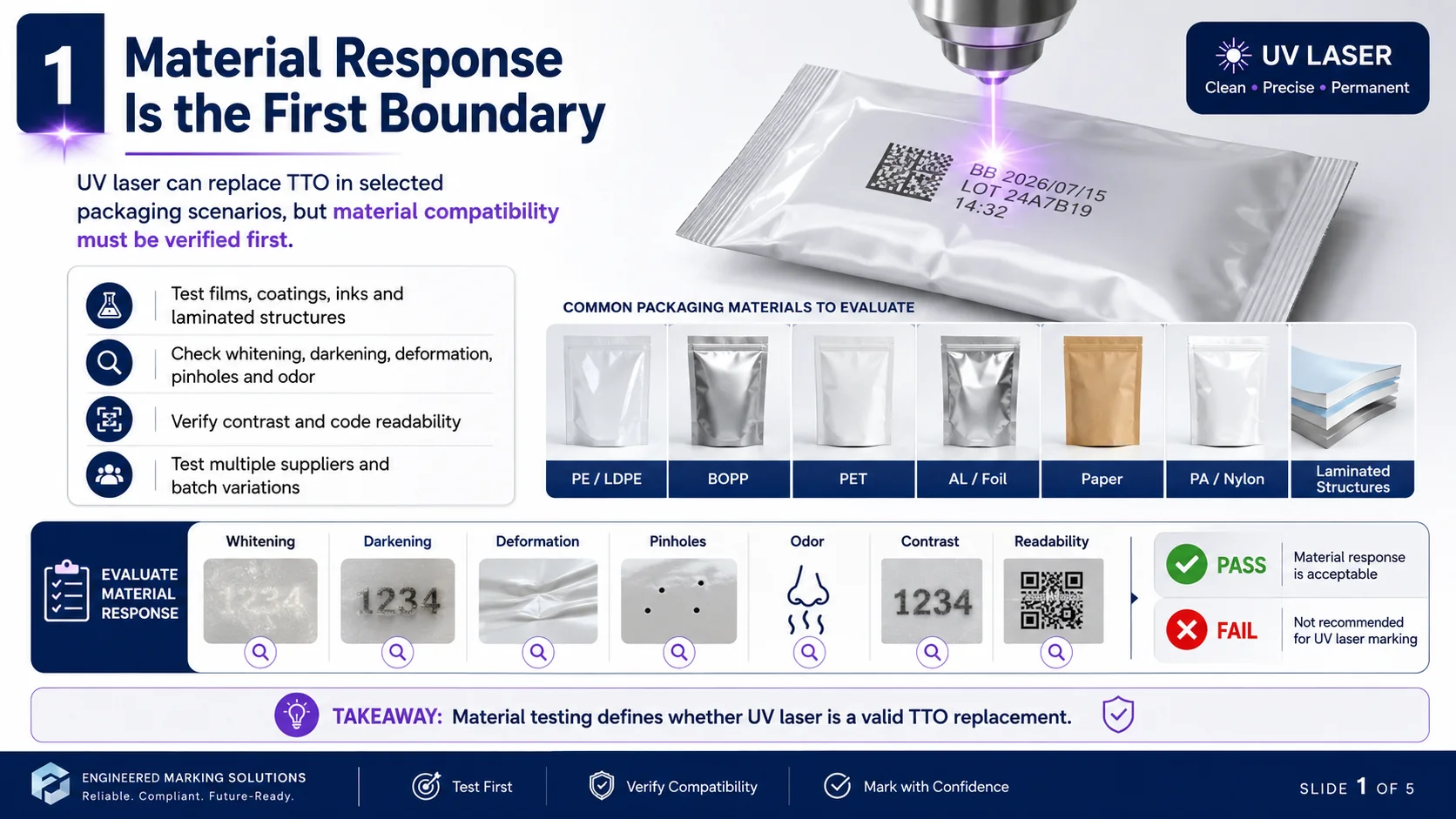
Material response is the first boundary
UV laser has low heat influence compared with many thermal processes, but it still interacts with films, coatings, inks and laminated structures. The test should check whitening, darkening, deformation, pinholes, odor, contrast and code readability.
If the package structure changes across suppliers or batches, the test must include more than one sample type.
Synchronization replaces ribbon management
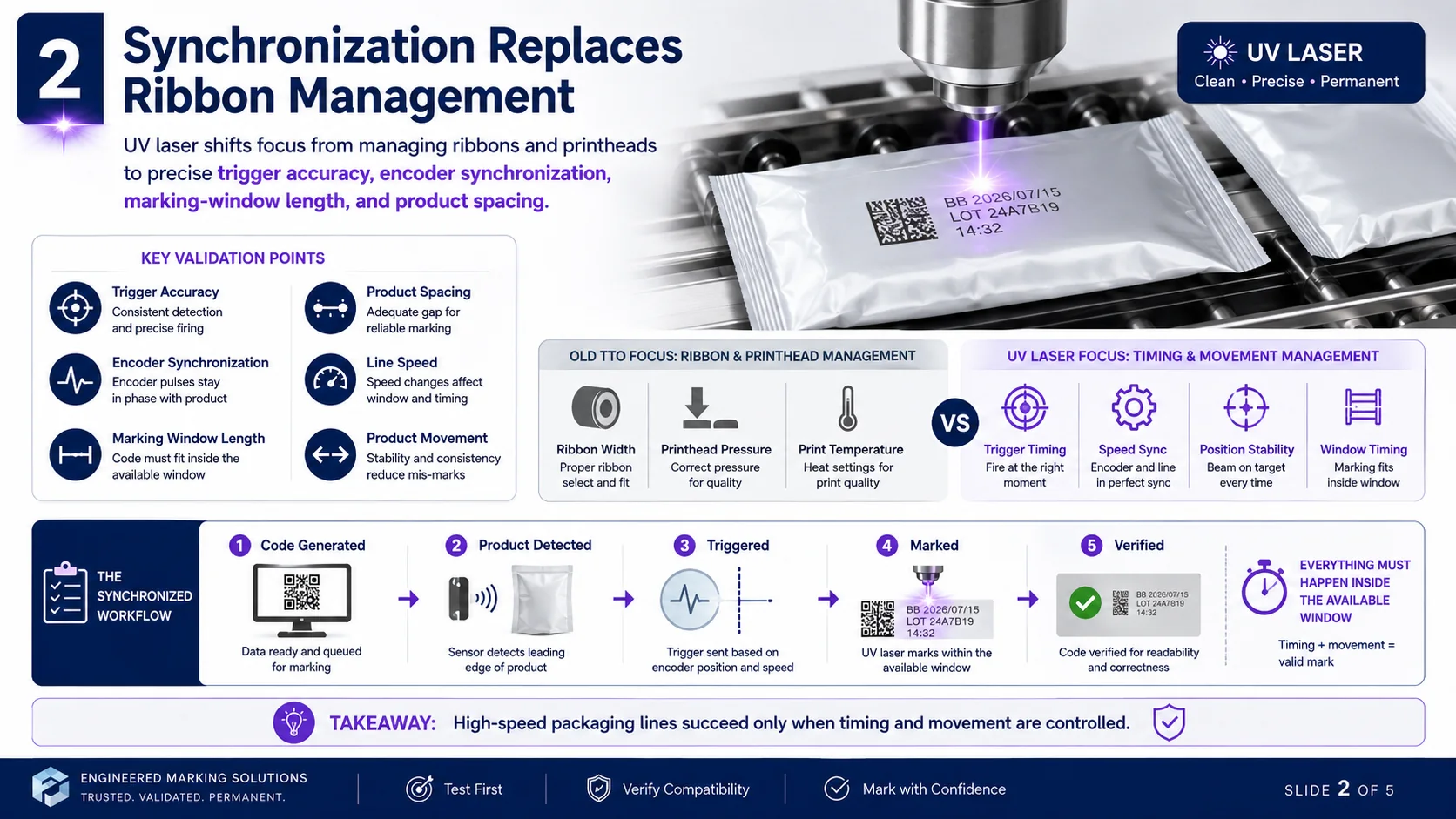
TTO projects often focus on ribbon width, printhead pressure and temperature. UV laser projects shift the focus toward trigger accuracy, encoder synchronization, marking-window length and product spacing.
The code must be generated, marked and verified inside the available window. If the line speed is high, trigger delay and product movement become decisive.
Verification should include reading and inspection
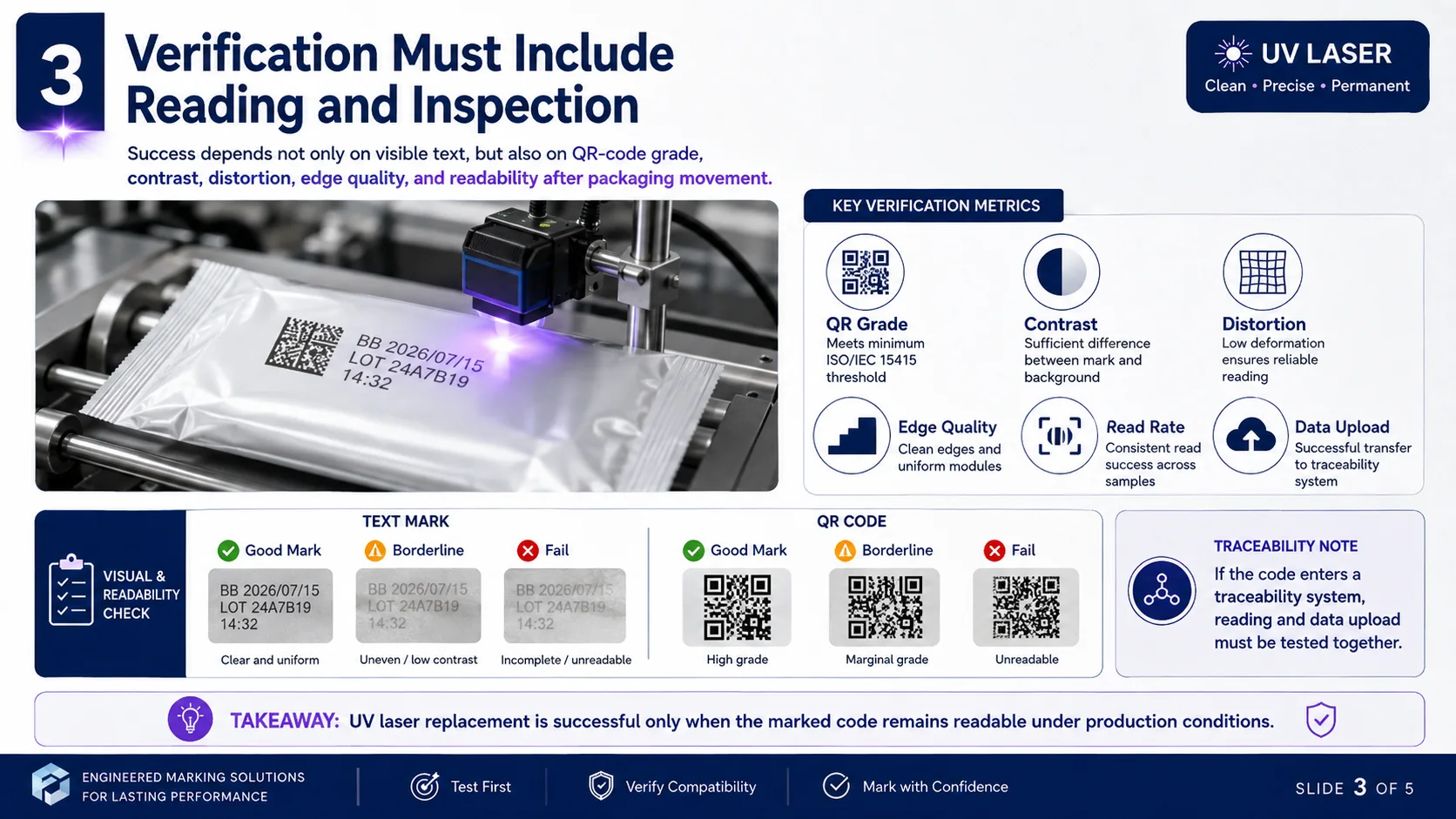
The project should verify not only text visibility but also QR-code grade, contrast, distortion, edge quality and readability after packaging movement. If the code enters a traceability system, reading and data upload should be tested together.
UV laser replacement is successful only when the marked code remains readable under production conditions.
Cost comparison should include the whole system
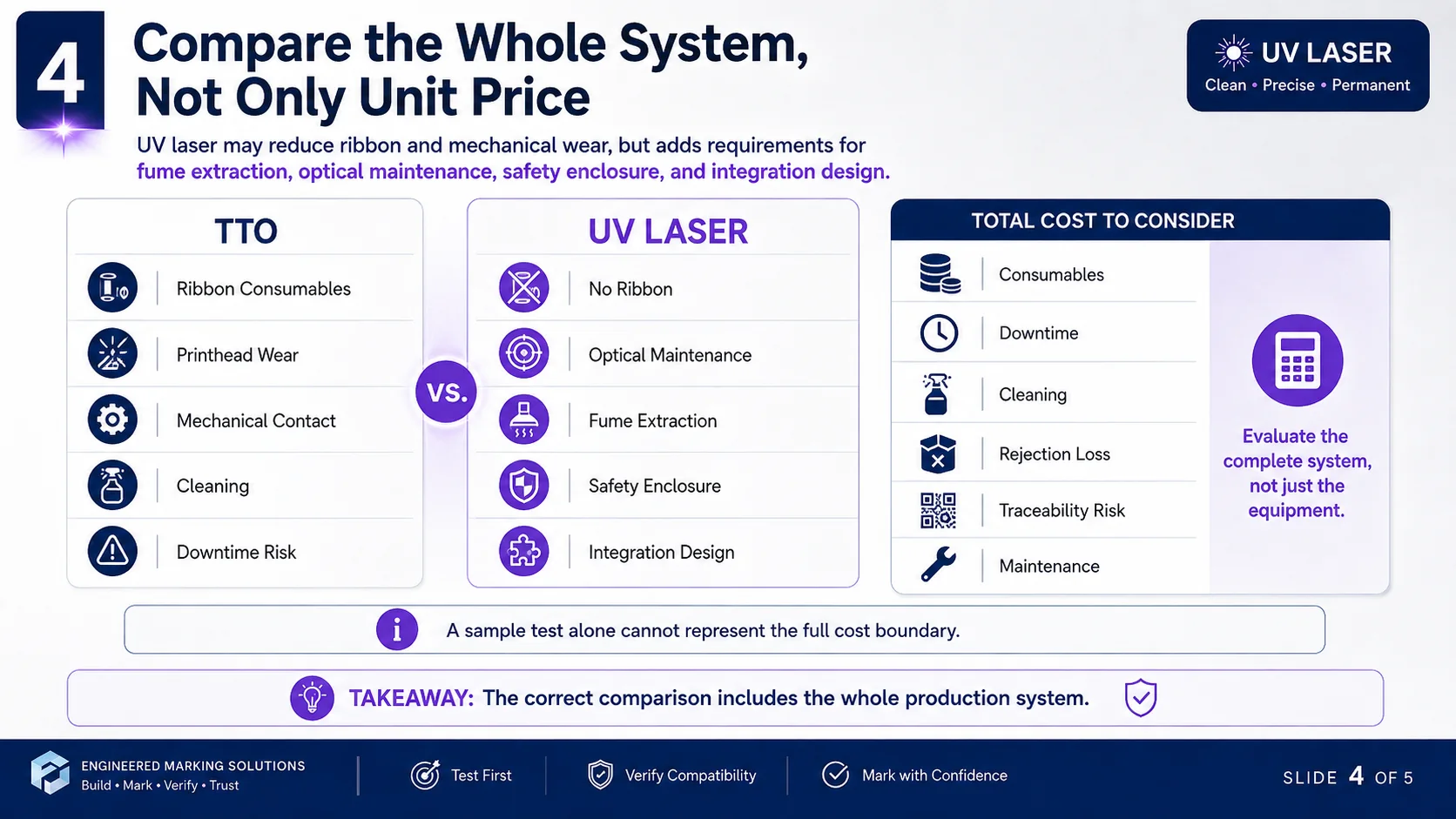
UV laser may reduce ribbon and mechanical wear, but it adds requirements for fume extraction, optical maintenance, safety enclosure and integration design. The correct comparison includes consumables, downtime, cleaning, rejection loss and traceability risk.
A sample test alone cannot represent the full cost boundary.
Practical takeaway
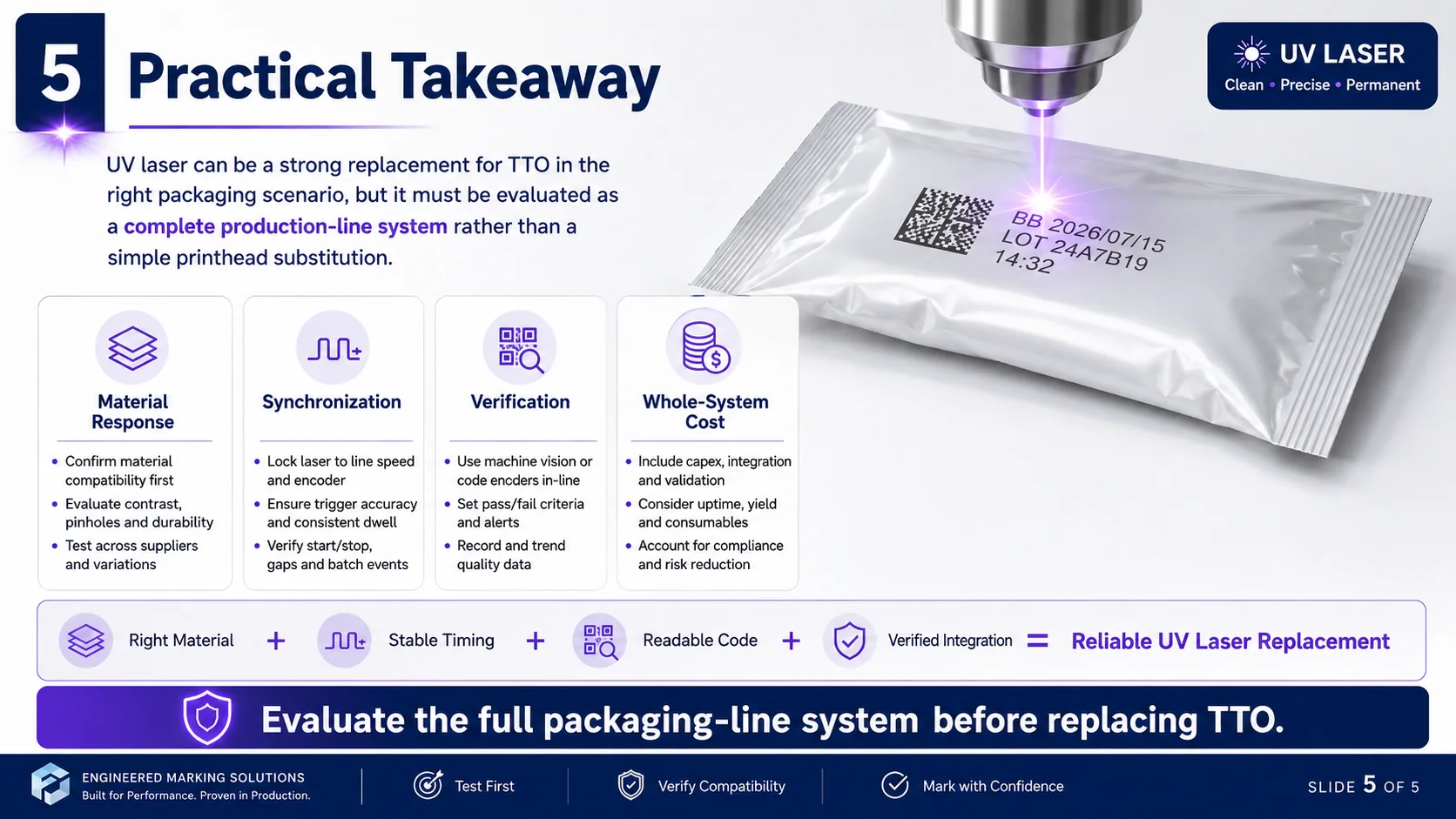
UV laser can be a strong replacement for TTO in the right packaging scenario, but it should be evaluated as a complete production-line system rather than a simple printhead substitution.
Need to evaluate a real production scenario?
Lugsicher can help review materials, marking targets, line speed, vision inspection and data feedback requirements before equipment selection.