
Multi-plant marking: roll out configurations under control
Multi-plant marking: roll out configurations under control
An approved marking system at a reference plant cannot be transferred simply by copying its equipment list. Different material batches, conveyor arrangements, networks and maintenance conditions can change the result. A controlled rollout should document shared rules, approved variants and site-specific differences separately.
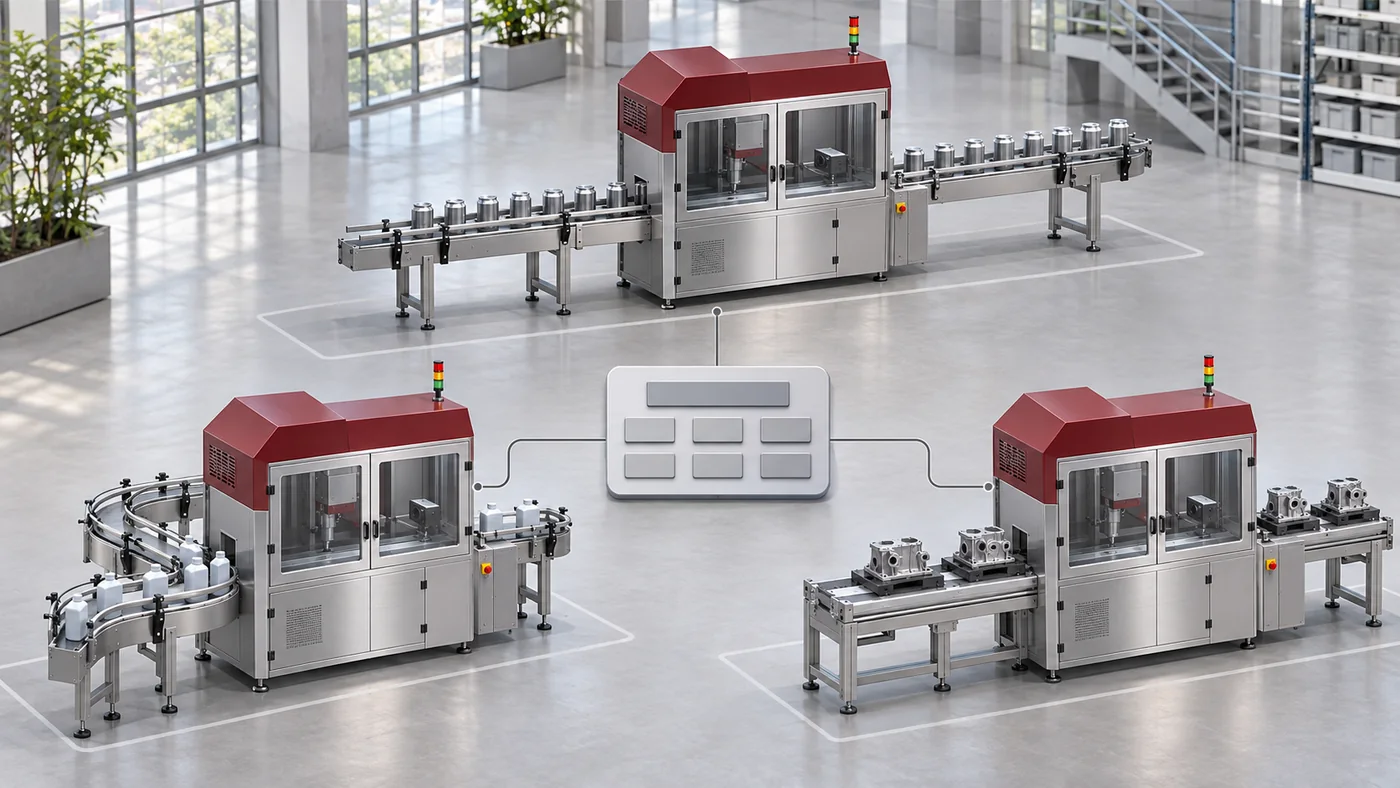
Distinguish the shared baseline from local variants
The shared baseline defines which data is marked, how a result is assessed and who approves changes. A variant specifies the technical implementation validated for a particular material and process. Each plant adds only its justified local deviations.
| Level | Define centrally | Check locally |
|---|---|---|
| Data | Fields, formats, identity rules and job association | Data source, transfer and packaging levels |
| Process | Test methods and documentation structure | Material, optics, workholding, speed and lighting |
| Control | Meaning of states and fault responses | PLC integration, sensor positions and workpiece tracking |
| Operation | Change approval, version records and restoration | Access rights, language, spare parts and maintenance access |
This keeps results comparable without imposing an untested universal recipe on different materials.
Create a traceable configuration baseline
Each approved variant should have a configuration record. It links the equipment identifier and plant to the validated material range, marking layout, process recipe, camera program, interface mapping and corresponding acceptance evidence.
Record version levels, approval dates, responsible people and dependencies. A recipe number without the associated software and optical configuration is insufficient to restore an earlier state reliably. Also document which changes the plant may make itself and which require renewed technical approval.
Standardise the meaning of status messages
Different PLC and MES systems may use different protocols. The meaning of the exchanged states should nevertheless be unambiguous: job received, data confirmed, marking completed, inspection passed and result accepted are separate events.
Define consistent handling of missing data, repeated messages, timeouts and connection loss. Remarking, rework and blocked identifiers also need shared rules. Otherwise, plants may operate technically similar systems while recording the same events differently.
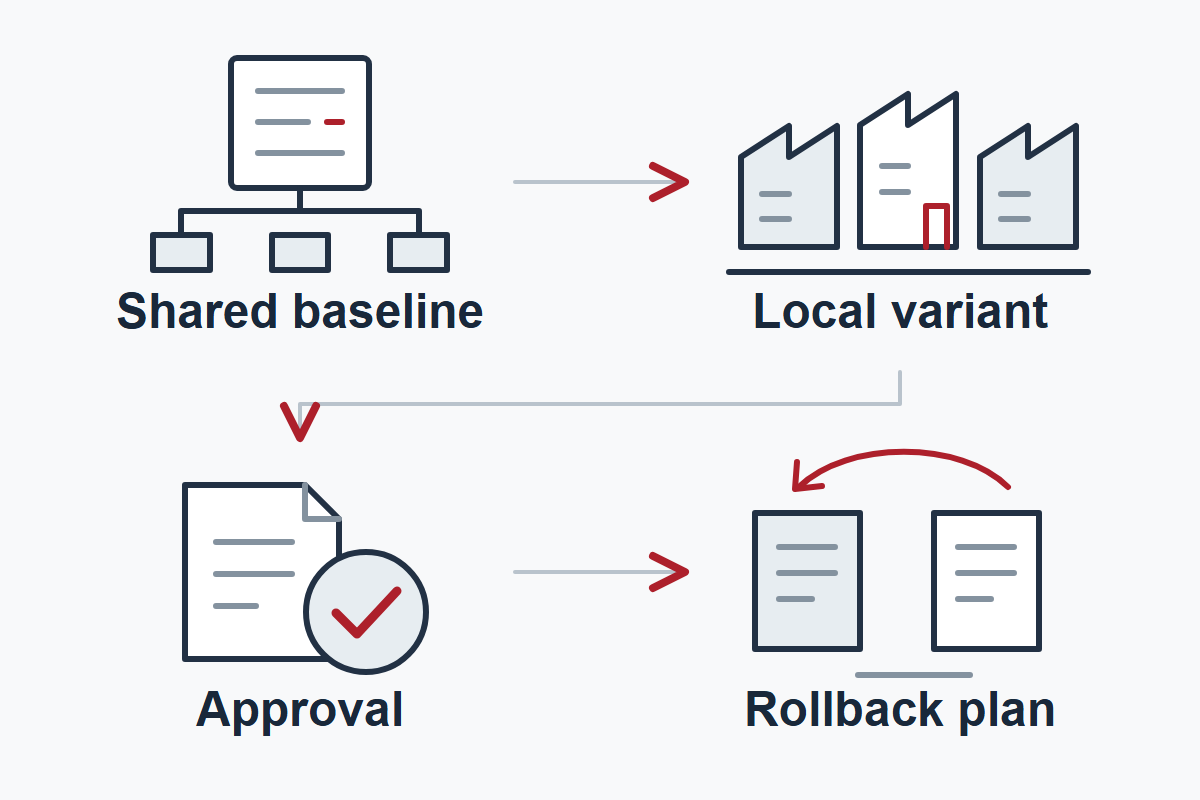
Roll out changes with approval and a rollback plan
- Describe the change: Document the reason, affected plants, versions and expected effects.
- Check dependencies: Assess the layout, recipe, vision inspection and interfaces together.
- Run a reference test: Test the change under the intended material and operating conditions.
- Compare plant differences: Explicitly consider differences in materials, workholding, speeds and control systems.
- Approve the defined rollout: Record the authorised person, transfer method and active version; do not accidentally overwrite local deviations.
- Prepare rollback: Keep the previous approved configuration available, together with rules for affected workpieces and data records.
Technically restoring the old version does not replace assessment of products already processed or marking data already transferred.
Accept each plant on the basis of its differences
The reference plant provides a documented starting point, not blanket evidence for every other site. Before rollout, check material suppliers, surfaces, product guidance, speed, network integration and maintenance conditions. Use those differences to select the additional tests required.
Local acceptance should cover normal production, changeover conditions and agreed fault cases: an incorrect job, a missing read, unconfirmed rejection and connection loss. Test methods may be shared; specific limits follow from the product and its process.
Material changes, new optics, modified workholding, layout changes and software updates should be recorded as possible triggers for retesting. A central overview of active versions and unresolved deviations then makes maintenance and further rollouts easier.
Review your application with Lugsicher
Describe the material, code content, line cycle and the issue you have observed. This helps define the next checks for your application.
Discuss your project