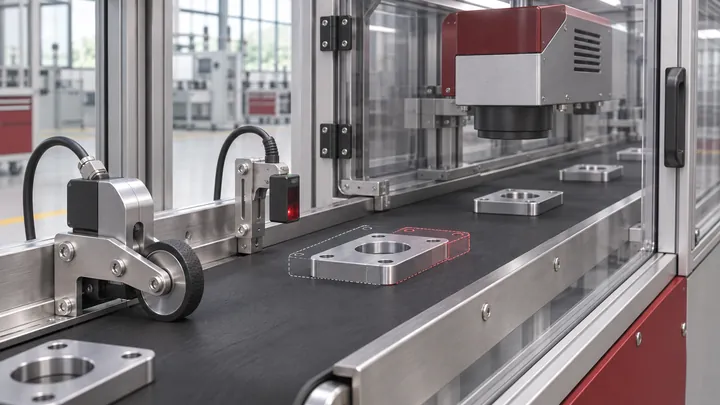
Diagnosing position drift in flying laser marking
Diagnose laser marking position drift: check encoder scaling, trigger delays, product slip and guidance before changing compensation.
Read article →
Industrial Identification, Inspection and Traceability Solutions
Industrial Identification, Inspection and Traceability Solutions
Insights & Blog
This page now brings back the article module from the original Lugsicher source library. Visitors can browse practical posts on laser marking, inspection, materials and production applications, then open each article for the full detail page.

Technical Articles
Browse English technical notes adapted from Lugsicher project articles, including laser marking, coding, vision inspection, packaging and traceability topics.
Diagnose laser marking position drift: check encoder scaling, trigger delays, product slip and guidance before changing compensation.
Read article →
Investigate readable codes and frequent rejects: check the original image, triggering, product tracking, decision reason and reject confirmation.
Read article →
After an incorrect marking, reconcile products and code status: define the affected scope, control rework and document the restart decision.
Read article →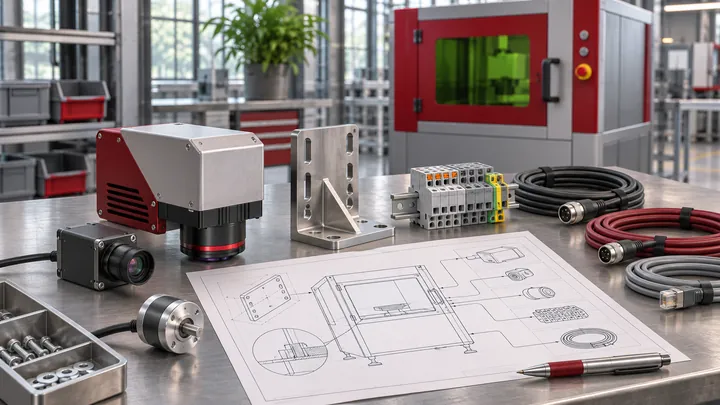
Compare laser marking quotations using a shared scope-of-supply matrix covering interfaces, acceptance, maintenance and open cost assumptions.
Read article →
Roll out marking systems across plants with shared data rules, validated configuration variants, version approvals and site-specific acceptance checks.
Read article →
Validate CO₂ laser marking on PET bottles: assess wavelength, bottle wall, complete code content and line movement before production approval.
Read article →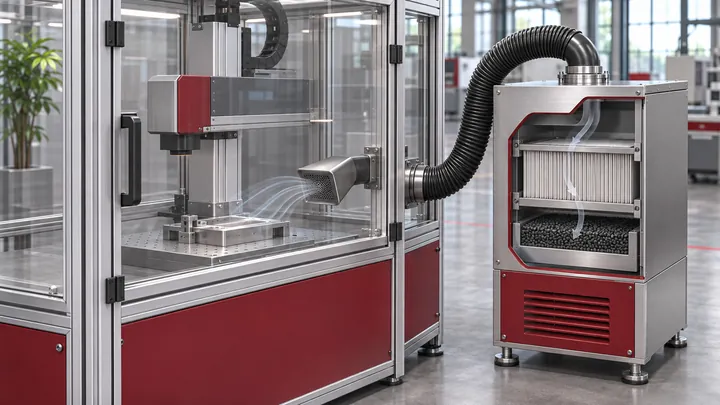
Plan laser fume extraction by assessing emissions, source capture, filter selection, monitoring and maintenance before acceptance.
Read article →
A practical engineering view of why industrial vision inspection projects often fail at the standard-definition stage rather than at the camera or algorithm stage.
Read article →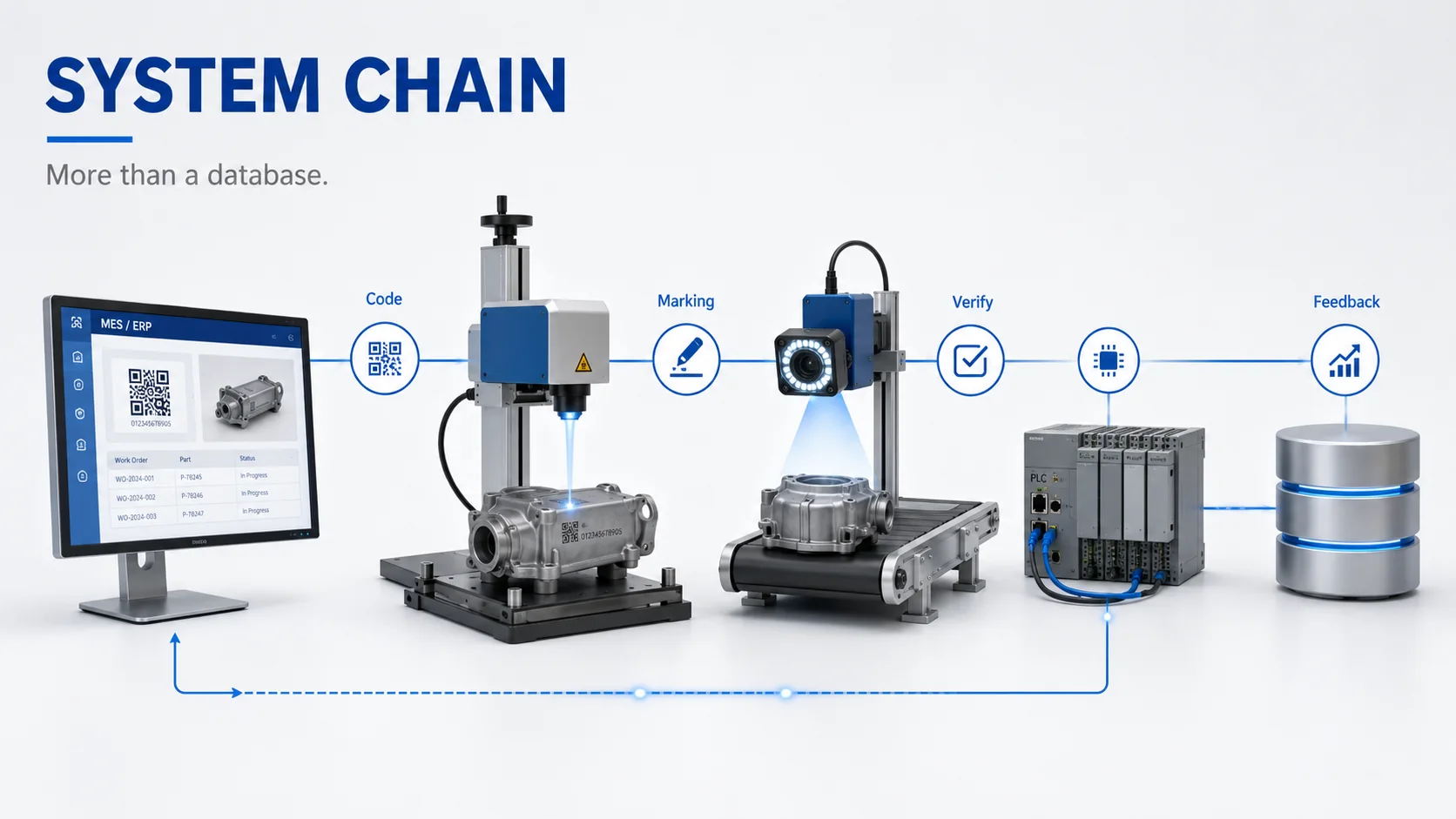
One-item-one-code traceability depends on front-end marking, reading, inspection and line control, not only on MES, ERP or database functions.
Read article →
Medical device traceability marking should be designed as a data, marking, inspection and feedback system instead of a simple coding equipment purchase.
Read article →
CO2 laser marking on non-metal packaging should be evaluated through material response, trigger timing, code readability, smoke handling and maintenance limits.
Read article →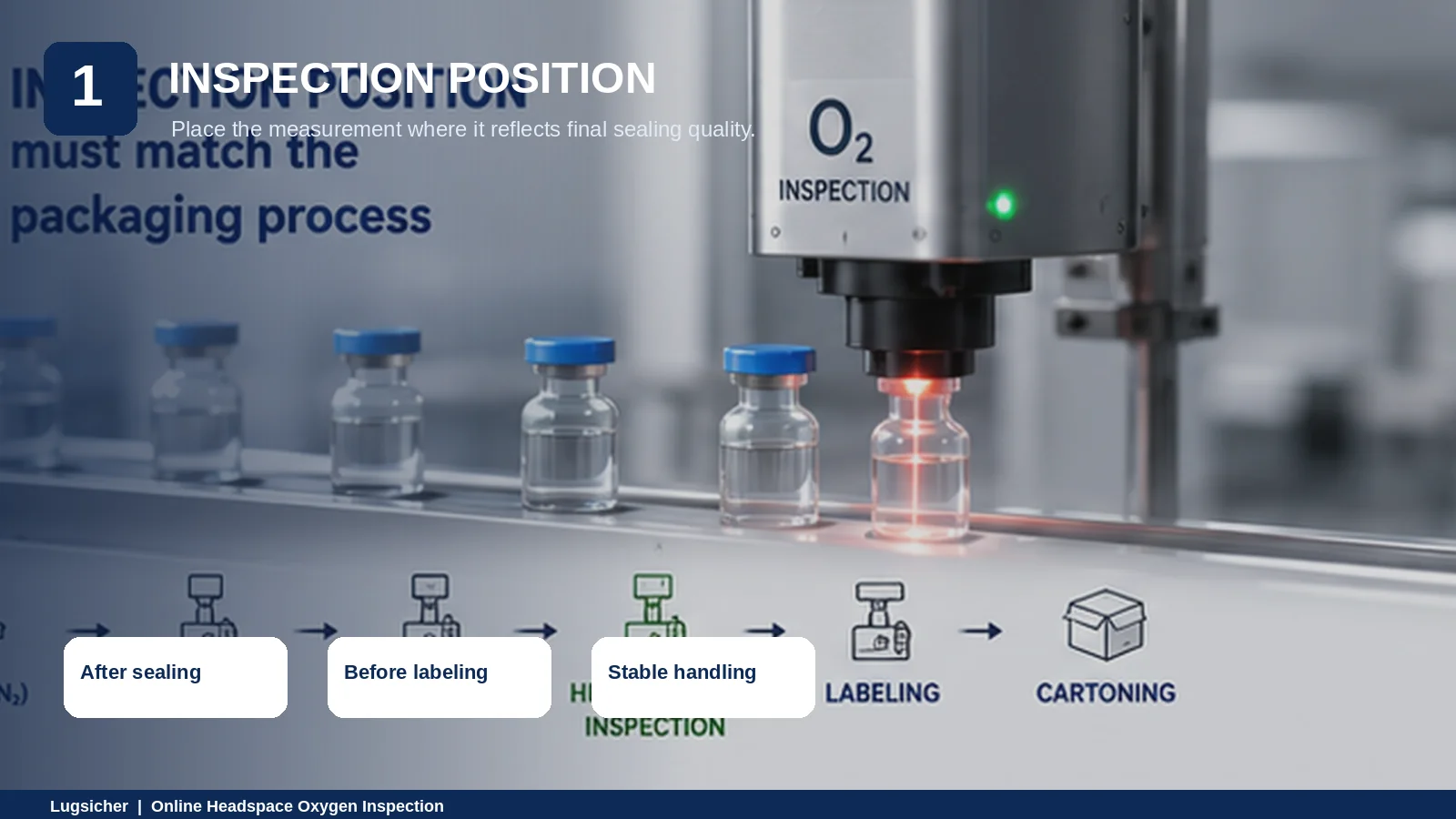
Headspace oxygen inspection becomes valuable when it is integrated with line position, product handling, PLC/MES interfaces, abnormal handling and traceability data.
Read article →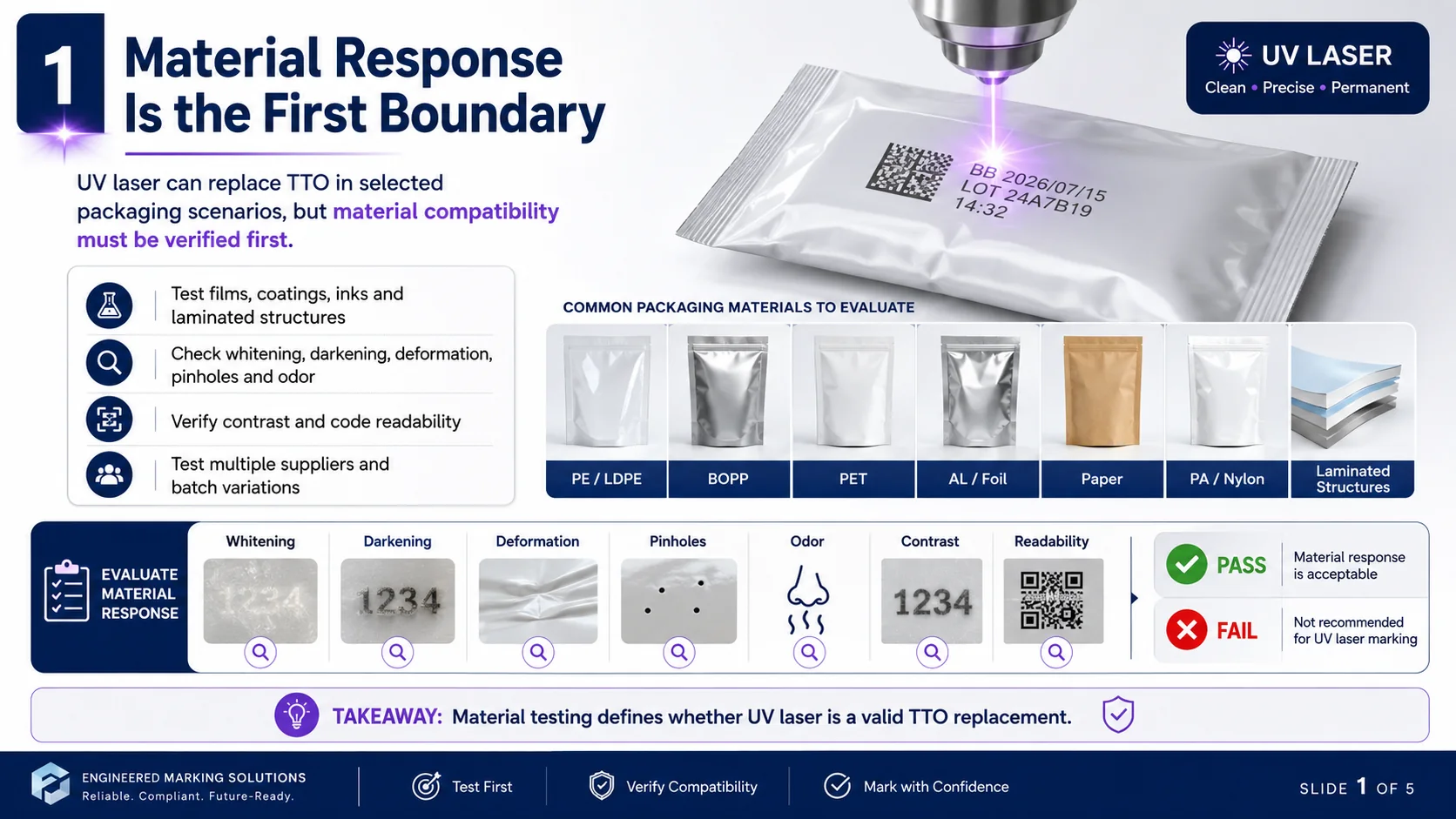
UV laser can replace TTO in selected packaging scenarios, but the decision should be based on material response, line synchronization, code quality and integration verification.
Read article →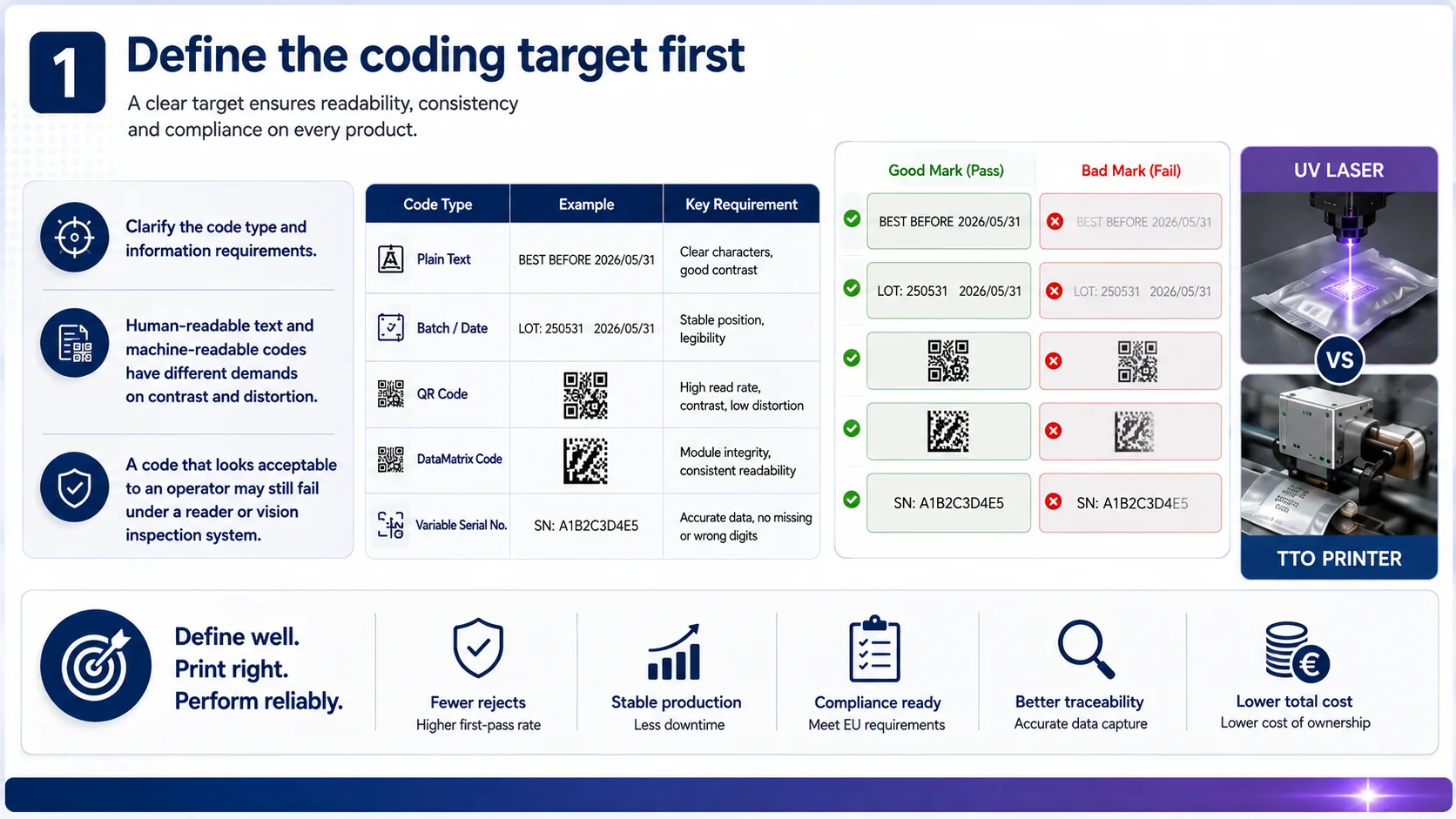
For soft packaging lines, UV laser and TTO should be compared through materials, control timing, readability, maintenance and abnormal handling rather than only through unit…
Read article →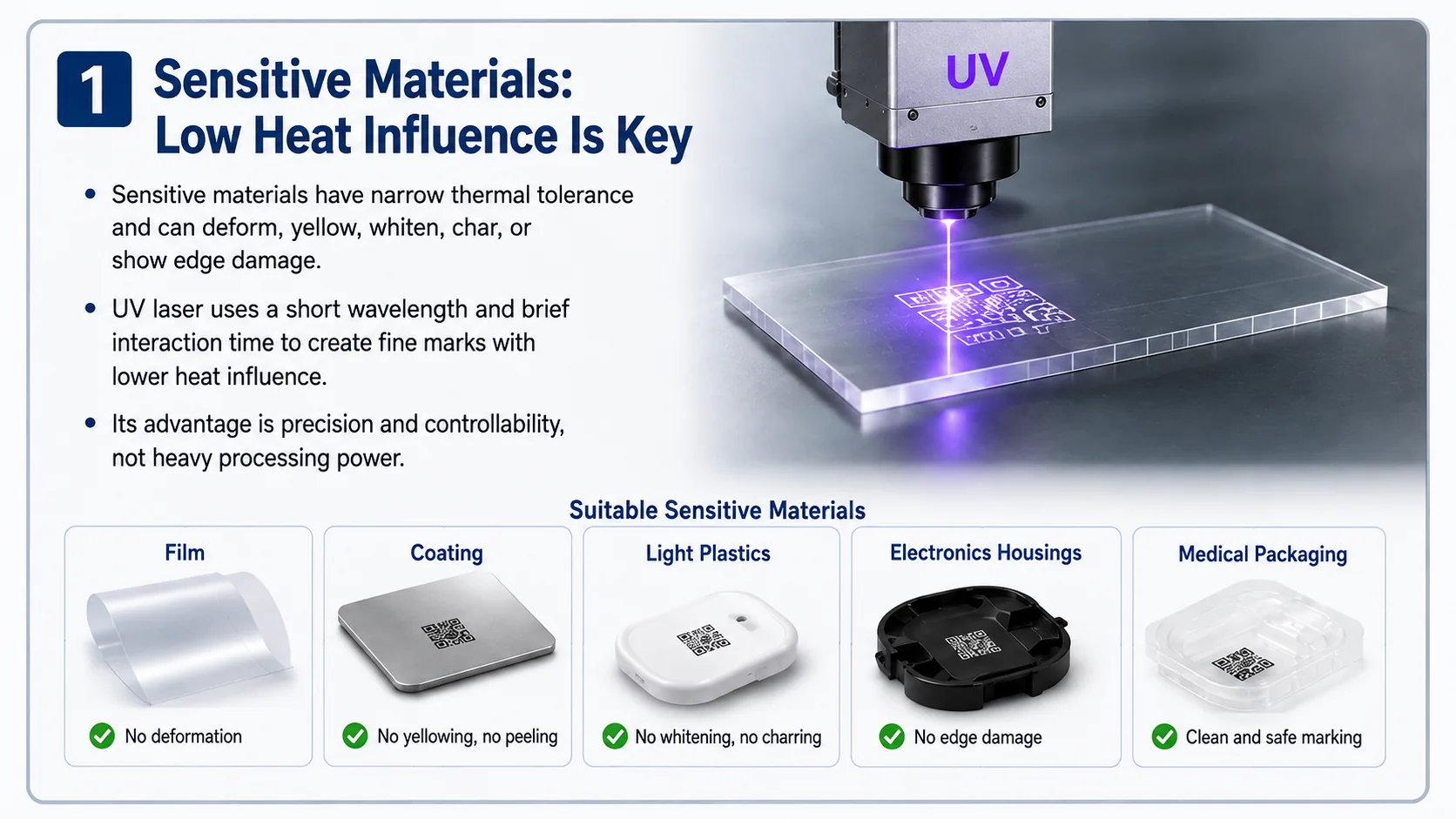
UV laser marking is often useful for films, coatings, light plastics, electronics housings and medical packaging where low heat influence and small code readability matter.
Read article →
A fiber laser may mark both metals and selected plastics, but the process window, acceptance criteria and risk points are different.
Read article →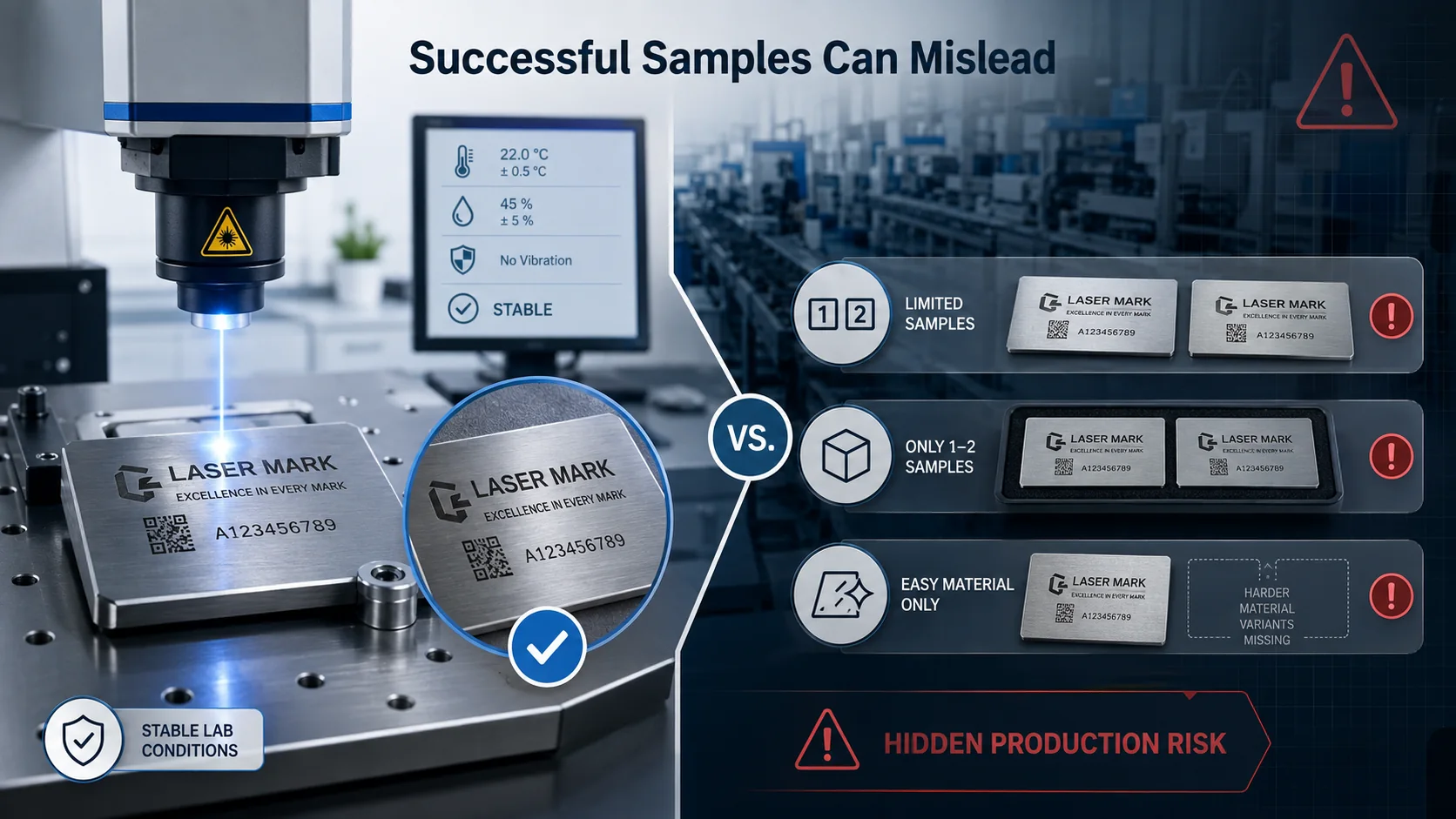
Material testing should validate process window, line speed, batch variation, readability and system integration, not only the best-looking sample.
Read article →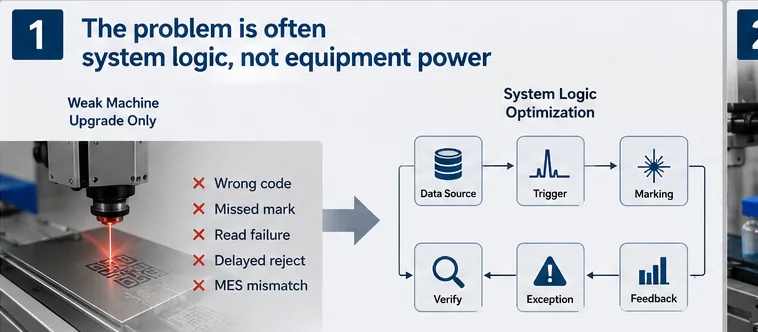
Industrial marking upgrades should redesign data flow, trigger logic, verification, abnormal handling and traceability rather than only replacing a laser, printer or labeler.
Read article →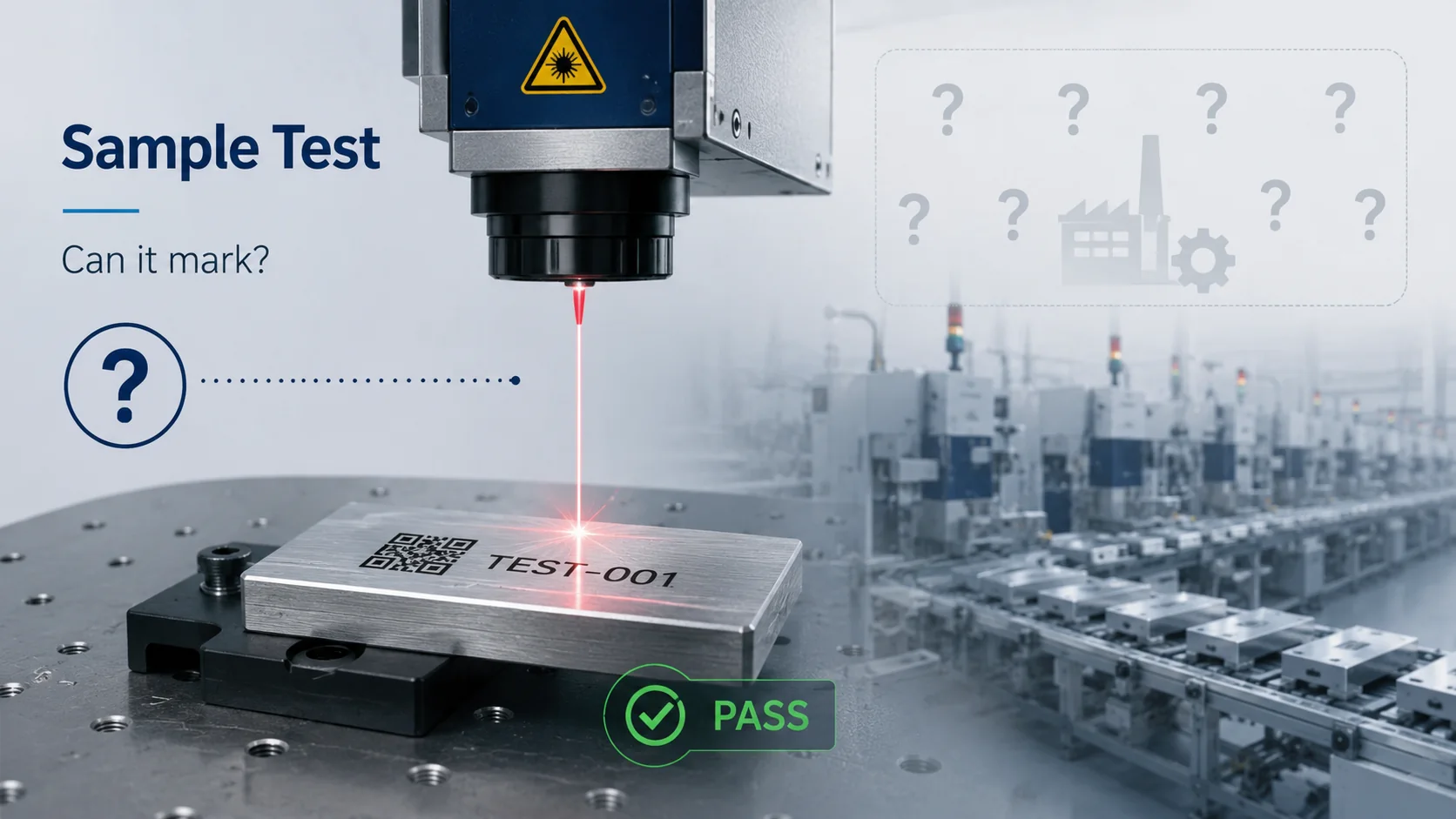
High-reflection metals, transparent plastics and coated materials often pass sample testing but become unstable in real production without process-window validation.
Read article →
Procurement teams should compare industrial marking solutions through process target, material conditions, line speed, integration interfaces and lifecycle cost.
Read article →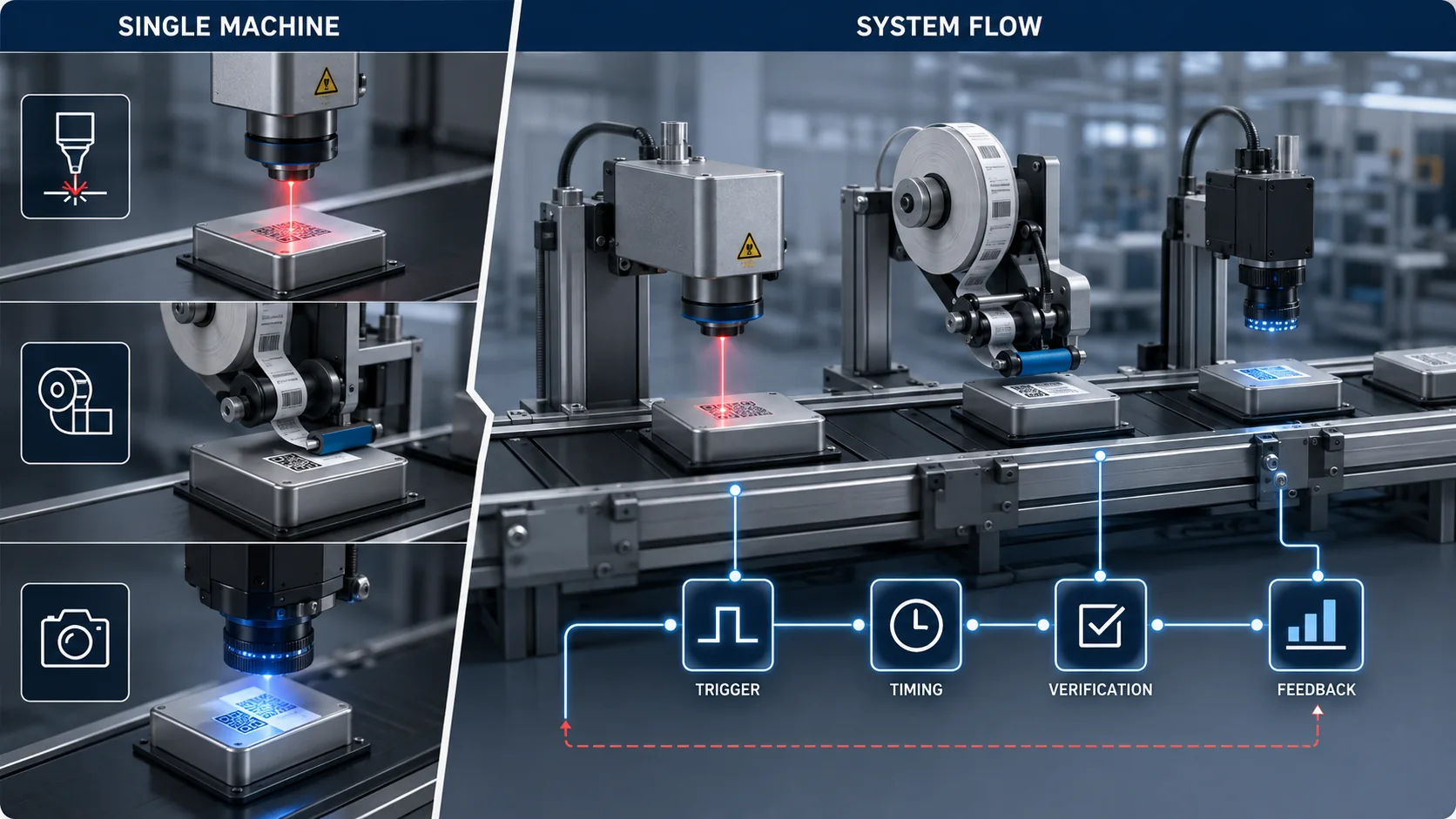
Modern industrial identification requires data delivery, marking execution, online inspection, abnormal handling and traceability feedback as one system.
Read article →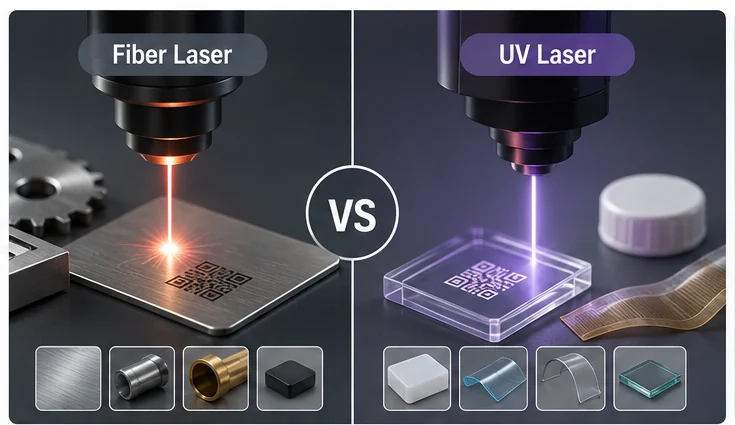
Budget-sensitive laser marking selection should start from material response, mark requirements, line speed, interfaces, maintenance and total cost, not only from equipment…
Read article →
The difference in power between carbon dioxide infrared and ultraviolet laser marking equipment is significant, making it difficult to adjust to the same power, and there are…
Read article →
In the field of laser processing, laser marking is one of the most widely used technologies, which is a product of the combination of contemporary high-tech laser technology…
Read article →
Taking the production of automotive parts as an example, the rate of manual quality inspection omissions has been consistently high. After a certain automotive parts factory…
Read article →
Recently, the editor used infrared laser marking machines with a maximum power of 30W and ultraviolet laser marking machines with a rated power of 5W to conduct marking tests…
Read article →
The domestic laser marking industry has undergone development and has entered a stable development period from a high-speed growth stage, and has been widely used in many fields.
Read article →
Laser engraving and marking is the process of using a high-energy laser beam to irradiate the surface of an object, instantly converting light energy into heat energy,…
Read article →Industrial identification, labeling, inspection and traceability communication for practical manufacturing needs.
Email: werner.spannbruckner@lugsicher.com
Phone: +43 (0) 664 5185182
Address: Riesaer Straße 70, 04328 Leipzig
Copyright © 2026 Lugsicher GmbH. Industrial coding, labeling, inspection and traceability communication.
Start from products, industries, materials or direct inquiry according to your project stage.